The Krakow issue
Krakow's Water Days from Zakrzówek Quarry to Tyniec Abbey
A summer route through Krakow's water: the guarded quarry at Zakrzówek, the flooded gravel pits the city actually swims in, and the paddle down the Vistula to a working Benedictine abbey.

By Rhys LlewellynKraków on foot — sights, neighbourhoods and the slow city
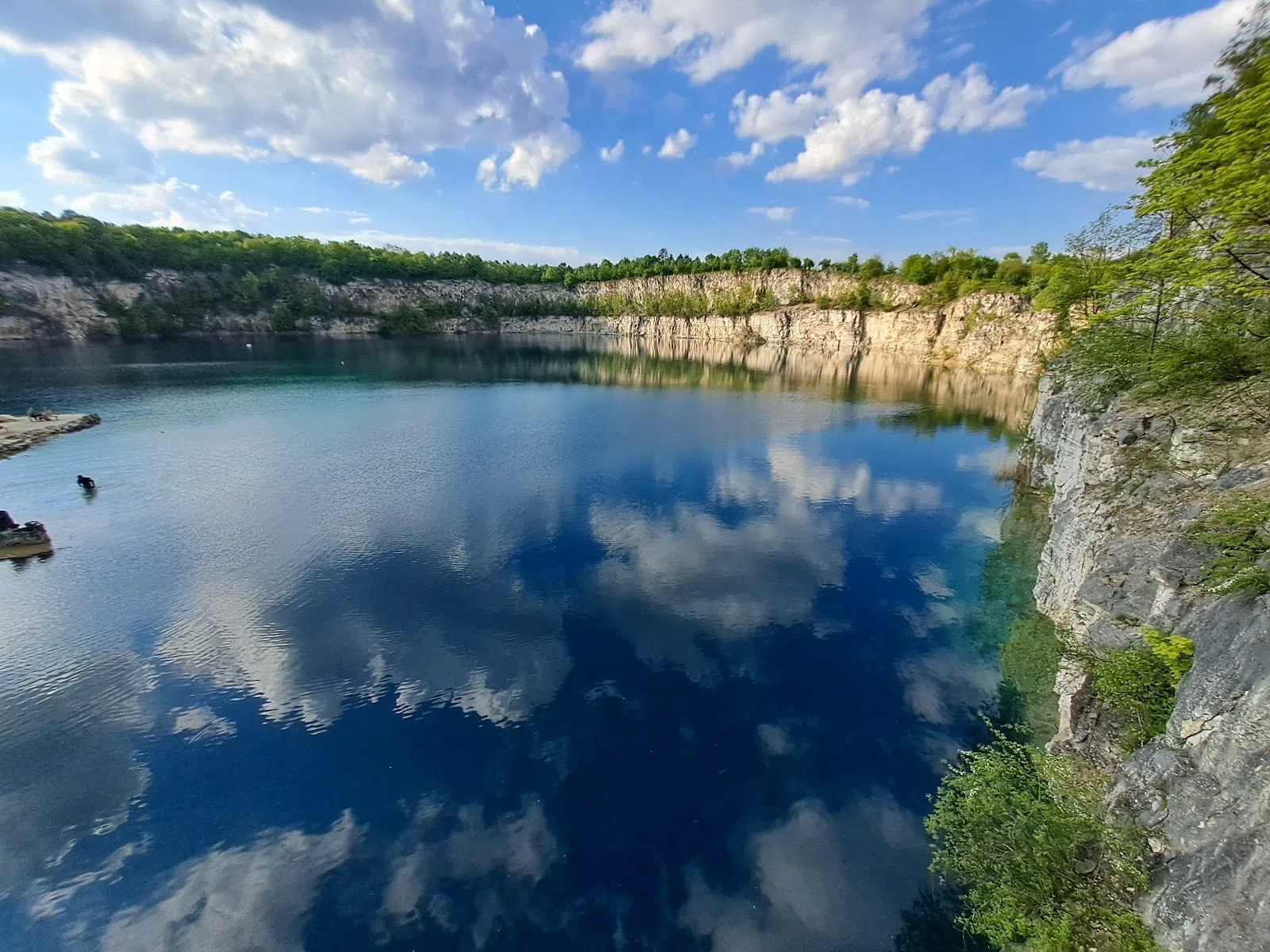
The water at Zakrzówek is the colour of bottle glass, and the walls holding it are vertical limestone, cut that way because men were taking stone out of the ground rather than building a lido. Krakow sits about as far from a coastline as a European city can, and yet from the middle of June the city drains sideways: into flooded quarries and gravel pits, and onto the stretch of Vistula that runs west out of the centre towards a monastery standing on a cliff. What follows is that water in the order a sensible person would take it, with the prices, the caps and the closed seasons attached.
The quarry at Zakrzówek
Park Zakrzówek (Dębniki) is the single best swim in the city, and it is worth being precise about why: it is municipal, it is lifeguarded, it is free, and parking on ul. Norymberska costs nothing. There is a children's basin that starts at 40 cm and shelves to 3.5 m, and there are floating pontoons off which adults swim in marked water. From Wawel it is roughly half an hour on foot across the river and up through Dębniki, a pleasant enough walk in the morning and an unshaded slog at two in the afternoon.
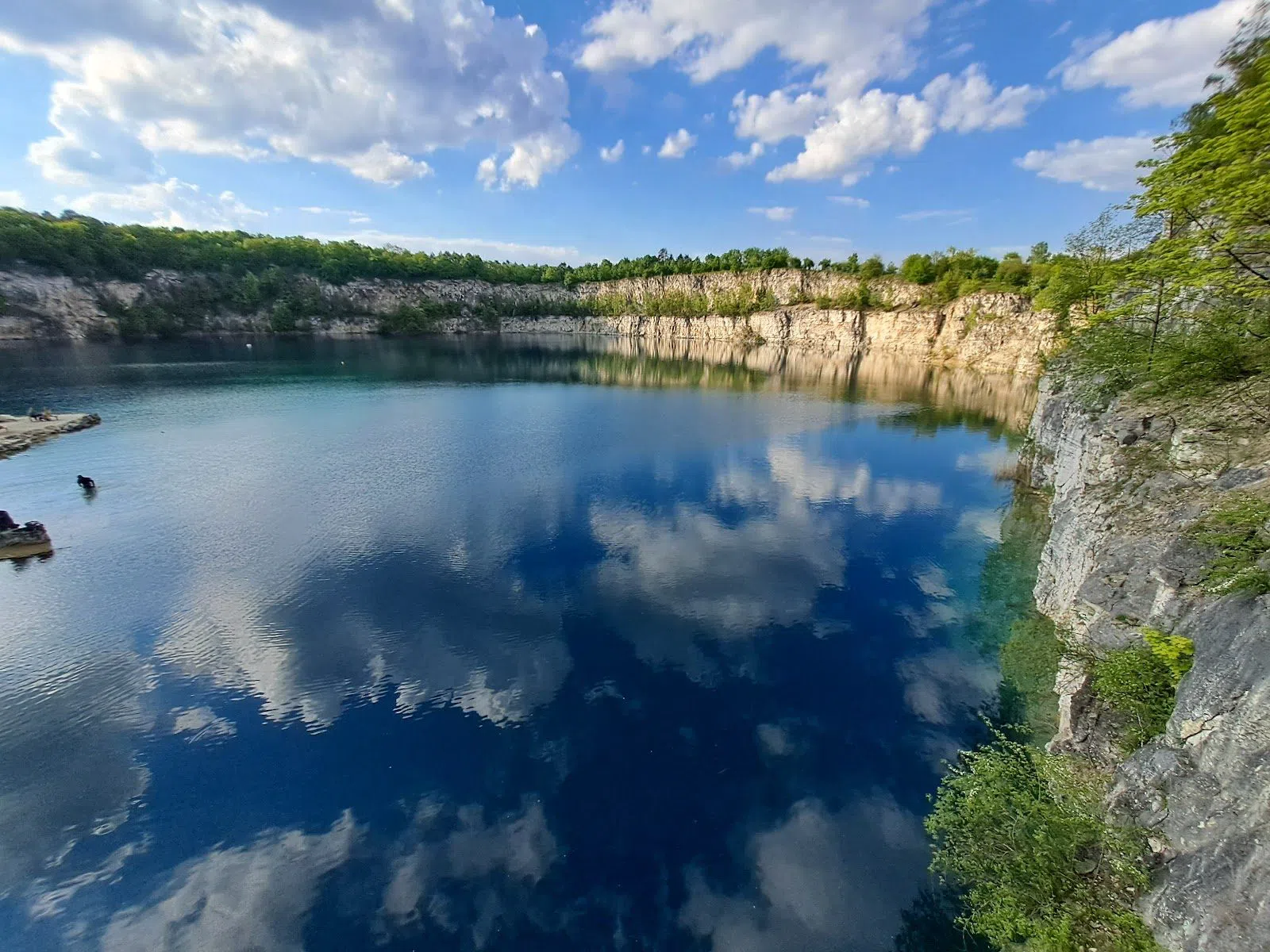
The rules here are not decoration. Swimming outside the marked pontoons is banned, and the reason is under your feet: the flooded quarry averages around 20 m and goes past 32 m at its deepest, with rock walls that drop away sheer rather than sloping. The stone came out of this hole for the Solvay soda works, and the young Karol Wojtyła was among those who laboured at the Solvay quarries during the war. The pit filled with groundwater once cutting stopped, and for years it was an unguarded swimming place with a bad record, before the city built the park that stands now, ropes and all.
Groups need one number: the floating platforms cap at 600 people, and on a genuinely hot day they fill by late morning. Nobody books, nobody tickets you, you simply walk in, which means a party of twenty either arrives early or splits into two arrivals and meets on the grass. Couples have it easier and can come late in the afternoon when the first shift has gone home.
Plan your Krakow trip
Live prices from our booking partners.
Free cancellation on many rooms. We may earn a commission when you book.
Getting onto the Vistula
You do not swim in the Vistula in Krakow. The legal, sane contact with the river is a hull or a board under you, and there are two good ways to get one.
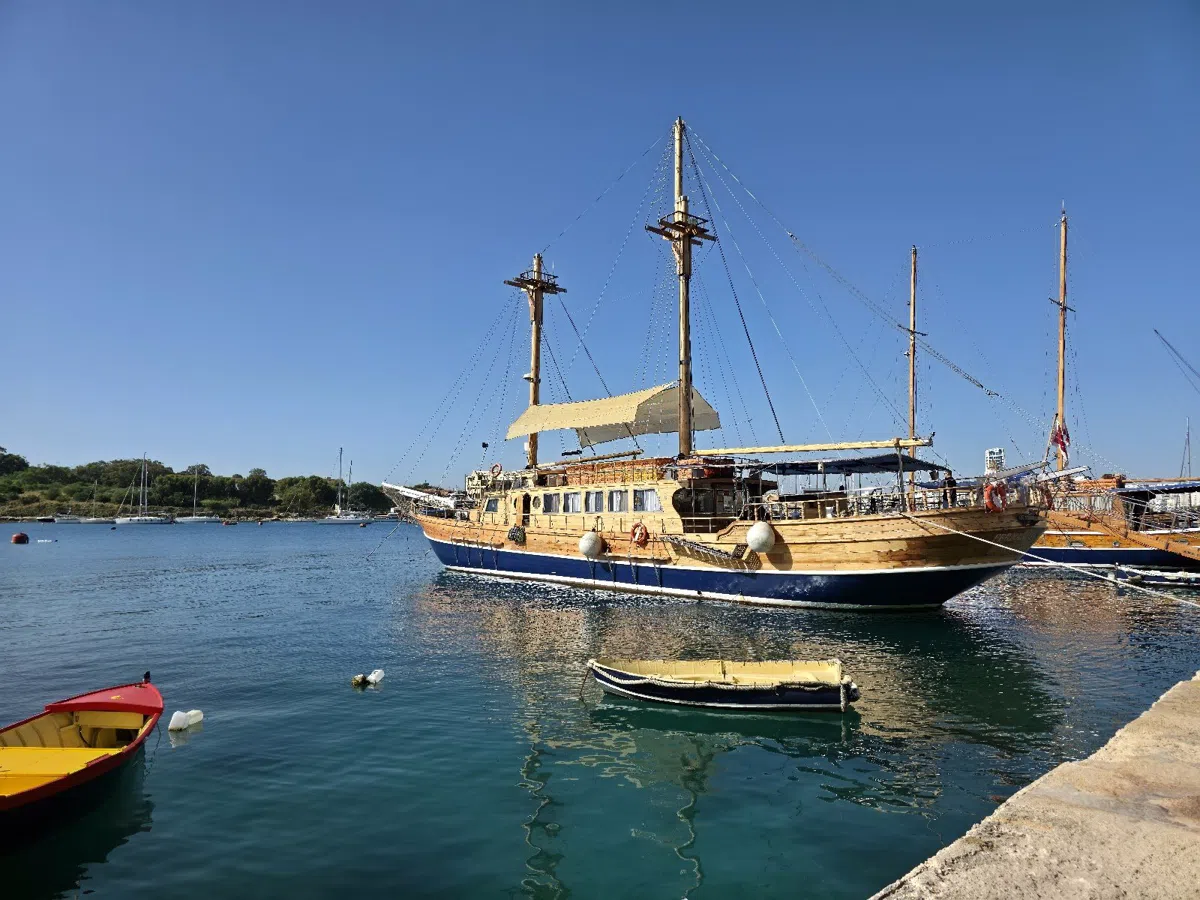
Kajaki Kraków (the KKW-29 landing, upstream on the Vistula bank) runs the route this article is about in the direction that actually works: 9 km downstream from Tyniec back into the city, three to four hours, flat water the whole way and manageable with children who can sit still. Their organised trips start at a minimum of eight people, and kayak-and-passenger transport is charged by the kilometre from their base at around 17 zł/km, which is how a group gets itself and its boats upstream to the abbey in the first place. It is the cheapest way to spend half a day on the river and the only one that ends with you arriving in the city rather than leaving it.
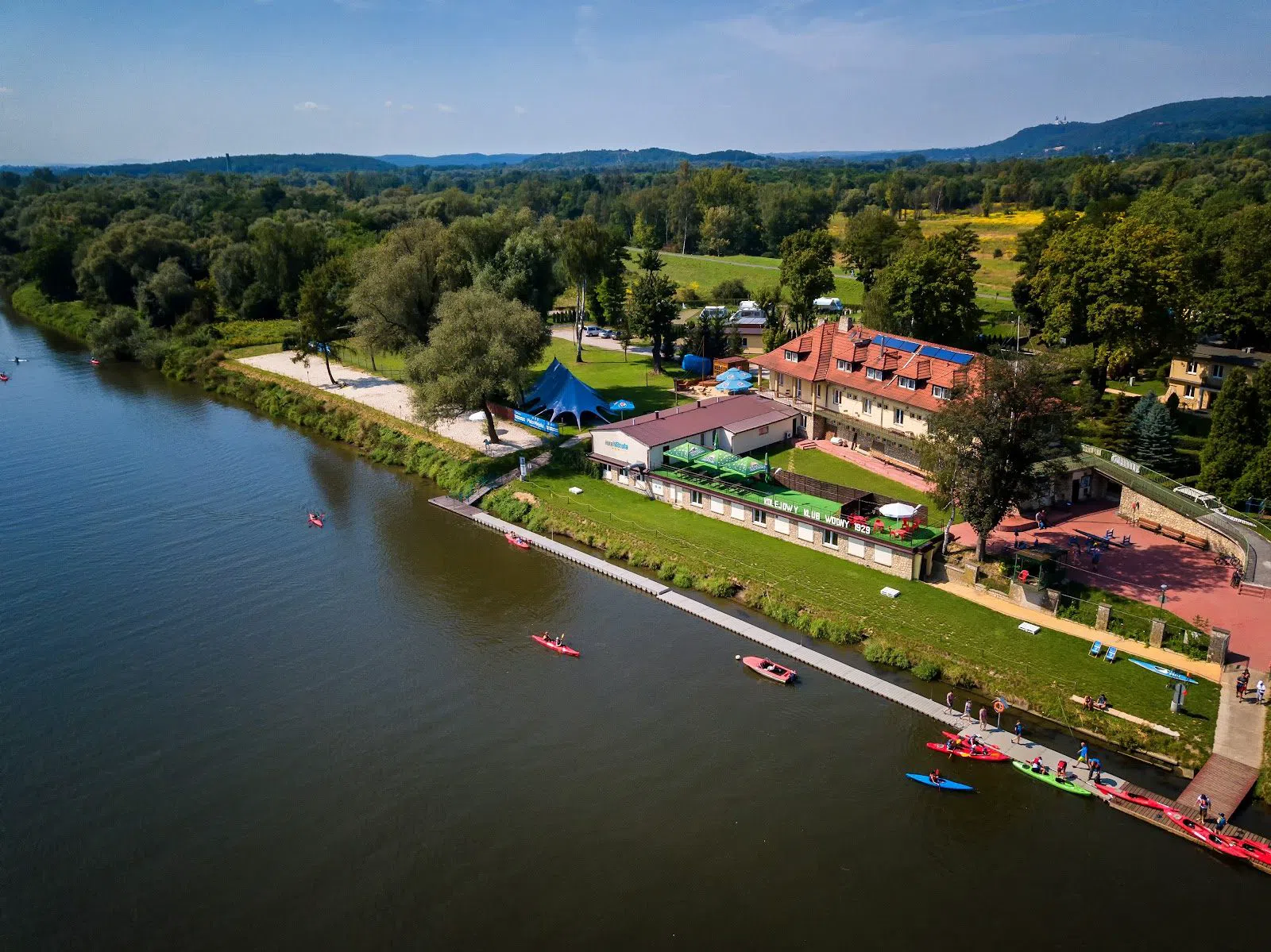
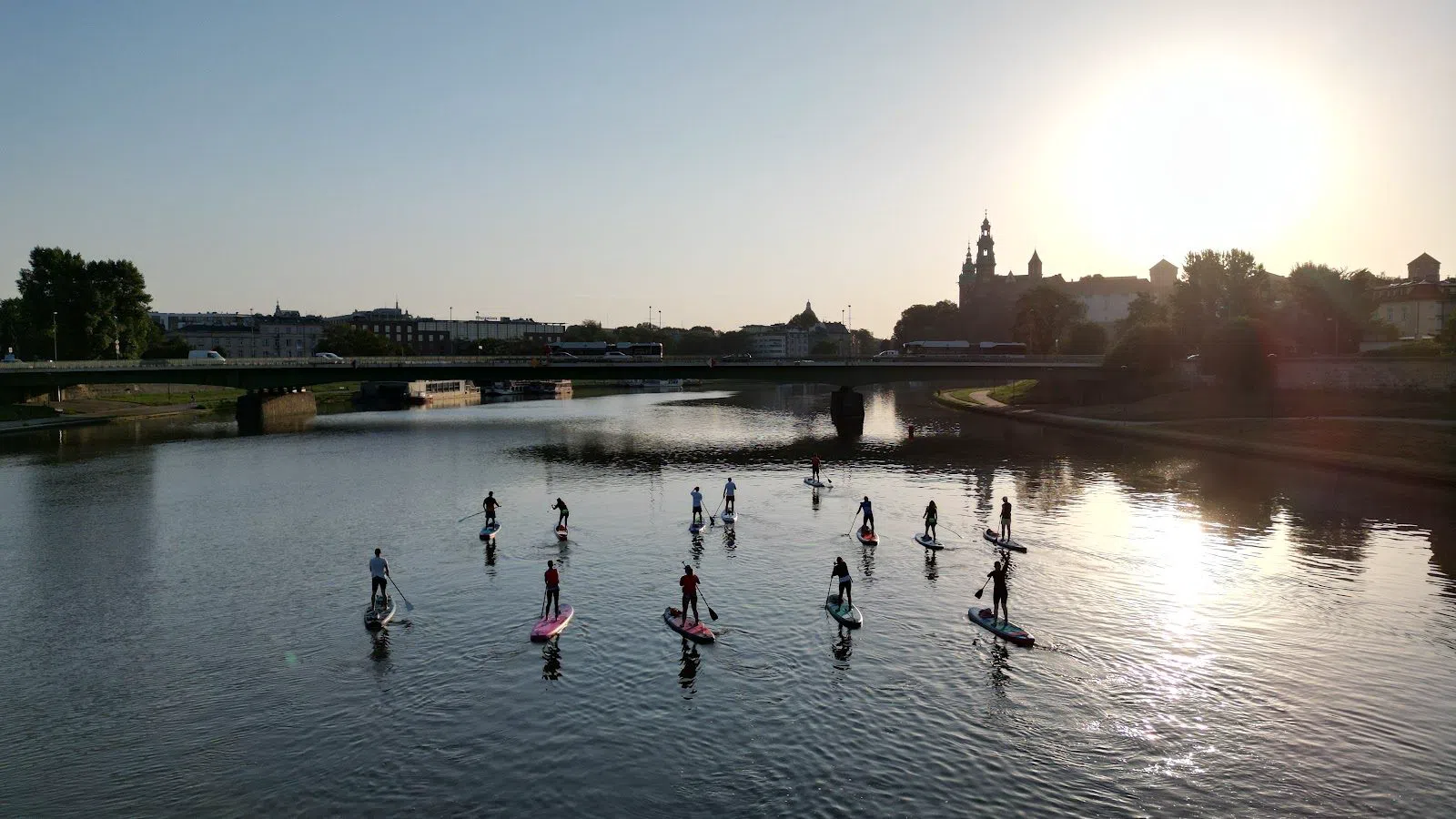
SUP Kultura (on the Vistula boulevards) rents paddleboards at 45 zł/hr for one or two hours, 40 zł/hr if you take three to five, and 150 zł for a full day, with cheaper multi-day rates. Board, paddle, leash, buoyancy aid and pump are all in the price, and they run guided trips with a licensed guide if nobody in your party has stood on one before. They are open seven days a week, year round, which makes them the reliable answer in late September when the lake beaches have shut their guarded season and the quarry has emptied out. A party can take a fleet, but ring ahead with numbers rather than turning up twelve-handed.
The Vistula was the working artery of the city for centuries. Salt and grain went downstream from here towards the Baltic long before anything went downstream for fun, and the boulevards you launch from are the tidy modern face of a waterway Krakow spent a long time turning its back on.
Downstream to the abbey at Tyniec
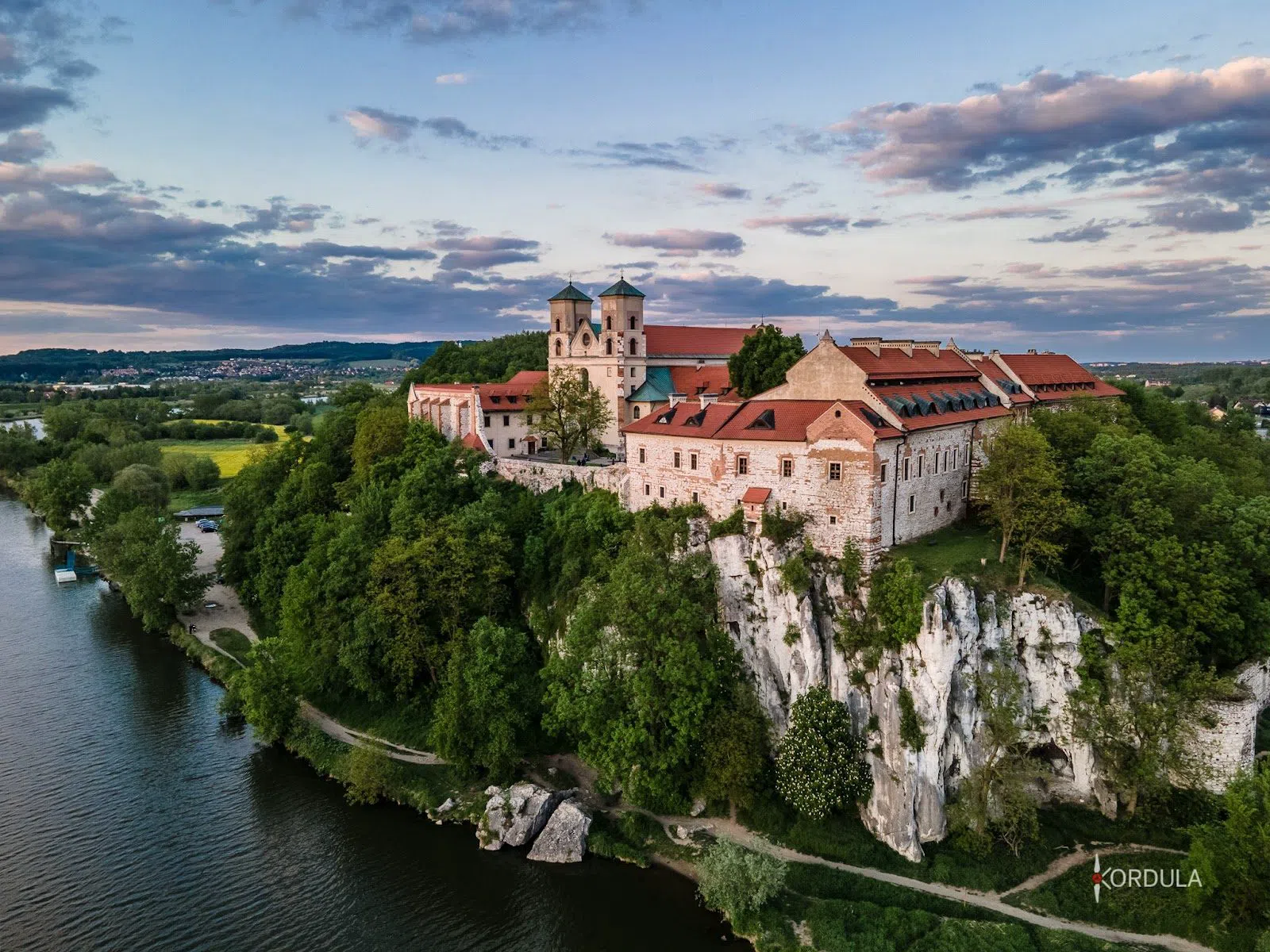
The Benedictine Abbey in Tyniec (Tyniec, on the western edge of the city) is what gives the river trip a destination rather than a turning point. It is a working monastery of nearly a thousand years, founded in the eleventh century, suppressed in the early nineteenth when the community was dissolved, and re-established when monks returned in 1939 to a half-ruined complex on the limestone bluff. There is a museum, a café, and a shop selling Benedictine products, and the courtyard costs nothing to walk into.
Prices are modest: the museum is 7 zł, or 5 zł concession; a combined museum and abbey tour is 10 zł, or 8 zł concession; a family ticket is 25 zł and under-sixes go free. Museum hours run longer in season, Monday to Friday 09:00–17:00 and weekends 10:00–18:00 from May through October. Guided abbey tours follow a fixed hourly timetable and will take groups, with one weekend wrinkle: the church is open to individuals then and excluded from the guided tours. Anything over about a dozen people should be booked ahead rather than assumed.
If paddling back is not the plan, Krakowska Żegluga Pasażerska (Krakowska Grupa AMNIS, sailing from the Wawel landing on Bulwar Czerwieński) is the lazy version and no worse for it: about four and a half hours return, with roughly 45 minutes ashore at the abbey. A scheduled Tyniec return sits in the region of 100 zł a head, and whole-boat charters are priced on request. Two practical facts decide whether it happens at all: the route needs a minimum of four passengers, and it is cancelled with 24 hours' notice if it does not fill, so book early in a quiet week and have a fallback. Those 45 minutes buy the courtyard, the church door and the shop. They do not buy lunch.
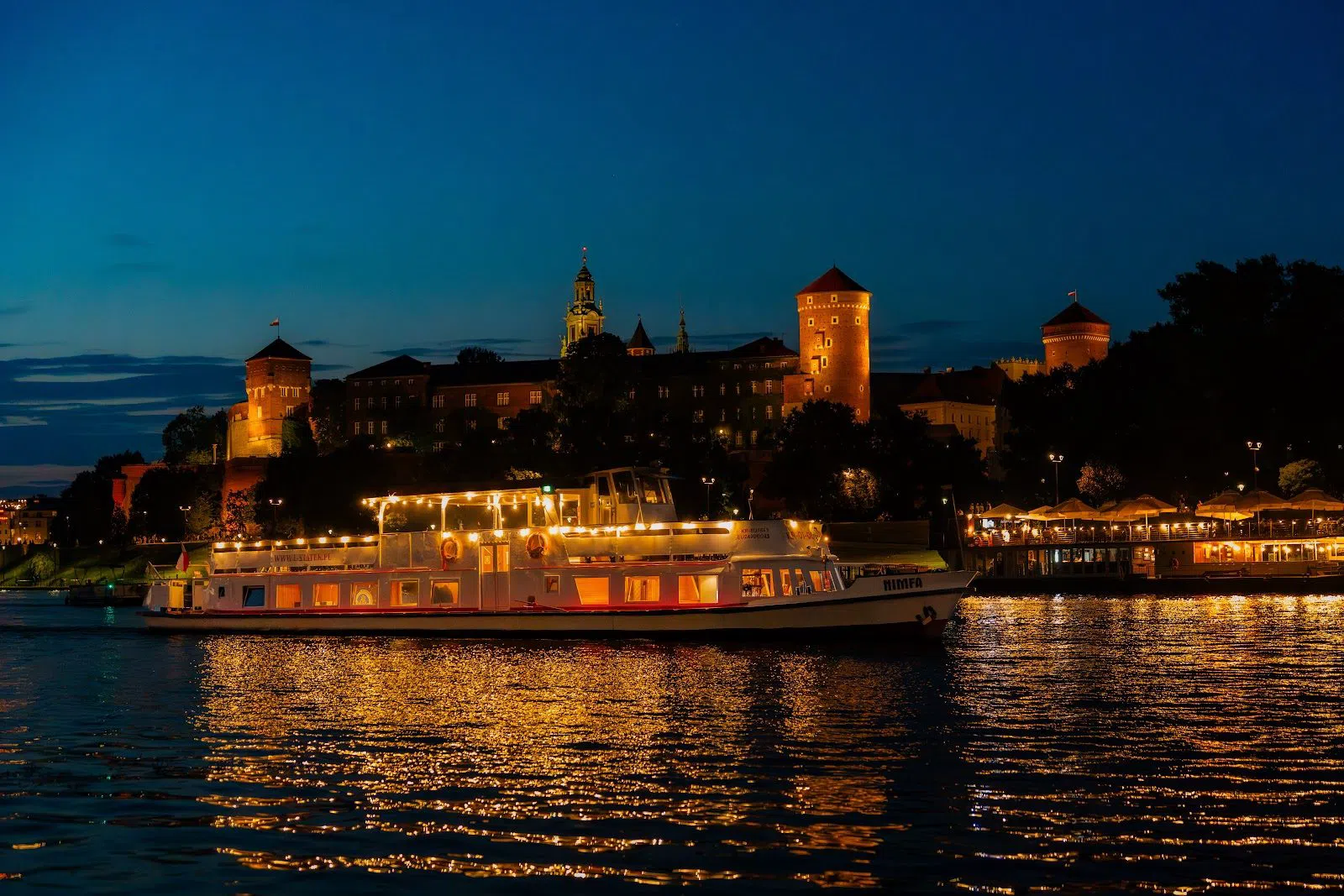
The combination I would actually pick is cruise out, paddle back. The boat does the upstream work, and the 9 km home is downstream with the current doing half of it.
City lakes that will take a crowd
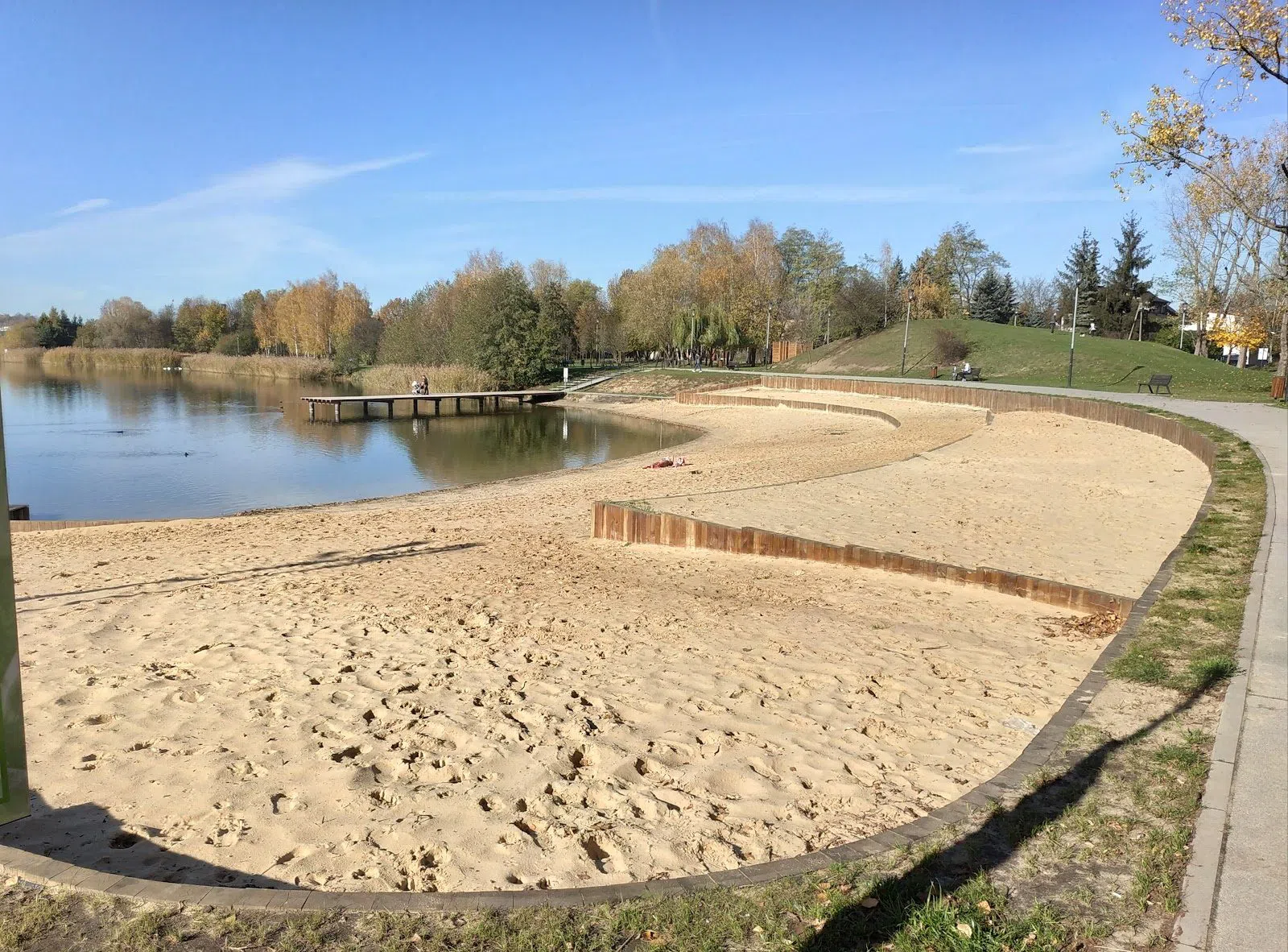
Zalew Bagry (Park Bagry Wielkie, Podgórze) is the closest real swim to the centre, a tram ride out, free and lifeguarded, and, unusually, explicitly not capacity-limited. It is a flooded sand and gravel working, which is why the shape is odd and the water is clean and cold. There are two supervised beaches, Plaża Bagry on the north shore and Plaża Bagry Wschód on the east; treat them as two entrances to one lake rather than two separate outings. This is the swim that absorbs a stag party, a school group or an office of forty without a queue forming.
Przylasek Rusiecki (out past Nowa Huta) is the quietest of the official beaches: free entry, no cap, lifeguards on duty 9:00–17:00 daily in season. The season is short and precise, 27 June to 31 August 2026, so it is a July-and-August answer only, and outside those dates you are swimming unguarded, which is another way of saying you are not swimming. The pinch point is parking: one brick lot stays free, the other two are seasonal and paid, and on a hot Saturday the free one goes first.
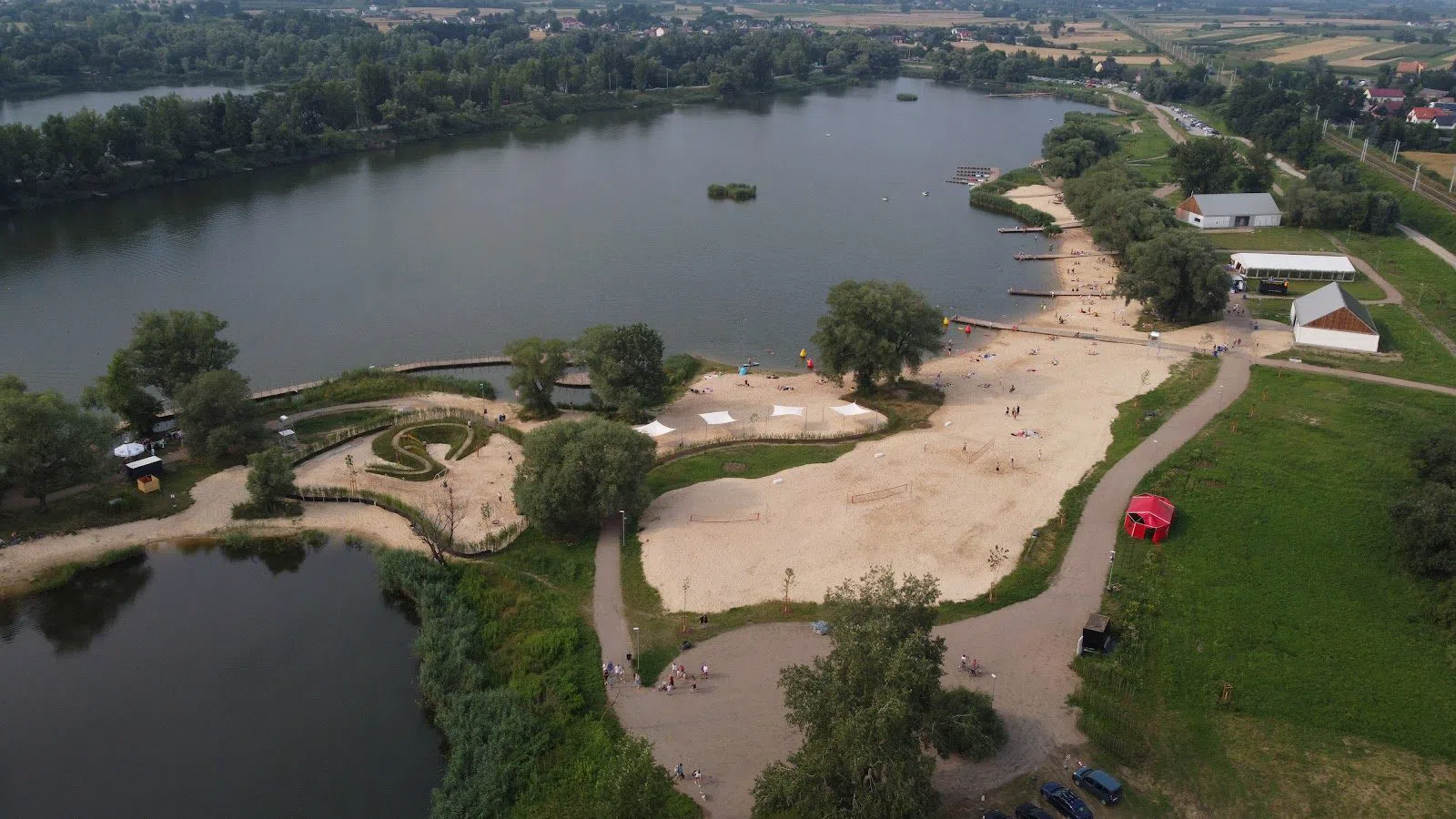
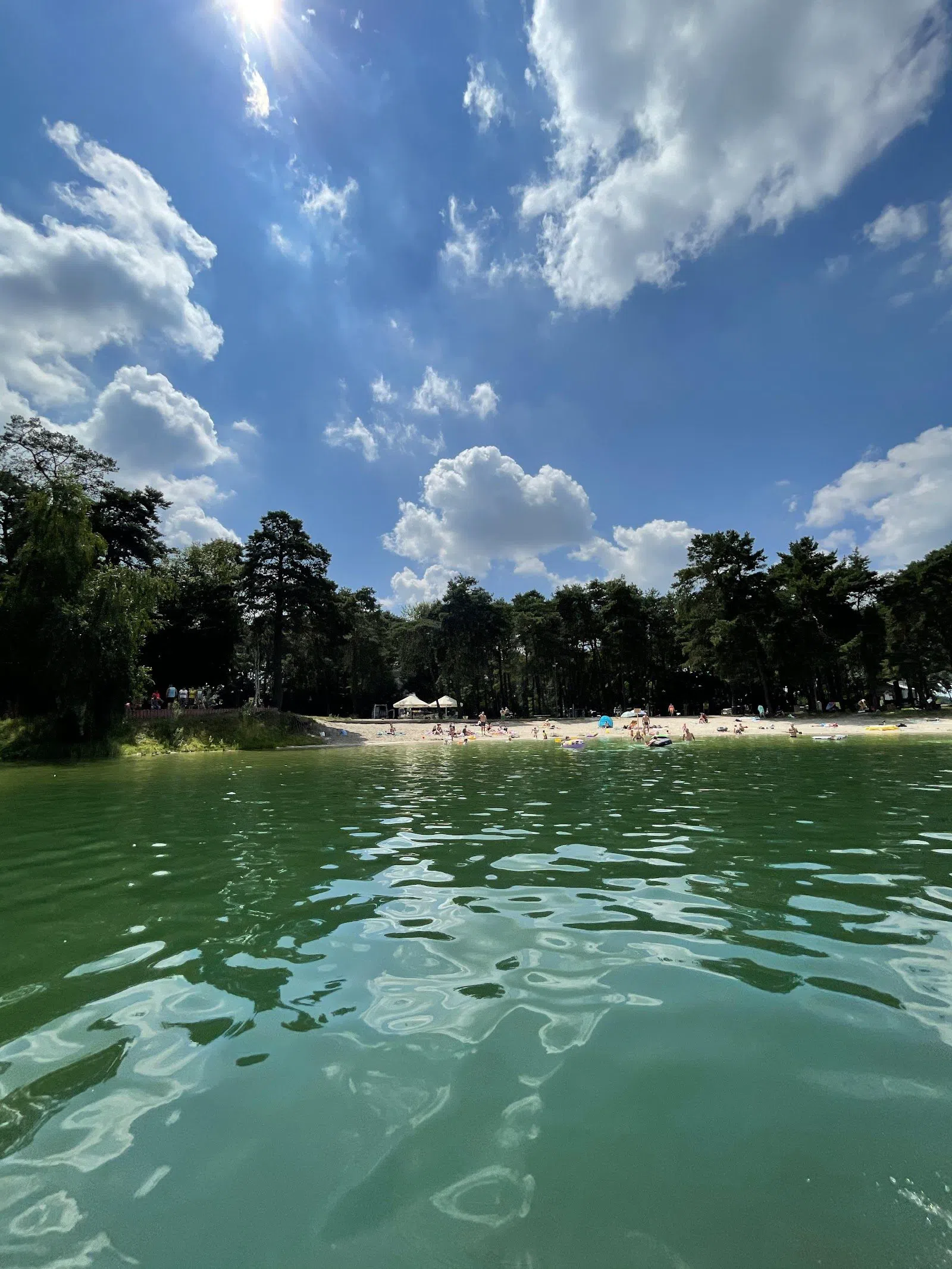
Zalew na Piaskach (Zalew Kryspinów, at Budzyń, about 12 km west) is the nearest thing to a seaside day within reach of ordinary city buses. It is the only one here with a gate: 20 zł for adults, 15 zł for ages 6–15 and over-60s, 40 zł for a family, under-sixes free, with parking another 20–25 zł. Sports clubs and rental outfits work the site, the beach is guarded 10:00–18:00 on sunny days from June to August, and the grounds themselves open 08:00–22:00, so the evening after the lifeguards knock off is still yours. A paid gate also means a group is simply ticketed in, with none of the arithmetic Zakrzówek demands.
When the city lakes are heaving, Zalew Chechło (a 40 km drive west) is worth the car. Free entry, paid parking in two car parks, lifeguard towers, beach volleyball and badminton courts and covered picnic pitches. It swallows a large group easily, and the beach has been rebuilt. The water is rated fit for bathing through the 2026 season, but the guarded window is narrow: 20 June to 31 August 2026, 10:00–18:00. Check before you drive out.
Two cables and the riders they suit
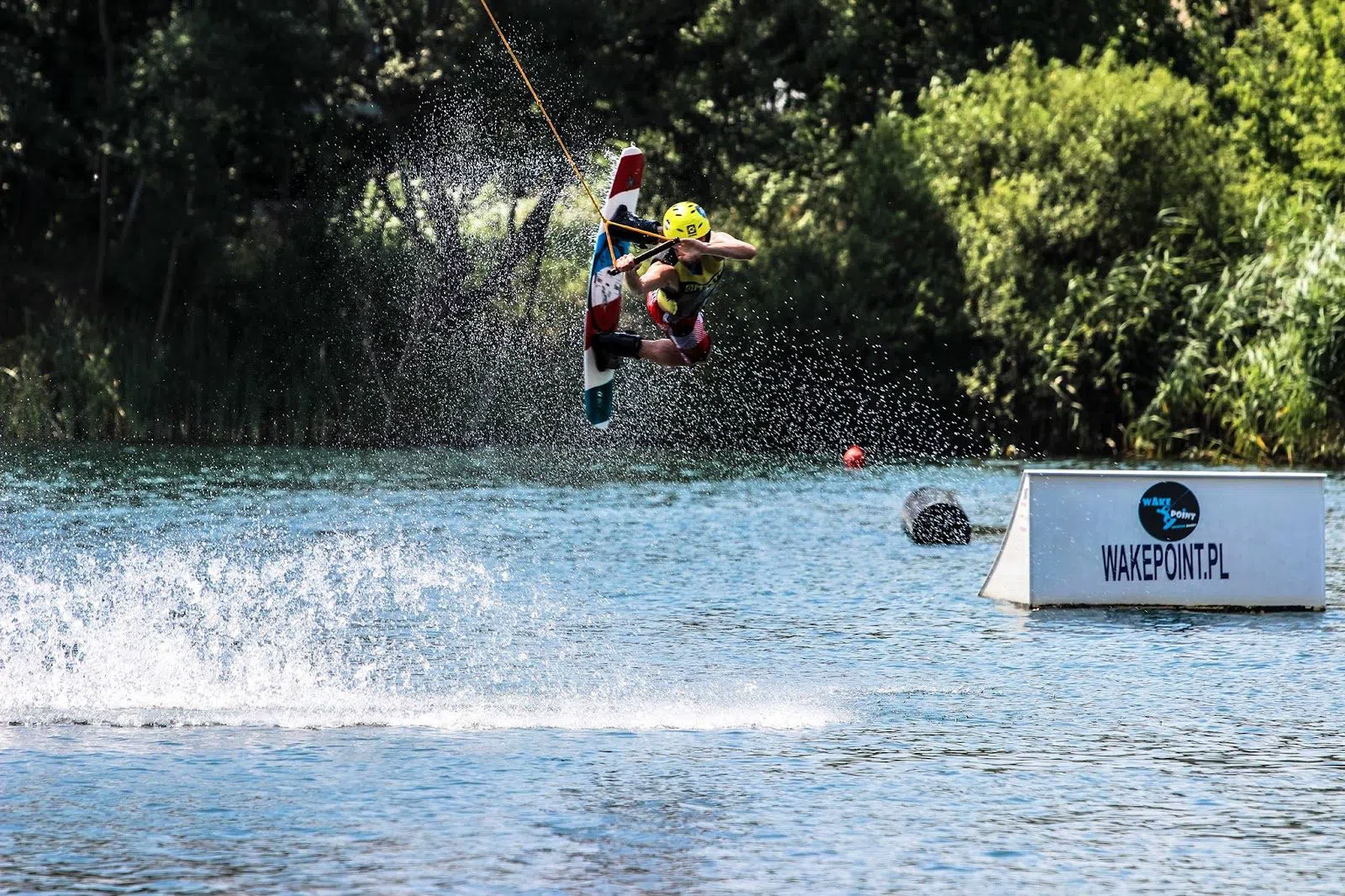
Wakepark Kraków (Cholerzyn) is the one to book if the group is mixed. It runs two separate cables, a 160 m beginners' line and a 210 m obstacle line, which is the whole reason a first-timer and a confident rider can share the same booking without one of them standing about. Rates are structured for up to four people on a cable: 70 zł for 15 minutes for one person, rising to 260 zł an hour for four, and summer camps run 1800 zł for five days with a minimum of five and a maximum of twelve participants. They do events and group bookings openly. Reserve online, because walk-ups are not guaranteed.
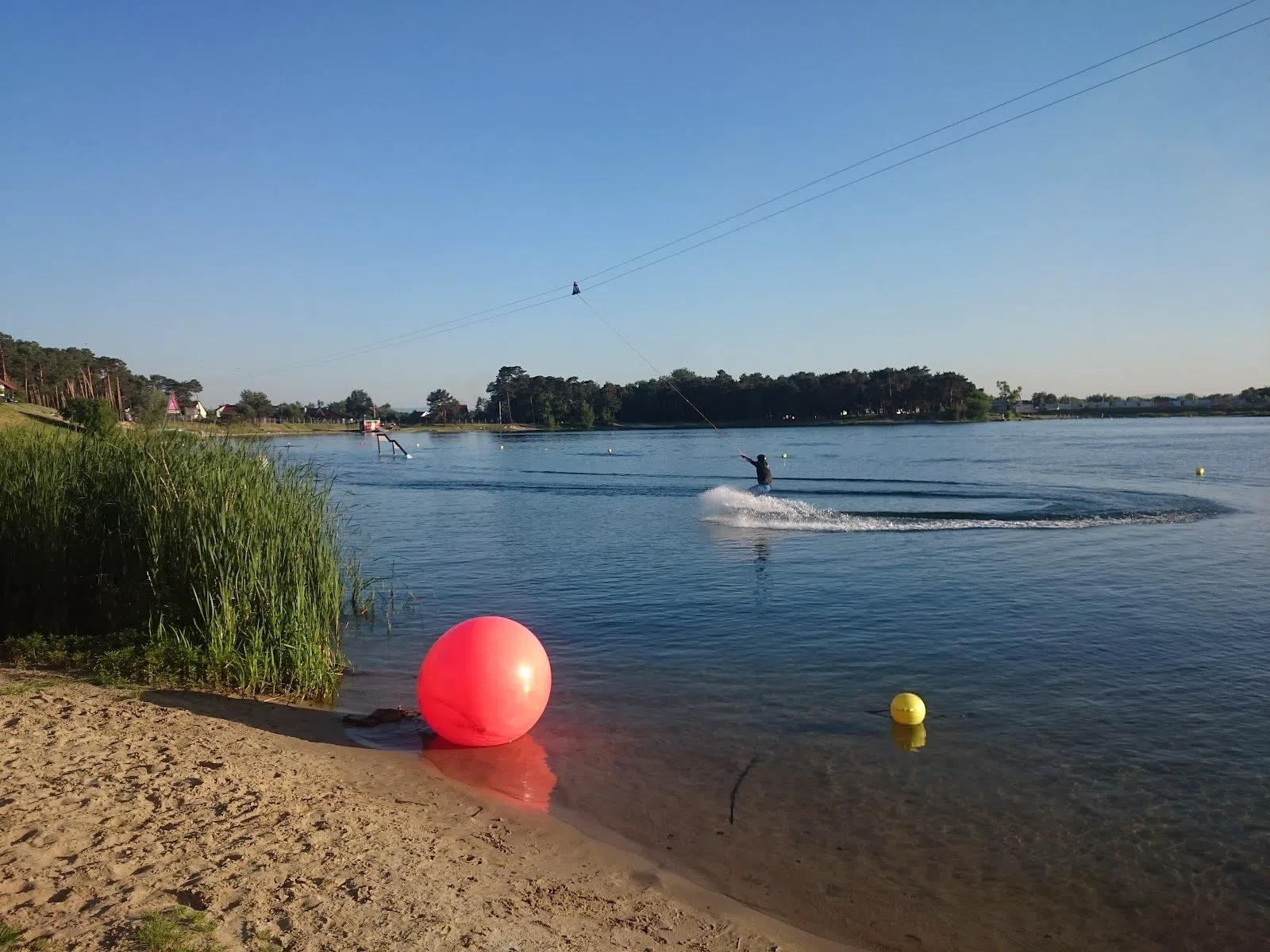
WakePoint Kraków Bagry (Podgórze, on the same lake as the beaches) is the in-city alternative, a municipal ZIS facility with a wakeboard school, rental and changing rooms. The cable sells by the hour for up to four riders at a time, from 35 zł/hr on weekdays between 10:00 and 16:00, plus kit hire. That makes an easy afternoon (swim off the beach, ride the cable, never leave Krakow), but it is workable for a small group and tight for a large one, and the opening hours are posted on the operator's social channels rather than a fixed published timetable. Check the day before.
Whitewater without leaving the city
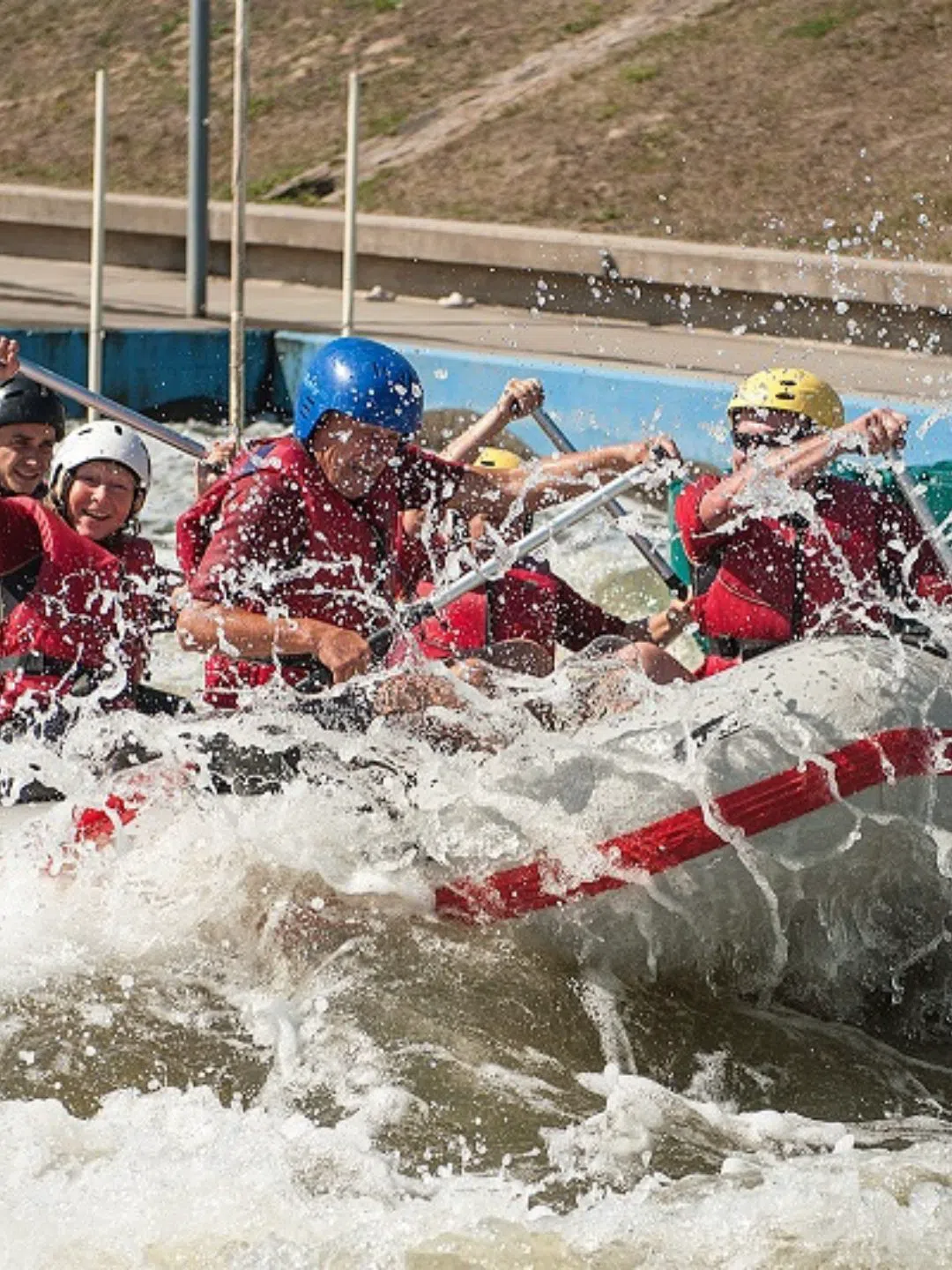
Tor Kajakowy Kolna (Krakowski Klub Kajakowy, on the south-western edge of the city) is genuine whitewater inside the city boundary: an artificial course carrying over 15 m³ per second, built as a training channel for slalom racers rather than as an attraction, which is why the instructors are club competitors. Rafts seat six and run under an instructor; stag, corporate and school bookings are routine, and pricing is per person for a raft session in the mid band. The detail that sells it to people who have never paddled anything is the geometry: the bank is never more than about six metres away. It is loud and fast and entirely supervised, and it is a better use of a stag afternoon than most things sold as one.
When the sky closes in
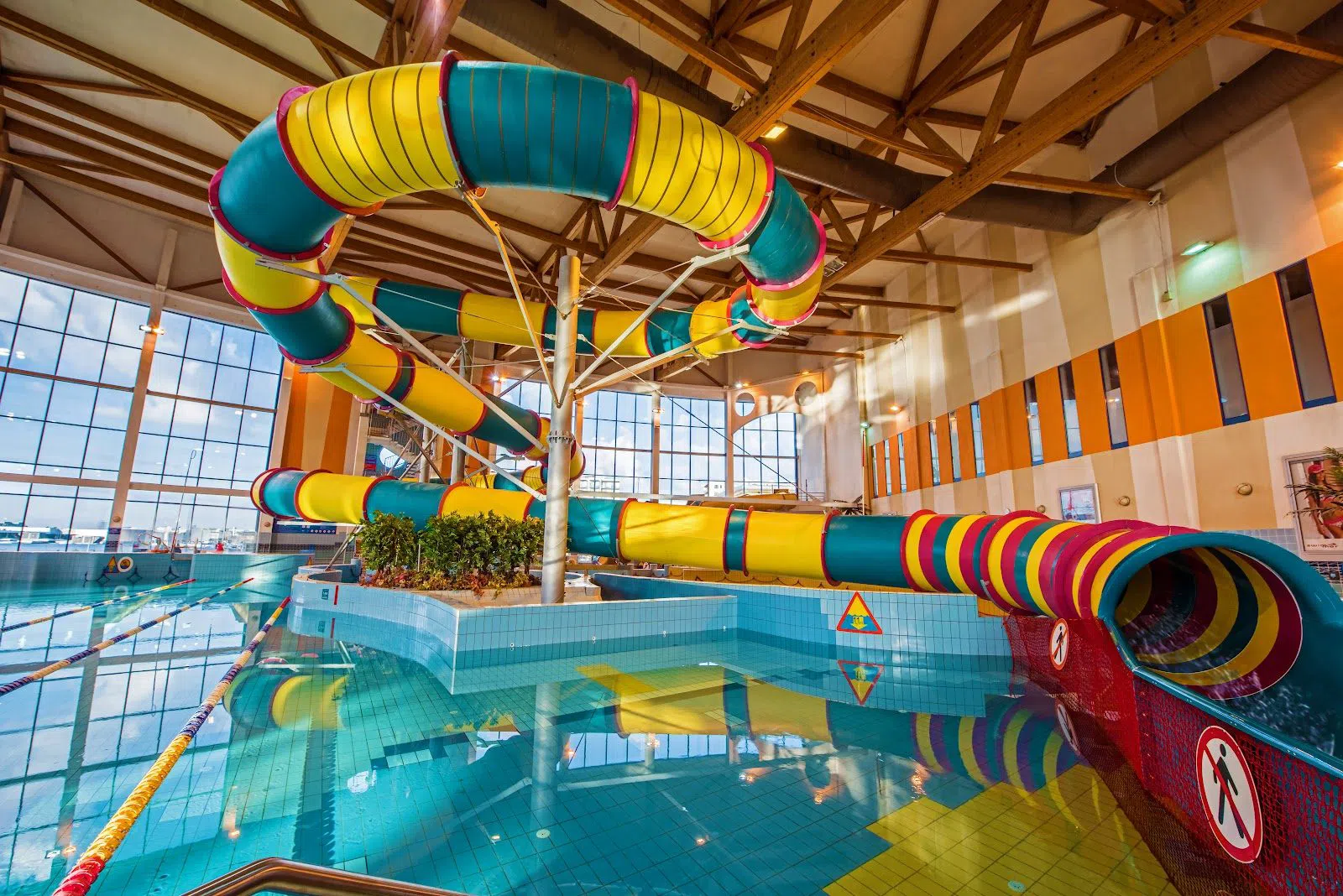
Park Wodny Kraków (north-east of the centre) is the rain-day and cold-snap answer, and the only entry here that works outside the June-to-September window at all. It is one of the largest indoor water parks in the country, open daily 08:00–22:00, ticketed by time with family and evening rates, and it will take any size of group without notice. In summer there is also an outdoor beach area, Stacja Parkowa, between the aquapark and the neighbouring hotel, which softens the fluorescent-lit indoor feeling considerably.
Ending the day on the boulevard
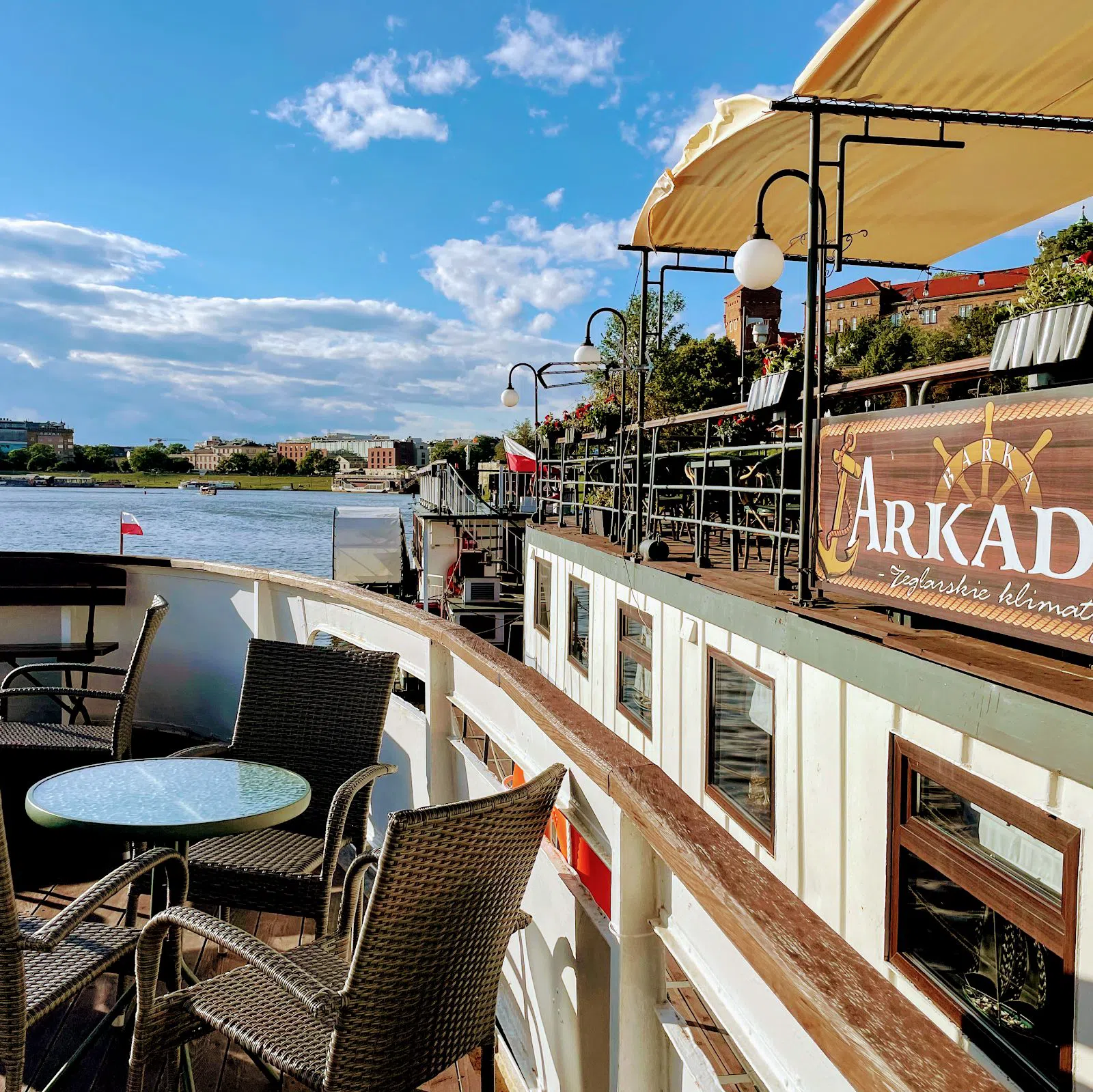
Barka Arkadia (moored on Bulwar Czerwieński) is a barge restaurant and bar on the same stretch of bank as the cruise landings, which makes it the obvious place to finish a river day without walking anywhere. It is open year round rather than being a summer pop-up, which is rare on this bank, and events are core business rather than a tolerated nuisance: corporate parties, anniversaries, stag and hen groups, and bookings that can be combined with a cruise. Prices are restaurant mains and normal bar rates, not the tier the location would let them charge. Couples get a quiet table midweek; a group of twenty should ring ahead and say so.
Getting there, paying and timing
Most of this is reachable on ordinary public transport. Zakrzówek is a walk or a short bus hop from the centre, Bagry is a tram ride from Podgórze, Przylasek Rusiecki sits at the far end of the Nowa Huta side of the city, and Kryspinów is on regular city buses despite feeling like a day trip. Only Chechło and, realistically, Cholerzyn want a car.
Carry cash. The free sites (Zakrzówek, Bagry, Przylasek Rusiecki, Chechło) have no ticketing, but their kiosks, ice cream stands and parking meters are happier with złoty in hand than with a card. Budget roughly: nothing for a day at Zakrzówek or Bagry beyond food; 20 zł a head plus parking at Kryspinów; 10 zł for the abbey with its museum; about 100 zł for the scheduled Tyniec cruise; 45 zł an hour for a paddleboard; from 35 zł an hour for the city cable.
On timing, three rules cover the summer. Hot weekends fill Zakrzówek's 600-person pontoon capacity before midday. The guarded seasons are short and dated (27 June to 31 August 2026 at Przylasek Rusiecki, 20 June to 31 August 2026 at Chechło) and outside them the lifeguard towers are empty. And the Tyniec cruise needs four passengers to sail, so a Tuesday in early June is a booking to confirm, not to assume. If you want the whole arc in one day, take the morning boat downstream, give the abbey its courtyard and its shop, paddle or sail back, and swim at Zakrzówek in the long evening light when the crowd has thinned.
For where to base yourself, the river-facing side of the centre puts both the boat landings and the quarry within a walk. Start with a Krakow hotel search, and the wider Krakow guide covers what to do with the days it rains.
Before you go
Can you swim in the Vistula in Krakow?
No. The river is not a bathing water in the city and you should not be swimming in it. The legal and sensible way to be on the Vistula is in a kayak or on a paddleboard. Kajaki Kraków run a 9 km downstream trip from Tyniec back into the city, and SUP Kultura rent boards from 45 zł an hour.
Do you need to book or pay for Park Zakrzówek?
No. It is free, unticketed and municipally lifeguarded, and parking on ul. Norymberska costs nothing. The catch is capacity: the floating platforms cap at 600 people and fill by late morning on hot days, so arrive early or split a large group into two arrivals.
How do you get from Krakow to Tyniec abbey?
By boat or by kayak. Krakowska Żegluga Pasażerska sail from the Wawel landing on Bulwar Czerwieński, about four and a half hours return with roughly 45 minutes ashore, around 100 zł a head. The route needs four passengers and is cancelled with 24 hours' notice if it does not fill. Kajaki Kraków shuttle groups of eight or more upstream and let you paddle the 9 km back in three to four hours.
When are Krakow's lake beaches lifeguarded in 2026?
The dated ones are precise: Przylasek Rusiecki is guarded 9:00-17:00 daily from 27 June to 31 August 2026, and Zalew Chechło 10:00-18:00 from 20 June to 31 August 2026. Kryspinów is guarded 10:00-18:00 on sunny days from June to August, with the grounds open 08:00-22:00. Outside those windows there is no lifeguard on the water.
Where can a large group swim in Krakow without a capacity limit?
Zalew Bagry in Podgórze is free, lifeguarded, explicitly not capacity-limited, and reachable by tram, with two supervised beaches on one lake. Przylasek Rusiecki also has no cap, though its parking does. Kryspinów has a paid gate, which means a group is simply ticketed in at 20 zł a head.