The Krakow issue
Krakow runs on trams, trains and a ten-minute walk
Trams come every five minutes, one train line serves both the airport and the salt mine, and the walk from the platform to the Main Square takes ten minutes: Krakow in 2026 is a city you can get around without a car.

By Rhys LlewellynKraków on foot — sights, neighbourhoods and the slow city
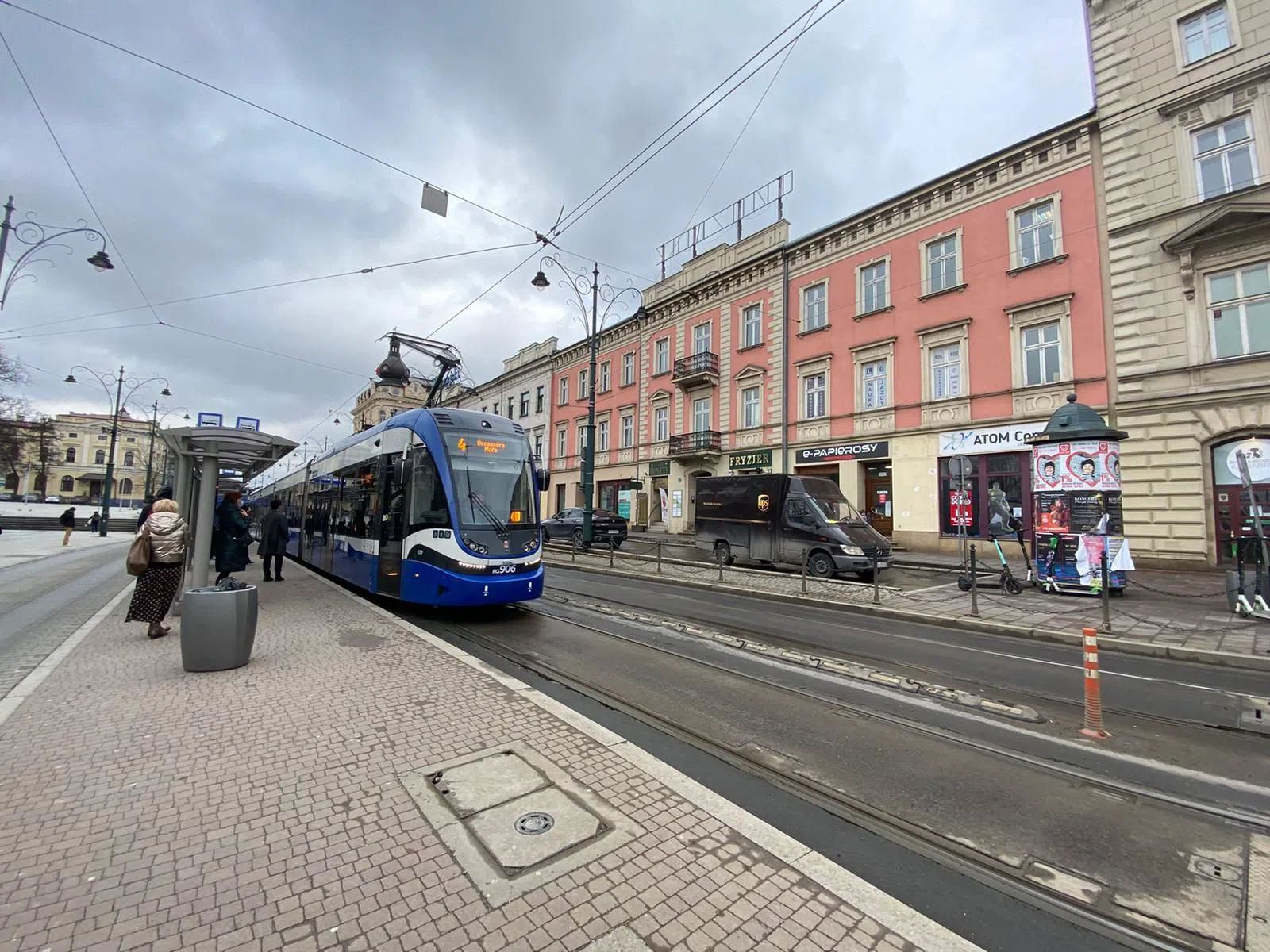
Krakow is a city you can cross for the price of a coffee. The trams run from before six in the morning until close to eleven at night, the airport sits twenty minutes down a train line whose city terminus is a ten-minute walk from the Main Square, and the medieval core is shut to cars in any case. Hiring a car here mostly buys you a parking problem.
The trams do most of the work
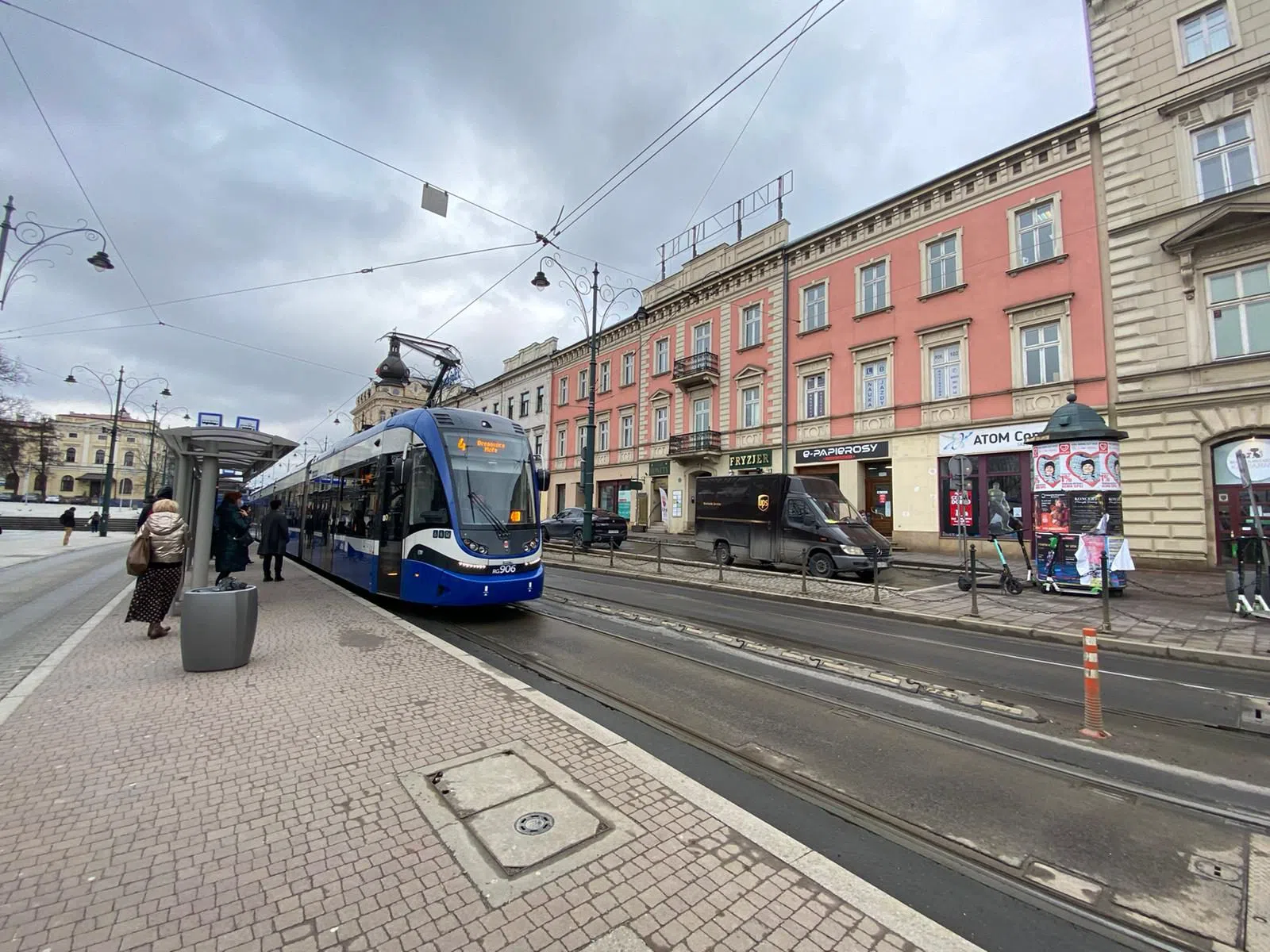
MPK Kraków (the citywide tram and bus network, every district) is the network everything else on this page connects to. Trams run roughly 05:00 to 23:00 at intervals of five to ten minutes, and the 600-series night buses cover the 23:00 to 04:00 gap, so there is no hour of the day with nothing moving. The city has run trams since 1882, when they were pulled by horses; the overhead wires went up in 1901, and the alignment through the centre has barely moved since.
Fares are sold by time rather than distance: 4 PLN buys 20 minutes, 6 PLN buys 60, 8 PLN buys 90. If you are making more than four or five hops in a day, the passes win outright: 17 PLN for 24 hours, 35 PLN for 48, 50 PLN for 72, 56 PLN for a week. Every passenger needs their own ticket and must validate it on board. There is no group fare and no family ticket, so a party of six is six tickets, bought and stamped six times.
The one genuine trap is zones. Zone I covers the entire city, which sounds like it covers everything, but the airport and the salt mine both sit outside it and need a Zone I+II ticket. Buying Zone I and riding to the airport is the standard visitor mistake and the inspectors know it.
If you are travelling as a group, keep off the trams between 07:00 and 09:00 and again between 15:00 and 17:00. They run standing-room only at those hours and six people with day bags will not board together.
Jakdojade (free journey planner and ticket app, works citywide) removes the zone problem entirely. It plans the route, then sells the exact ticket that route requires, which is a different and better thing from a generic ticket machine. One account can buy several tickets in one go for people travelling together, so nobody else in the party needs to install anything or hand over a card. Tickets are sold at face value, 4 to 50 PLN, with a small card fee on top. If you would rather not install an app at all, jakdojade.pl in a browser does the same job.
Plan your Krakow trip
Live prices from our booking partners.
Free cancellation on many rooms. We may earn a commission when you book.
Walk from the platform to the square first
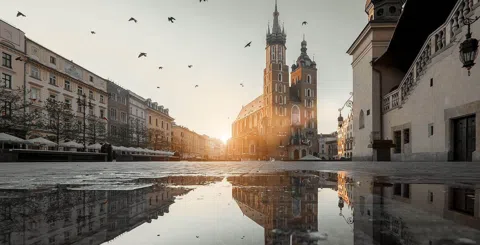
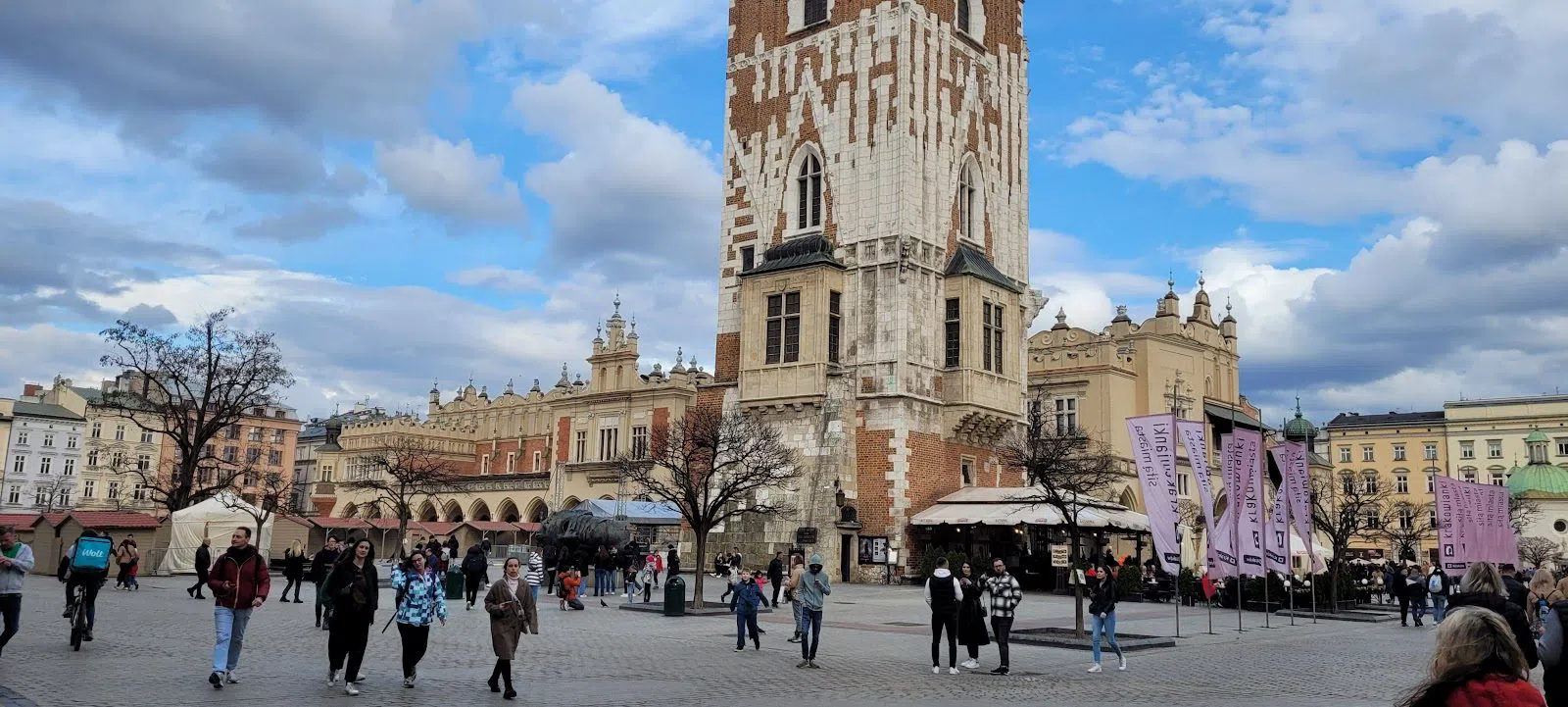
Before you buy any ticket at all, walk. Kraków Główny sits ten minutes from the Main Square on foot, and the route is the good one: out of the station concourse, through the underpass, past the round brick Barbican, in through St Florian's Gate and straight down Floriańska until the square opens out in front of you. It is the old royal approach to the city and it is still the best introduction to it.
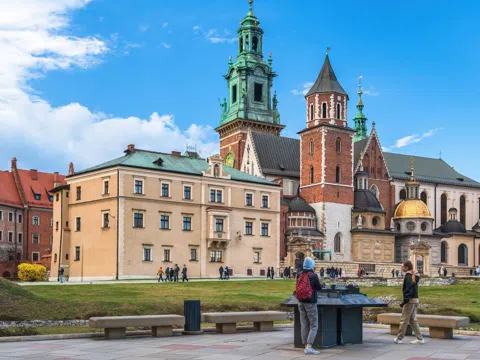
From the square, Grodzka runs south and delivers you to the foot of Wawel in about twelve minutes; carry on over Stradom and you are in Kazimierz inside twenty. That covers the three areas most visitors came for, on foot, without a single fare. The green ring you keep crossing is the Planty, laid out between 1822 and 1830 on the exact line of the medieval walls after they were pulled down, which is why it forms a closed loop and why it is a reliable way of knowing when you have left the old town.
If you are staying inside the Planty or in Kazimierz, you will use public transport for day trips and late nights and very little else. That should shape where you book: the Krakow hotel search is more useful to you than any transport pass if you get the location right first.
One train line covers the airport and the salt mine
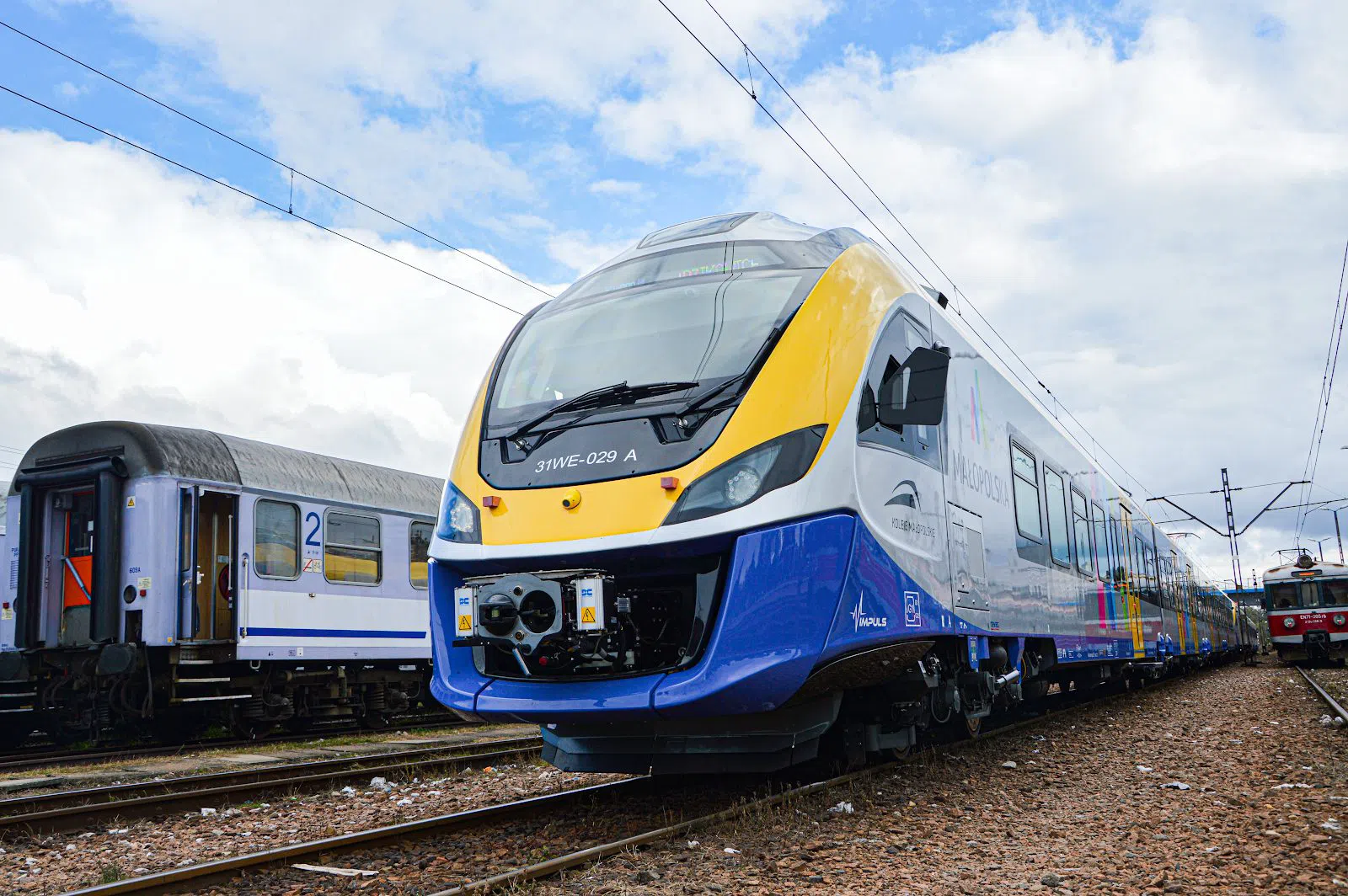
Koleje Małopolskie's SKA1 line (running through Kraków Główny) does more for a visitor here than any other single piece of infrastructure. It runs from Wieliczka Rynek-Kopalnia through Kraków Główny to the airport, which means the salt mine and the terminal are both a direct train with no changes and no need to understand the bus network at all.
The airport to Kraków Główny leg is 20 PLN. Wieliczka straight through to the airport is 24 PLN. There is also a 7 PLN add-on ticket valid for 70 minutes on city trams and buses, which is the neat way to handle the last mile from the station to your hotel without buying a second full fare. Buy on board from the machine, from the conductor, or in advance through KOLEO. There are no reservations and no practical seat limit, so a group simply boards.
For anyone arriving with luggage, the train has 138 or more seats per service and proper luggage space, which the airport coaches do not. Wieliczka has been mined for salt since the thirteenth century and went onto UNESCO's very first World Heritage list in 1978, so the mine is busy year-round; going out early on the train and booking your mine entry separately is the version of that day that works.
Everything that isn't a train leaves from behind the station
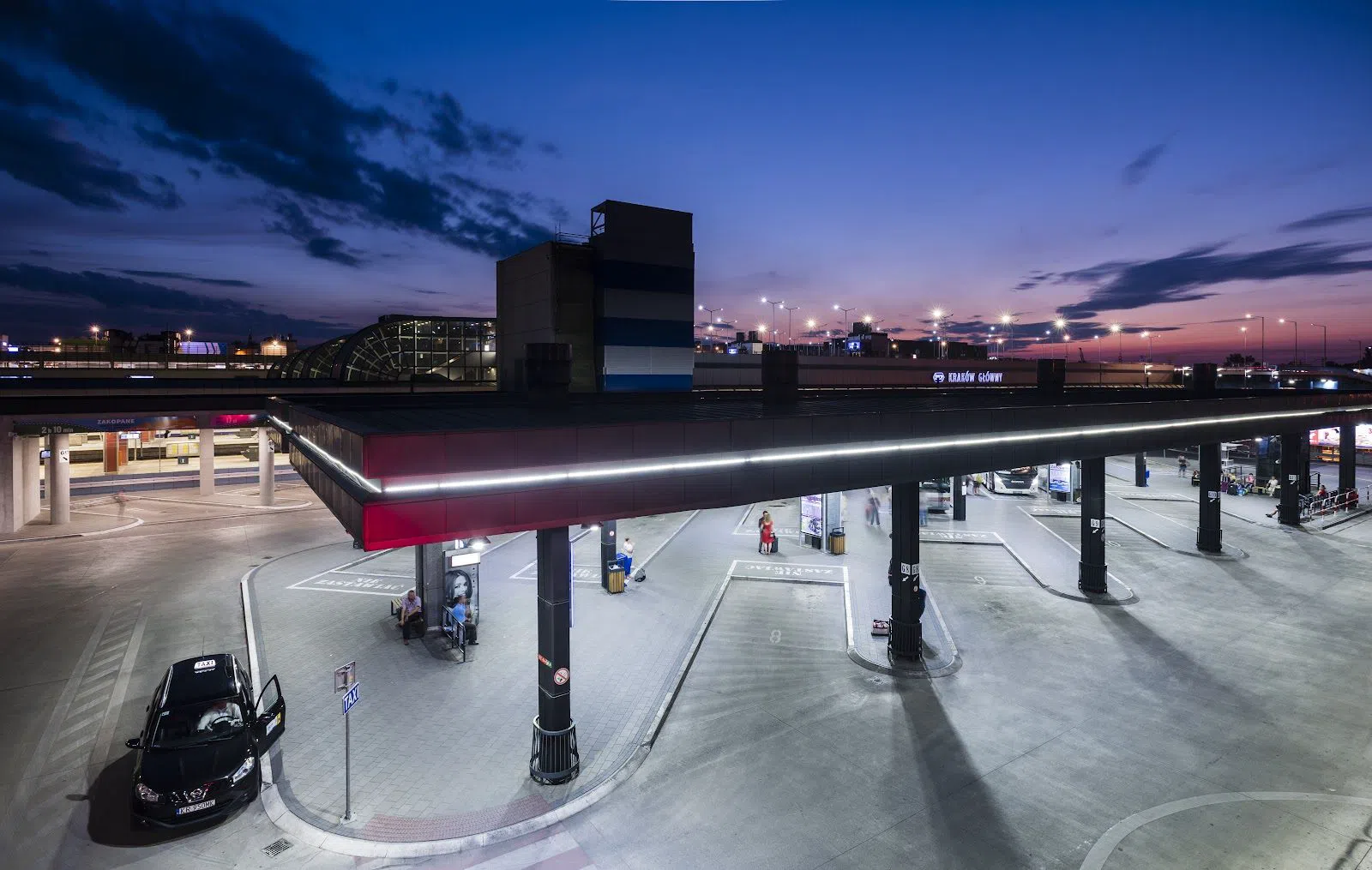
MDA Bus Station (Dworzec Autobusowy MDA, directly behind Kraków Główny) is where the day trips start. It is built for volume, with 38 departure stands, indoor waiting halls, toilets and paid left luggage, so a group killing two hours between a check-out and a departure can do it under cover. Using the station itself costs nothing. Trams 3, 19 and 50 and the 304 bus for the salt mine all stop within a couple of minutes' walk, and the whole complex sits on the far side of the tracks from the old town rather than across the city, which is not something you can say of most coach stations. Kraków Główny has been the city's main station since the 1840s and the bus terminal was simply tucked in behind it.
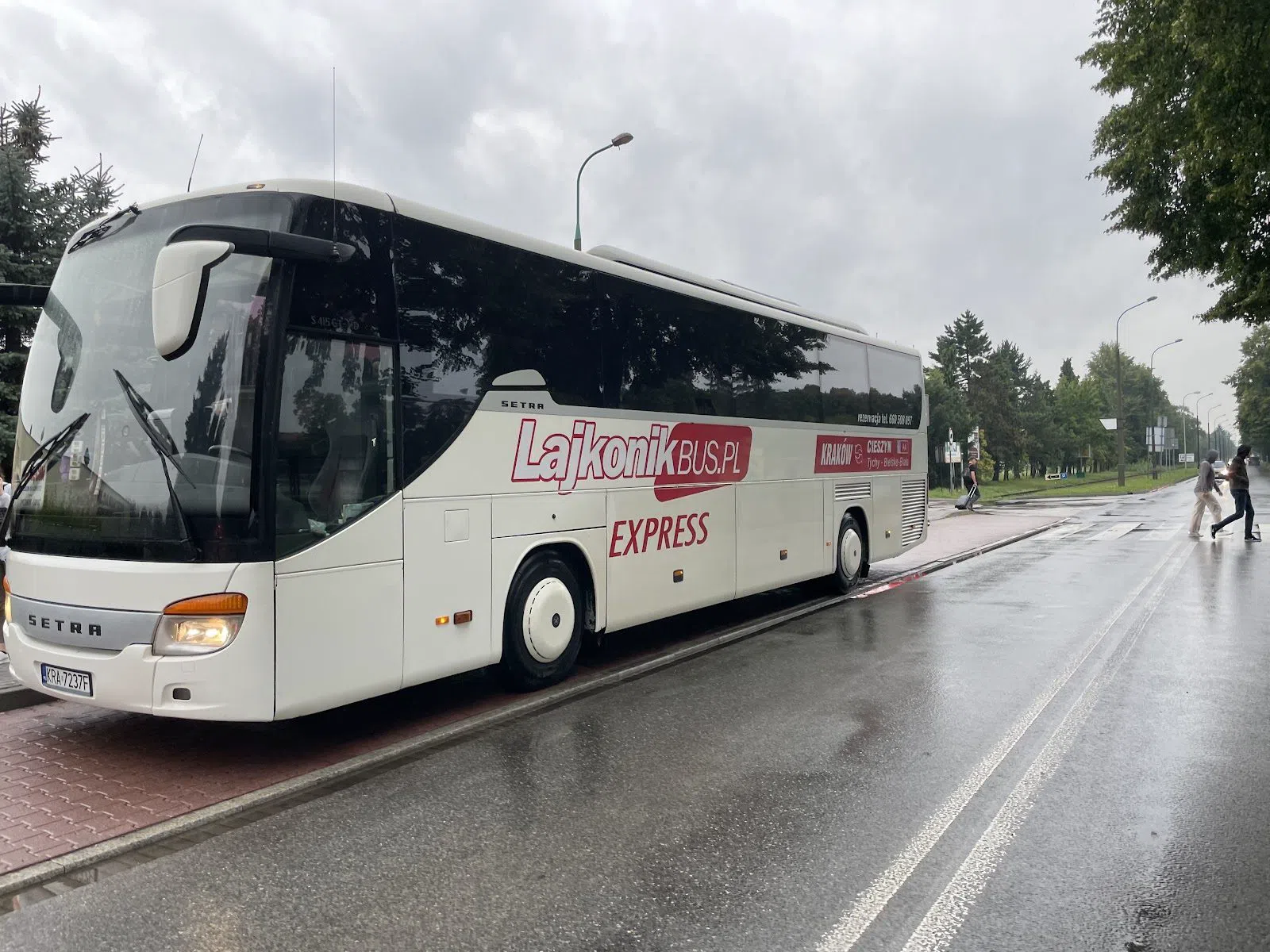
Lajkonik Bus (departing from MDA) runs the Memorial trip. It is 22 PLN one way, departures run roughly hourly between 07:00 and 15:00, and the trip takes about 90 minutes. Its advantage over the train is specific: it stops in the Memorial's own car park rather than in the town centre, which saves you the 25-minute walk at the other end. It is pay-on-board, which is fine for two people and a real risk for ten, since a full bus leaves you standing. Reserve ahead at moj-bus.pl if there are more than a few of you, and book your Memorial entry separately at visit.auschwitz.org, because the fare does not include it.
FlixBus (also from MDA, with some services direct from the airport) handles the mountains and the cross-border runs, with sixteen departures a day south towards the Tatras at 30 to 55 PLN booked online, plus coaches into the Czech Republic, Austria and Hungary. Book the seats together online and the group stays together. The caveat is the mountain road: the advertised 1h44 holds on a quiet weekday and not on a summer weekend, so budget two to two and a half hours.
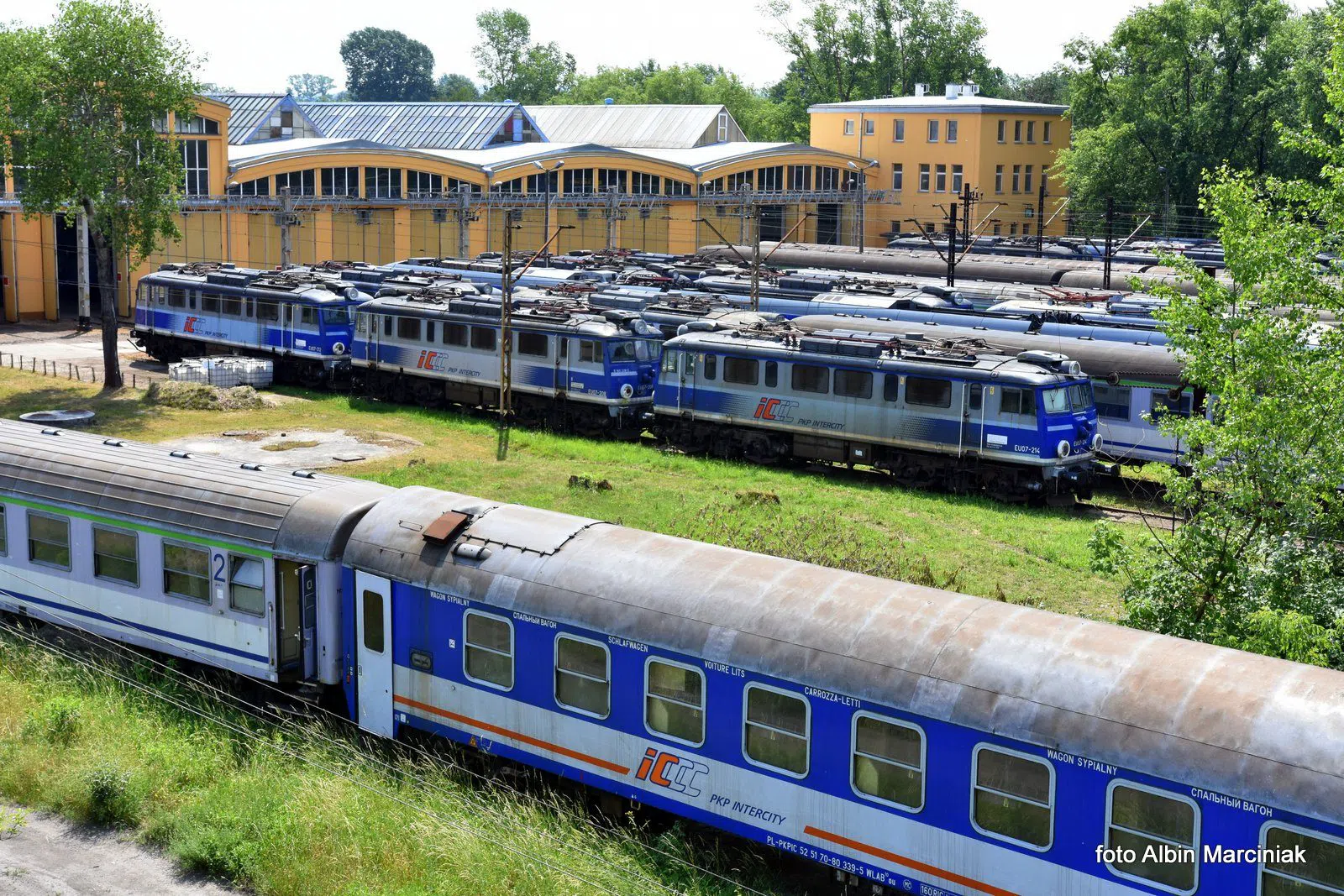
PKP Intercity (from Kraków Główny) covers the fast domestic rail. Second class to the capital runs from 49 PLN booked in advance to around 199 PLN if you walk up on the day, and the quickest service does it in 2h20. Fares are dynamic, so booking a week out roughly halves the price, the single biggest saving on this page. Seats are reserved on the fast services, so buy the whole group in one transaction or you will be scattered down five carriages.
Cars for the hours after the trams stop
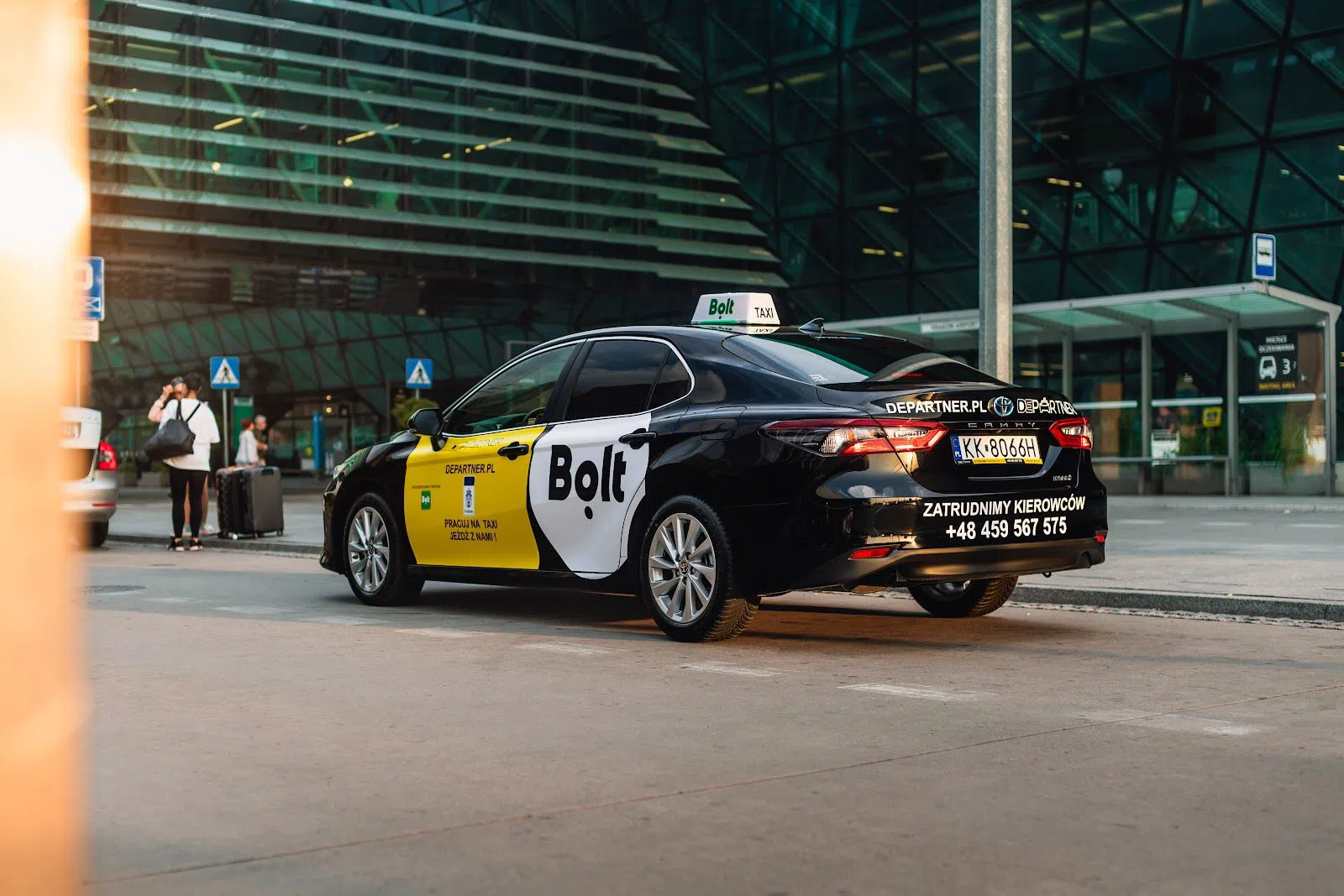
Bolt (app-based, citywide, with a marked pickup bay at the airport) is the default late-night fallback. Reckon on 60 to 90 PLN from the airport to the centre and 15 to 30 PLN for most rides inside the city. The fare is fixed in the app before you accept, which sidesteps the meter arguments that catch people flagging cars down on the edge of the Main Square. That square has been a trading floor since the town charter of 1257 laid out its grid; the haggling on it now is mostly over fares.
Uber (same coverage) is worth having installed alongside Bolt purely as a price check, since surge pricing hits the two apps at different moments. Rates in the city are similar. Since the 2024 law change every driver in Poland has held a city-issued taxi licence, so both are properly regulated services rather than a grey market.
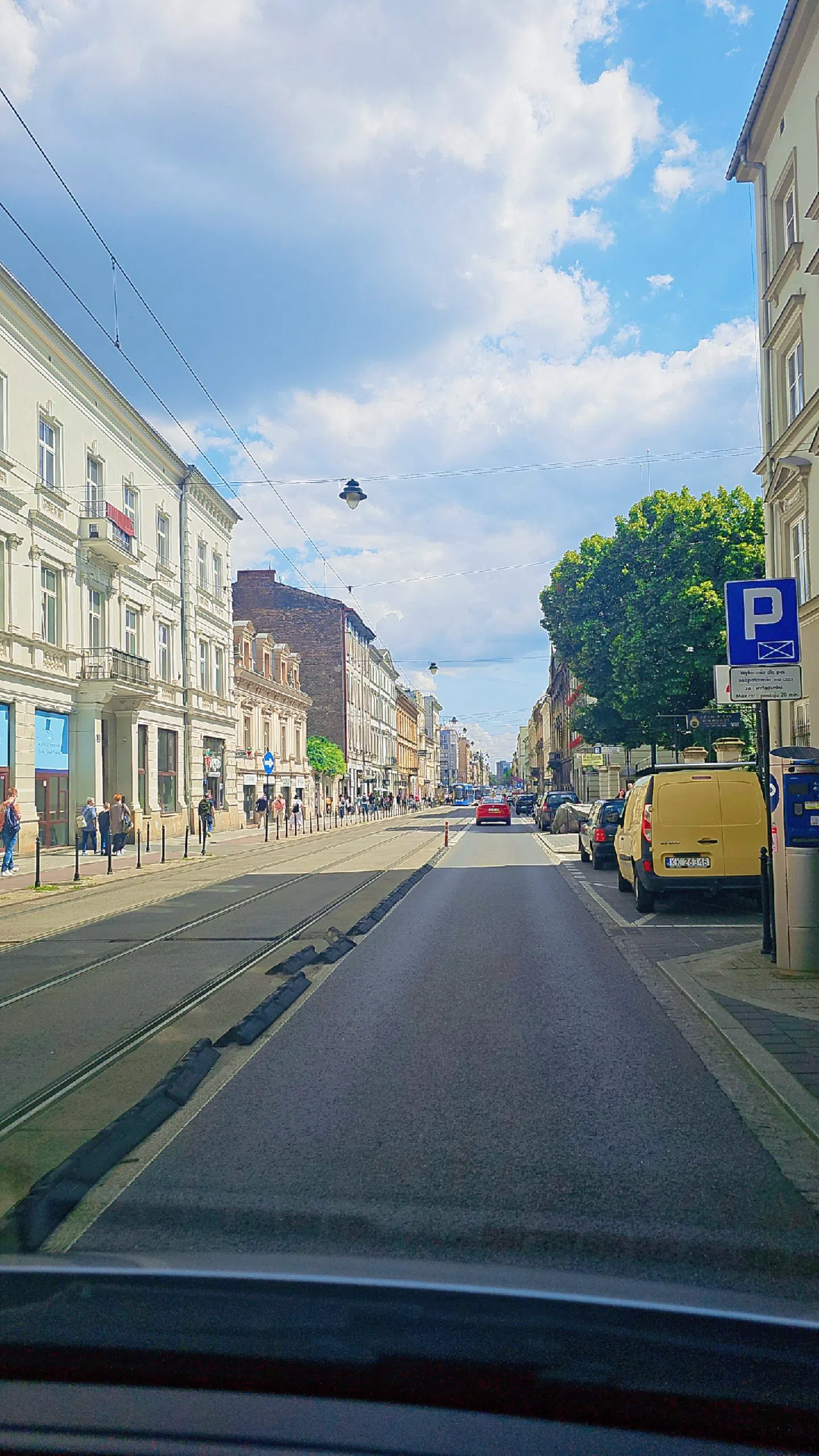
Both cap out at four passengers in a standard car. A party of six needs two cars or Bolt's XL tier; booking one vehicle and hoping for a van does not work here.
Scooters, a bike shop and one boat
Lime (centre and outward) operates year-round under a city agreement, and the pricing has a geography to it: 3 PLN to unlock plus 0.99 PLN per minute inside the second ring road, free unlock and 0.79 PLN per minute outside it. The agreement also caps scooter numbers in the centre and requires you to end every ride at one of 163 designated Mobility Points. Finish anywhere else and the app either keeps charging or fines you, which is the detail people miss. One rider per scooter, no doubling, so a group unlocks one each and hopes availability holds.
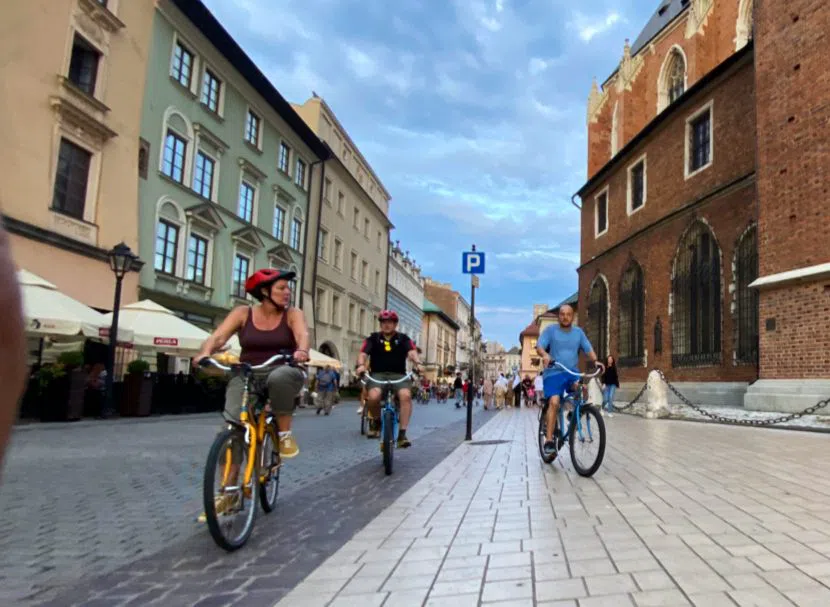
Cruising Krakow (small-group guided rides and rentals) is the realistic way to get on a bike here. Krakow no longer has a public bike scheme a visitor can use. Wavelo folded in 2019, and the municipal LajkBike that replaced it is a one-to-six-month subscription aimed at commuters rather than a docked system you can grab for an afternoon. Guided rides in small groups are the shop's model, with English- and Dutch-speaking guides, and tandems and e-bikes available if the party's fitness is mixed. Rates are quoted at booking rather than published.
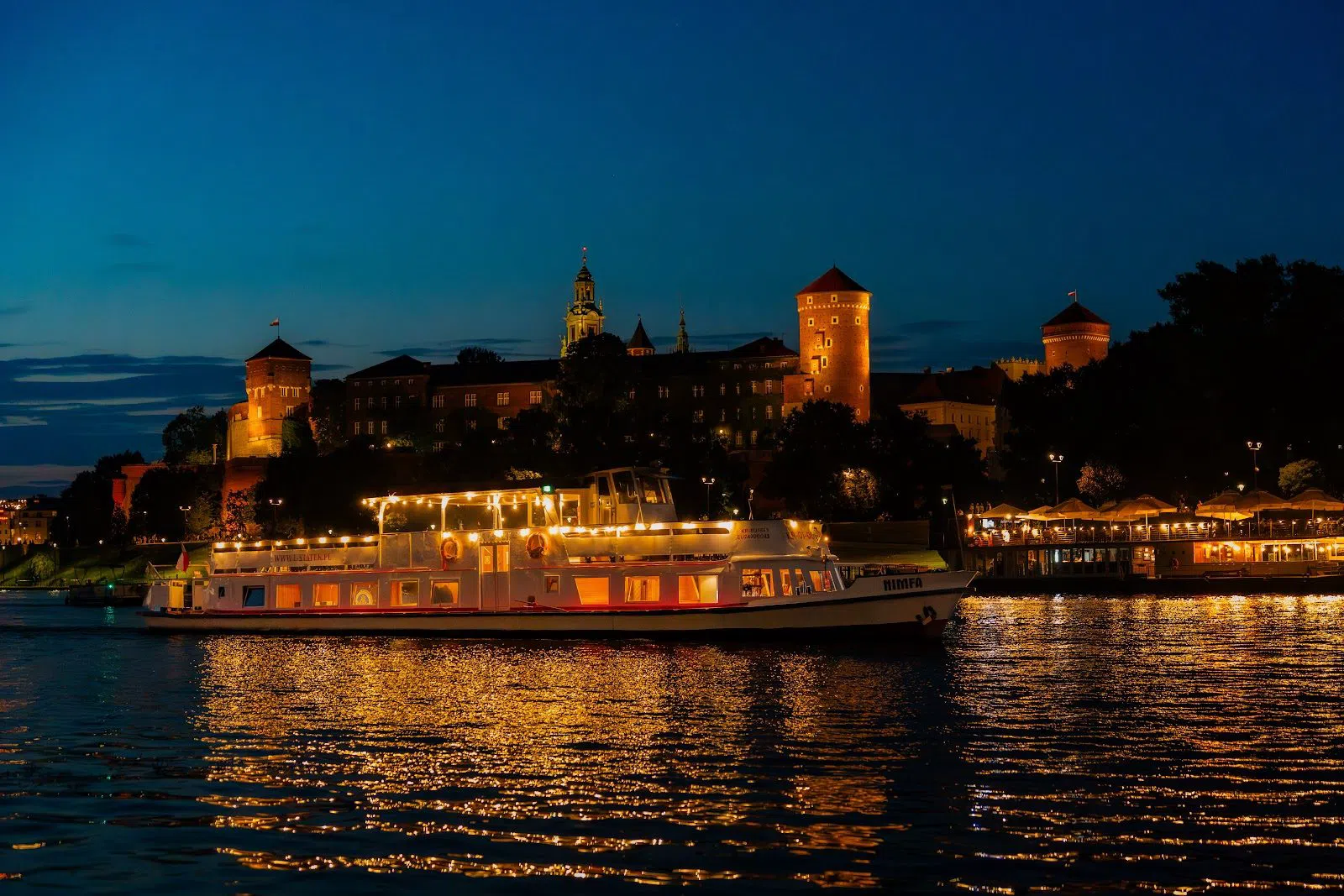
Krakowska Żegluga Pasażerska (sailing from directly under Wawel) is the largest operator on the navigable 20 km of the Vistula and the strongest group option on this page: vessels take anything from 1 to 200 people, and private catamaran charters are routine. The 30-minute Wawel cruise is 49 PLN, a city cruise 65 to 75 PLN. The one to think of as transport rather than sightseeing is the Tyniec run at 150 to 160 PLN, which lands you at the Benedictine abbey founded there in the eleventh century, with about 45 minutes ashore. That is four to five hours round trip for three quarters of an hour at the abbey.
Passes and somewhere to ask in English
KrakowCard (sold citywide and online) starts at around 36 USD for one day, with the three-day version including transport at roughly 60 EUR. It is priced per person, with no group rate, so the arithmetic is simply how many museums each traveller will genuinely enter. The transport half is the part that earns its keep for readers of this page: unlimited trams and buses, including the airport runs and the trip out to the salt mine. Check which version you are buying, because the cheaper three-day digital pass leaves transport out entirely.
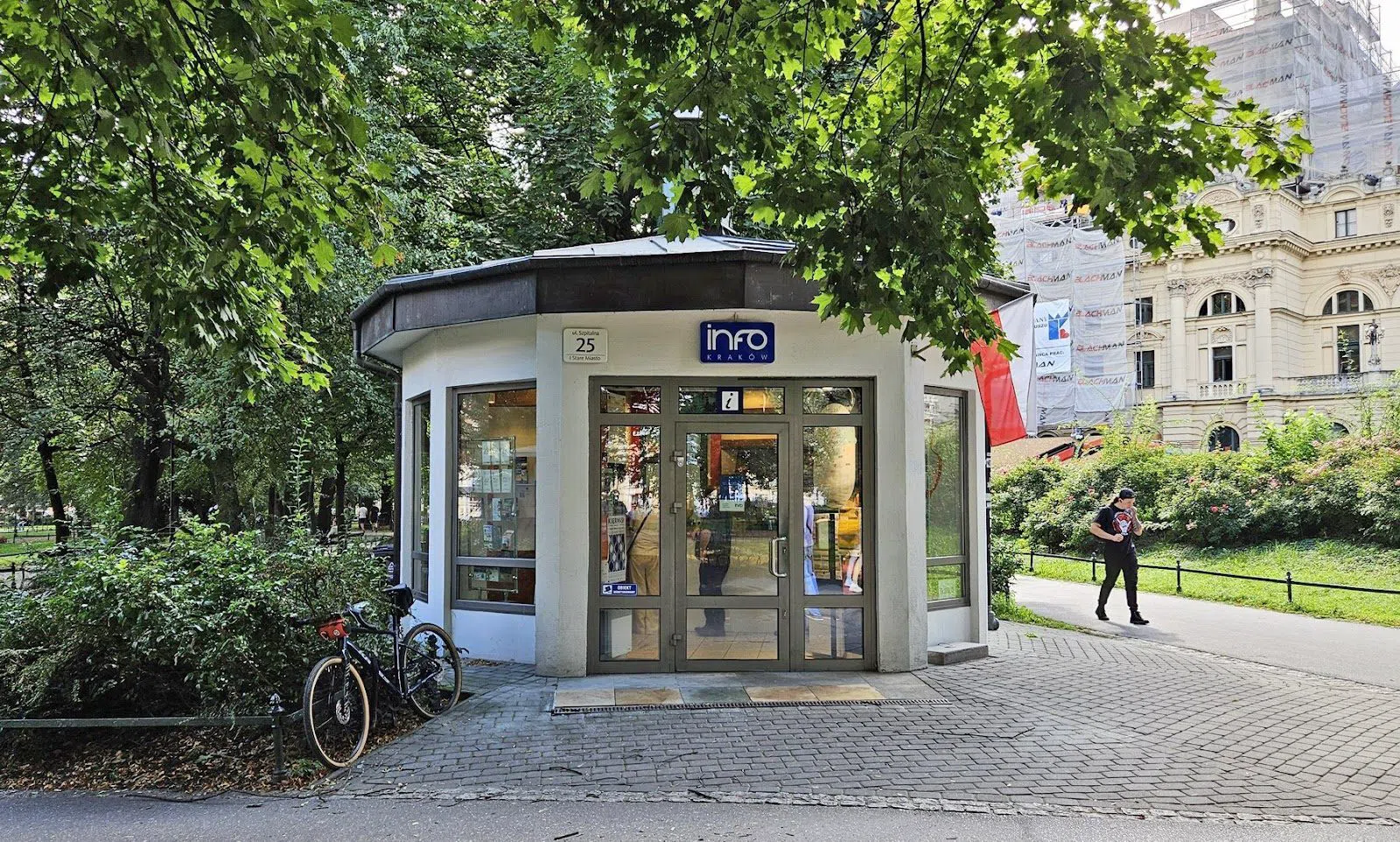
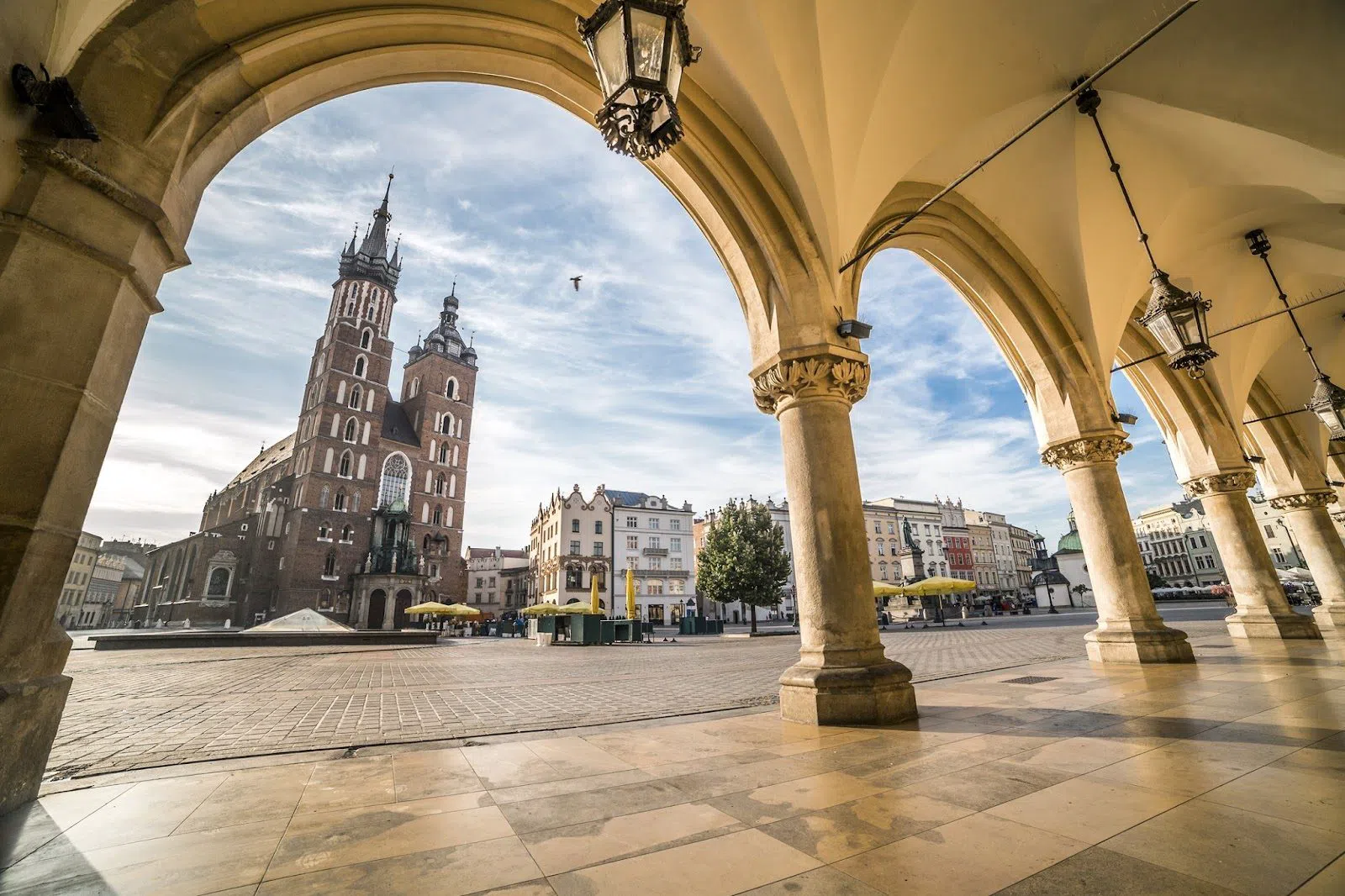
InfoKraków (counters at Sukiennice on the Main Square, Szpitalna 25, Józefa 7 in Kazimierz, Zgody 7 in Podgórze, and the airport at Medweckiego 1) is the municipal network, not a commercial tour desk, and it sells cards, tickets and tours at face value. Asking costs nothing. It is the reliable place to sort a KrakowCard or a paper ticket in English when an app refuses a foreign card, and it is where group excursions and Melex electric-car tours get booked. The Józefa 7 counter sits in what was a separate royal town from 1335 until 1800. Kazimierz only became part of Krakow under Austrian administration, which is why its street grid never lines up with the old town's.
Practical notes
Transport. Buy a 24-hour MPK pass at 17 PLN on any day you plan more than five rides; below that, singles are cheaper. Remember Zone I+II for the airport and the salt mine. Validate every ticket on board, because an unvalidated ticket counts as no ticket.
Cash. Cards work almost everywhere, including on the SKA1 machines and in the apps, but carry 50 to 100 PLN in notes for the Lajkonik Bus and for smaller counters. Prices here are in złoty; euro is quoted only on the KrakowCard's own site.
Timing. Trams thin out after 23:00 and the night buses run hourly, so the last useful tram matters more than the first. Avoid moving groups at 07:00 to 09:00 and 15:00 to 17:00. Book PKP Intercity a week ahead and the fare roughly halves.
Budget. A realistic four-day transport spend, staying in or near the old town: 35 PLN for a 48-hour pass, 40 PLN for the airport train return, 22 PLN each way on the Memorial coach, and one late taxi at around 25 PLN. That is under 150 PLN a head for the week's movement. Pair it with the Krakow guide when you are deciding which districts to base yourself in, because in this city the walking route you inherit from your hotel does more for the trip than any pass.
Before you go
Do I need to speak Polish to use Krakow's public transport?
No. Jakdojade works in English, in the app or at jakdojade.pl in a browser, and it sells the exact ticket your route needs instead of asking you to pick a zone and a duration. Ticket machines offer English too, and if a card is refused, the InfoKraków counters at Sukiennice, Szpitalna 25, Józefa 7, Zgody 7 and the airport sell paper tickets at face value and answer questions in English, free of charge.
What is the cheapest way from Krakow Airport to the centre?
The SKA1 train, run by Koleje Małopolskie, at 20 PLN to Kraków Główny, which is a ten-minute walk from the Main Square. Add the 7 PLN ticket, valid for 70 minutes on city trams and buses, if your hotel is further out. Bolt or Uber cost 60 to 90 PLN for the same trip, which is worth it only late at night or when heavy luggage has to go in two cars.
How do I reach the Wieliczka salt mine without a car?
The SKA1 line runs to Wieliczka Rynek-Kopalnia without a change, and the same train carries on to the airport for 24 PLN if you are going straight there. The 304 bus from beside MDA also serves the mine. On MPK tickets the mine sits outside Zone I, so you need a Zone I+II ticket; the transport version of the KrakowCard covers the trip.
Which MPK ticket should I buy for a day of sightseeing?
If you expect more than four or five journeys, the 24-hour pass at 17 PLN is the better buy; 48 hours is 35 PLN, 72 hours 50 PLN and a week 56 PLN. Below that, singles priced by time work out cheaper: 4 PLN for 20 minutes, 6 PLN for 60, 8 PLN for 90. Every passenger needs their own ticket and must validate it on board.
Can a group of six or more travel together easily?
On trams and the SKA1 train, yes, with no reservation needed and a ticket each, though large groups should avoid 07:00 to 09:00 and 15:00 to 17:00, when trams are standing-room only. On PKP Intercity, book the whole party in one transaction because seats are reserved. On the Lajkonik Bus, reserve at moj-bus.pl rather than paying on board. Ride-hailing caps at four per car, and Krakowska Żegluga Pasażerska takes 1 to 200 people.