The Krakow issue
Climbing Krakow's Four Mounds for Sunrise and Sunset
Four earth mounds ring Krakow, and only one is open at the hour when the light is worth having. Here is which mound to climb, when, and where to stand instead when the gate is shut.

By Rhys LlewellynKraków on foot — sights, neighbourhoods and the slow city
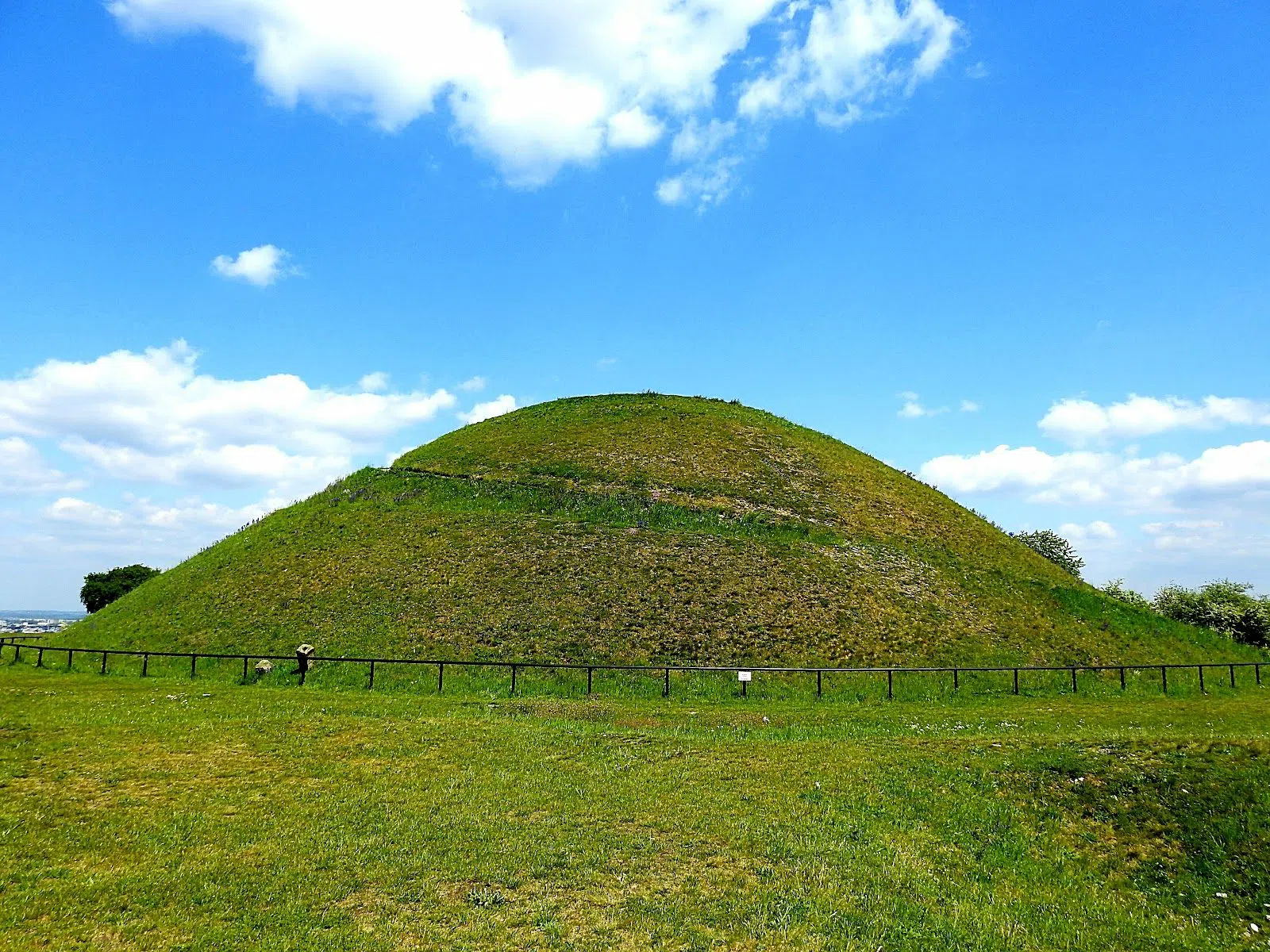
The oldest built thing in Krakow is not the castle or the cathedral but a cone of packed earth on the south bank of the Vistula, and nobody will stop you walking up it at four in the morning. Four mounds ring the city, two prehistoric and two raised as monuments within the last two centuries, and between them they face nearly every direction the light can arrive from. What follows is which mound works at which end of the day, which ones keep hours and which keep none, and where to stand when the cloud sits low and the climb would be wasted.
The mounds that never close
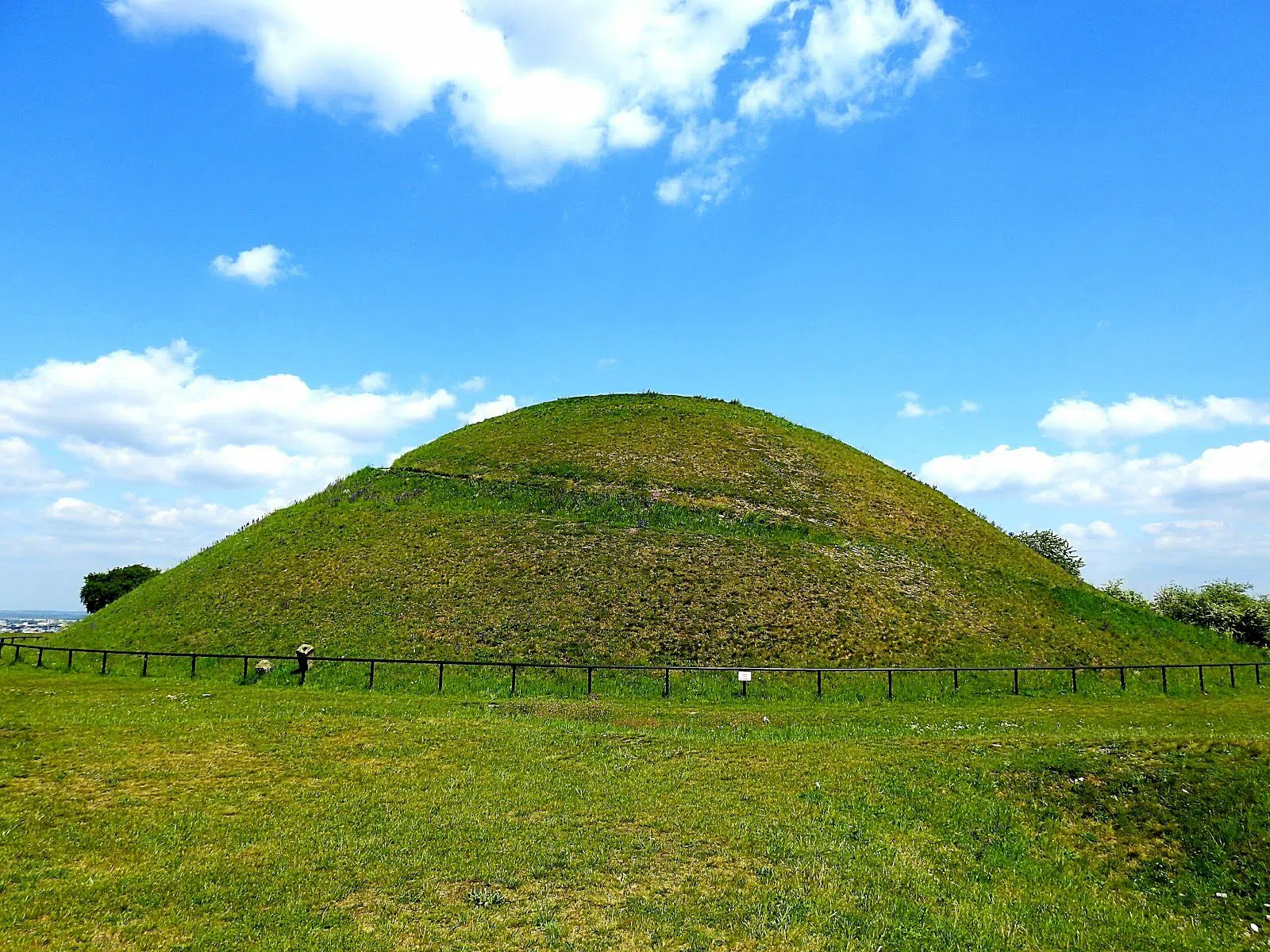
Krakus Mound (Kopiec Krakusa, Podgórze) is the one to learn first, because it is the only Krakow viewpoint with no closing time at all. There is no gate, no kiosk, no attendant and no fee, so a group of any size can walk up. The summit is a small platform, though, and a party over about fifteen ends up strung out down the slope rather than standing together. That openness makes it the one mound that reliably serves both a sunrise and a midsummer sunset, when the sun is still up long after every ticketed viewpoint in the city has locked up for the night. Archaeologists have opened it more than once without settling its age, which is part of why Krakow treats it as the city's oldest structure and attaches it to Krak, the founder in the legend. The path is bare earth and grass, and after rain or a frost it turns slippery enough to matter: trainers with no tread will have you coming down on your backside.
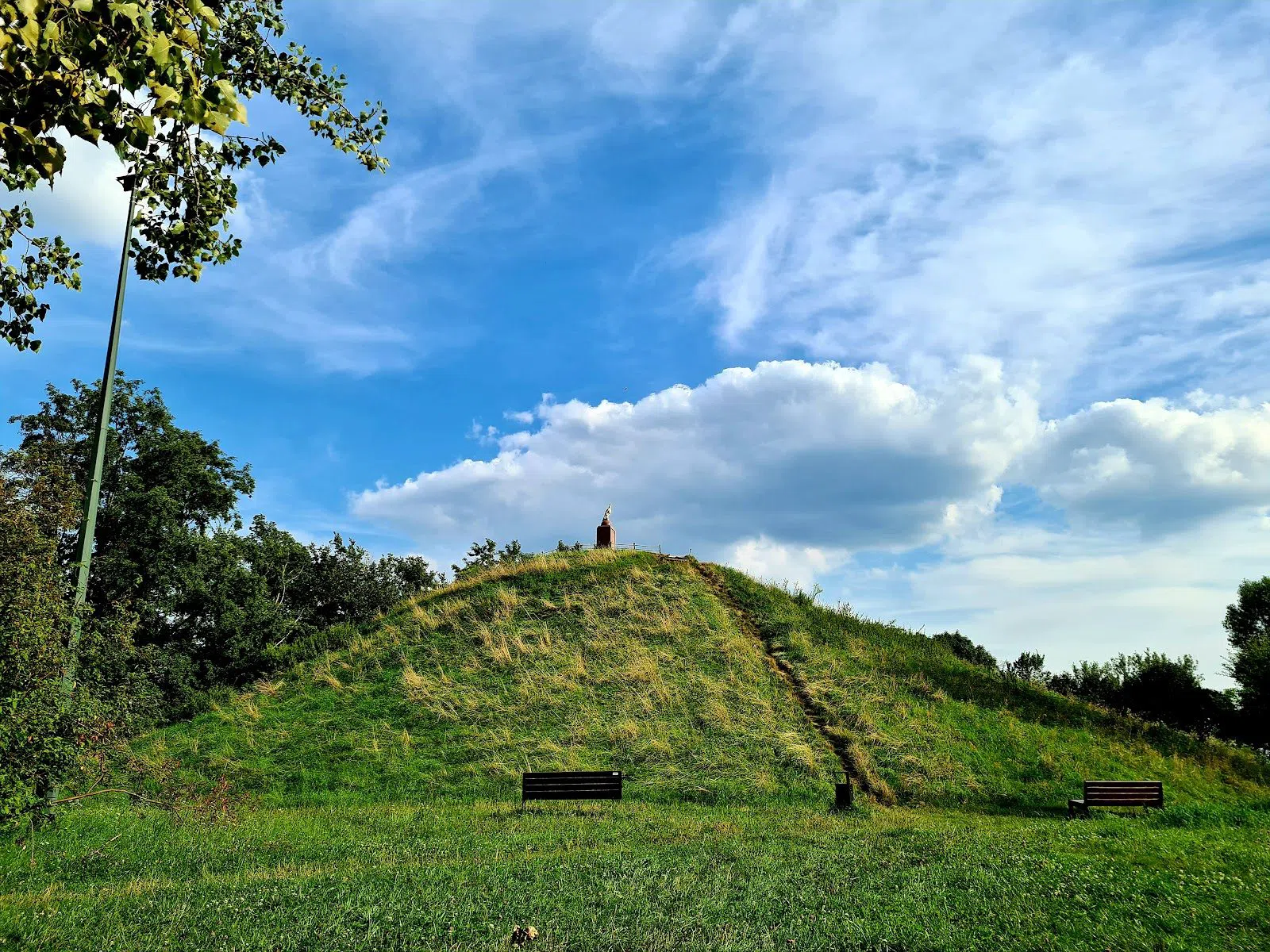
Wanda Mound (Kopiec Wandy, Nowa Huta) is the quietest and least visited of the four, and it shows a completely different city, industrial Krakow, chimneys and steel, rather than the Old Town skyline. It is free and unfenced, with no gate or ticket point at any hour, and you can reach it on foot, by bike or by tram from Aleja Solidarności. Its outlook faces east, which makes it the better of the two prehistoric mounds for sunrise, with the sun coming up over the flats rather than behind your shoulder. The legend pairs it with Wanda, Krak's daughter, and it stands near the old village of Mogiła and its Cistercian abbey, founded in the thirteenth century and swallowed by Nowa Huta in the twentieth. The approach is scrappier than at the other mounds, the signage and access paths are still unfinished, and the last stretch feels less like a monument than a field.
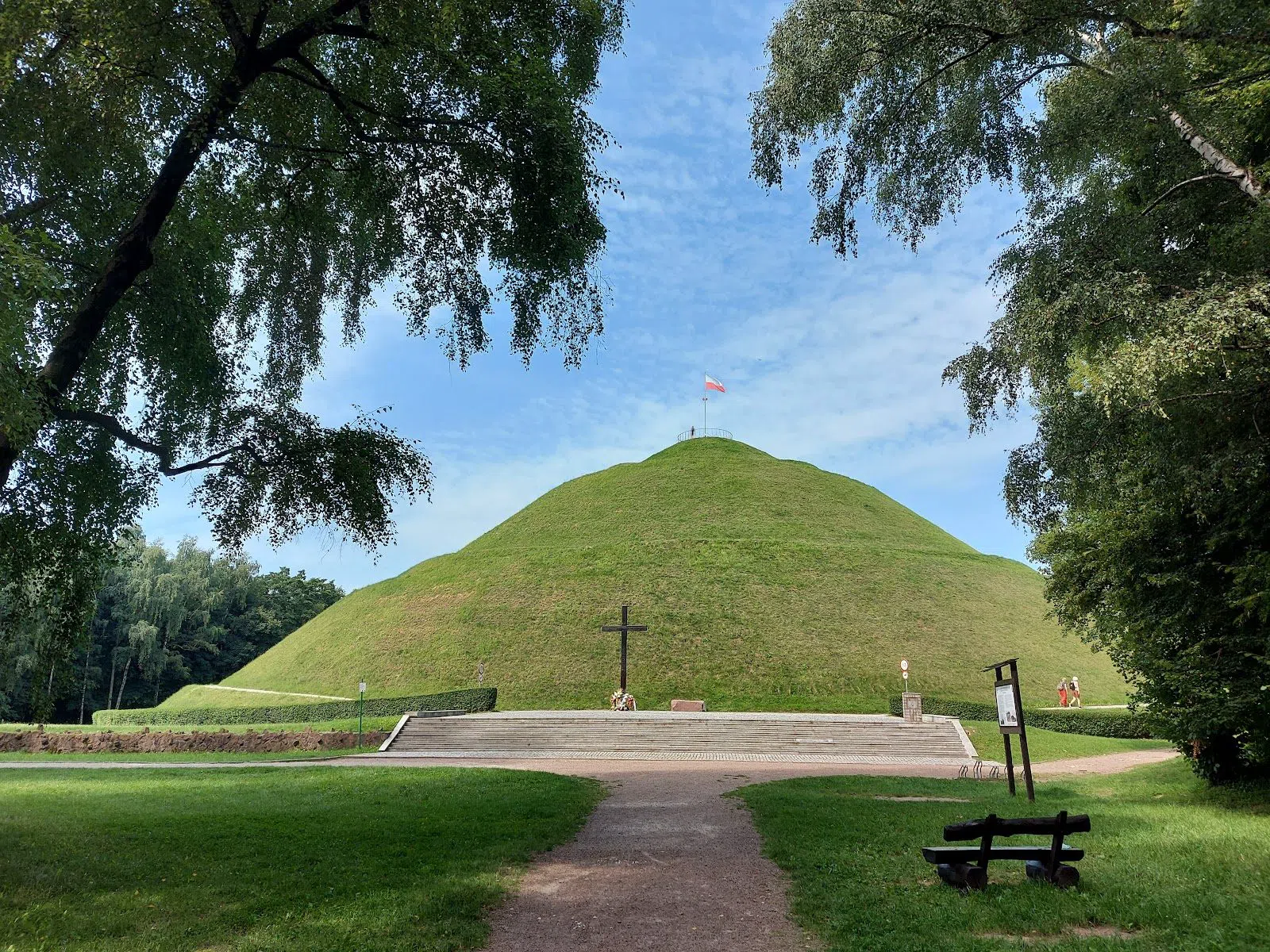
Piłsudski Mound (Kopiec Piłsudskiego, on Sowiniec in the Wolski Forest above Zwierzyniec) is the highest of the four and the only one that shows you the Tatras. The panorama sharpens for a short window just after sunrise on clear cold mornings, which is a narrow but real reason to set an alarm in late autumn or winter. It is free and open round the clock, and the wide forest approach paths suit a walking group, but there is no shelter, no lighting and no facilities on the hill at all. It is also a proper 30 to 40 minute forest walk from the nearest bus stop by the zoo, uphill, on paths that go dark quickly under the trees. Take a torch if there is any chance you are coming down after sunset. The mound was raised in the 1930s from soil carried in from battlefields, which is why it feels less like a hill and more like a deliberate object standing in a wood.
Plan your Krakow trip
Live prices from our booking partners.
Free cancellation on many rooms. We may earn a commission when you book.
The mound with a ticket desk
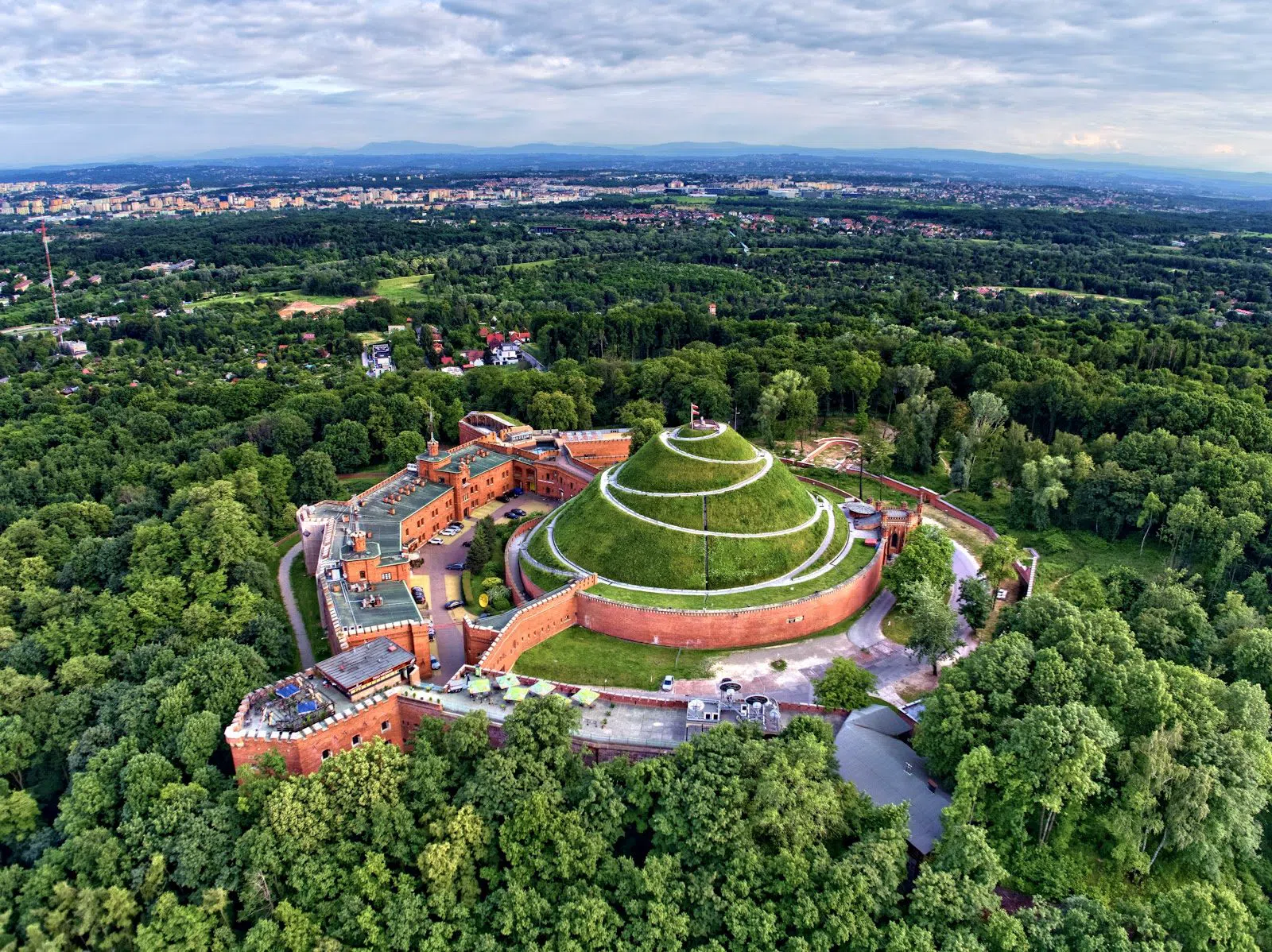
Kościuszko Mound (Kopiec Kościuszki, Zwierzyniec) gives the best-engineered view of the four, with a proper spiral path, a parapet and a museum in the Austrian fort wrapped around its base, and it is the only mound where you can learn something indoors before you climb. It also has the hours problem. It shuts at 19:00 in high summer and at 15:00 from late October, so it almost never coincides with actual sunset; if you have come to Krakow specifically to watch the sun go down from a mound, this is not the one. Tickets are sold on site only, cash or card, at the kiosk by the car park, and cost roughly 22 to 30 zł per adult, with a verified group rate of 22 zł per person for parties of ten or more and family tickets in the 50 to 90 zł band. Guided tours are bookable in advance, and groups are handled properly here in a way they are not on the free mounds. The mound was raised between 1820 and 1823 by public subscription, ordinary citizens carting earth, and the fort came later when the Austrians decided a patriotic hill was also a good gun platform. If you want the height and the sunset in the same evening, the answer sits just below: the rooftop Panorama Cafe at the Restauracja pod Kopcem keeps a terrace open from May to September and covers exactly the gap the mound's closing time leaves.
Water, meadow and river when you want the light without the climb
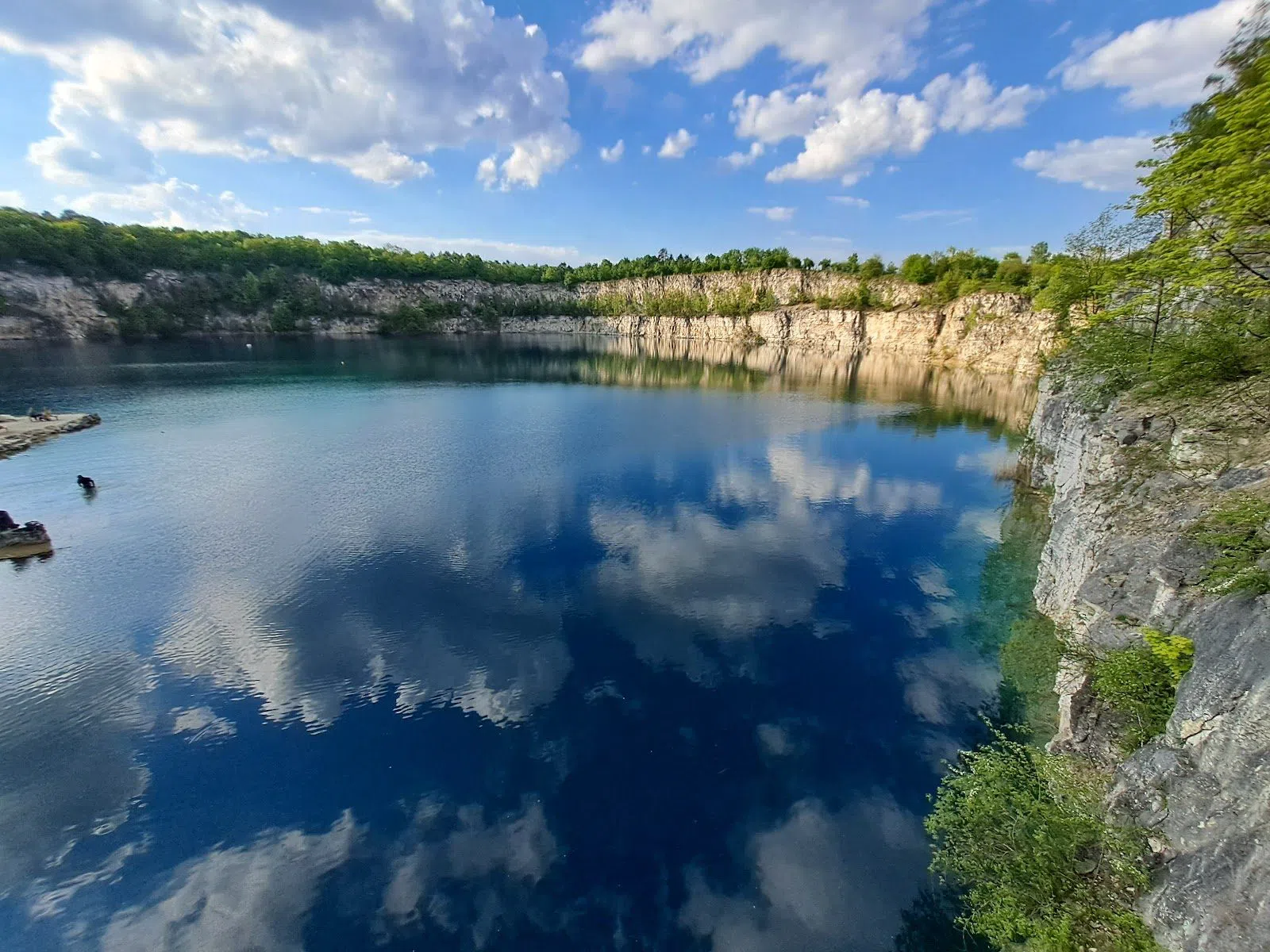
Zakrzówek Park (Dębniki) is a flooded limestone quarry, and the clifftop viewpoints along its northern edge catch low light on the white rock and the water at once, one of the few places in the city where the stone does as much work as the sky. The park and bathing area are both free. The floating pontoons are capped at 300 people at a time, so a large group should stay on the clifftop paths rather than trying to get everyone onto the decks. The bathing area runs to 30 September, Monday 14:00 to 19:00 and Tuesday to Sunday 08:00 to 19:00, while the surrounding paths and viewpoints stay open well beyond that. Swimming outside the marked area here is dangerous: the water is deep, cold below the surface and walled by rock. The quarry fed the Solvay works, and the young Karol Wojtyła was among the wartime labourers who cut stone out of it before it filled.
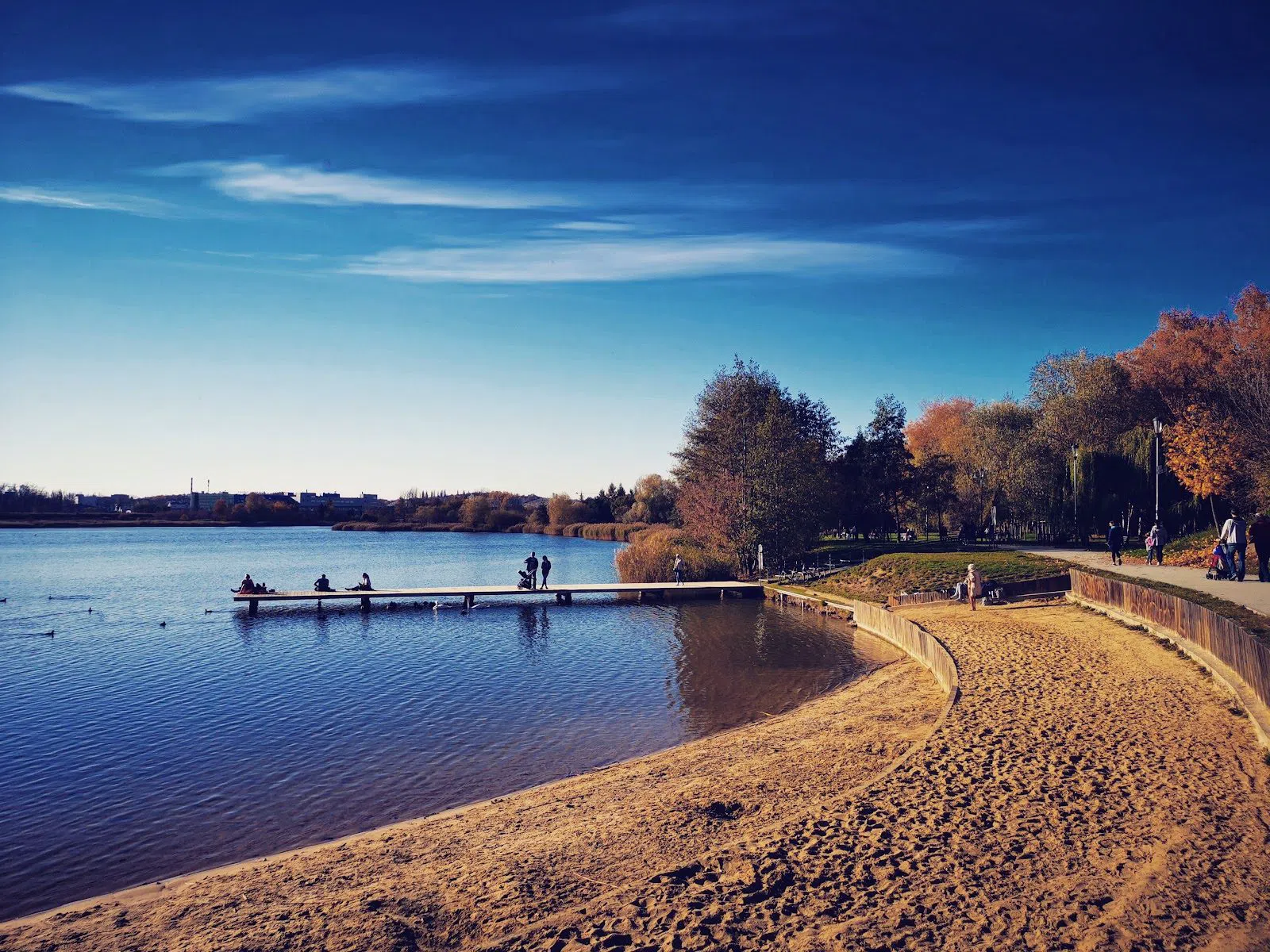
Bagry Lagoon (Zalew Bagry, Płaszów in Podgórze) is almost entirely a local spot, which is why it stays calm at first light. It is a worked-out gravel pit that filled with groundwater, and its open, east-facing water makes it a better sunrise than sunset target. Entry is free with no cap on numbers, and while the supervised beach runs 10:00 to 18:00 in the summer holidays, the open banks and the park around the lake are accessible whenever you turn up. Buses 127 and 427 from Podgórze SKA station stop by the beach, which makes it one of the easier pre-dawn targets to reach without a car.
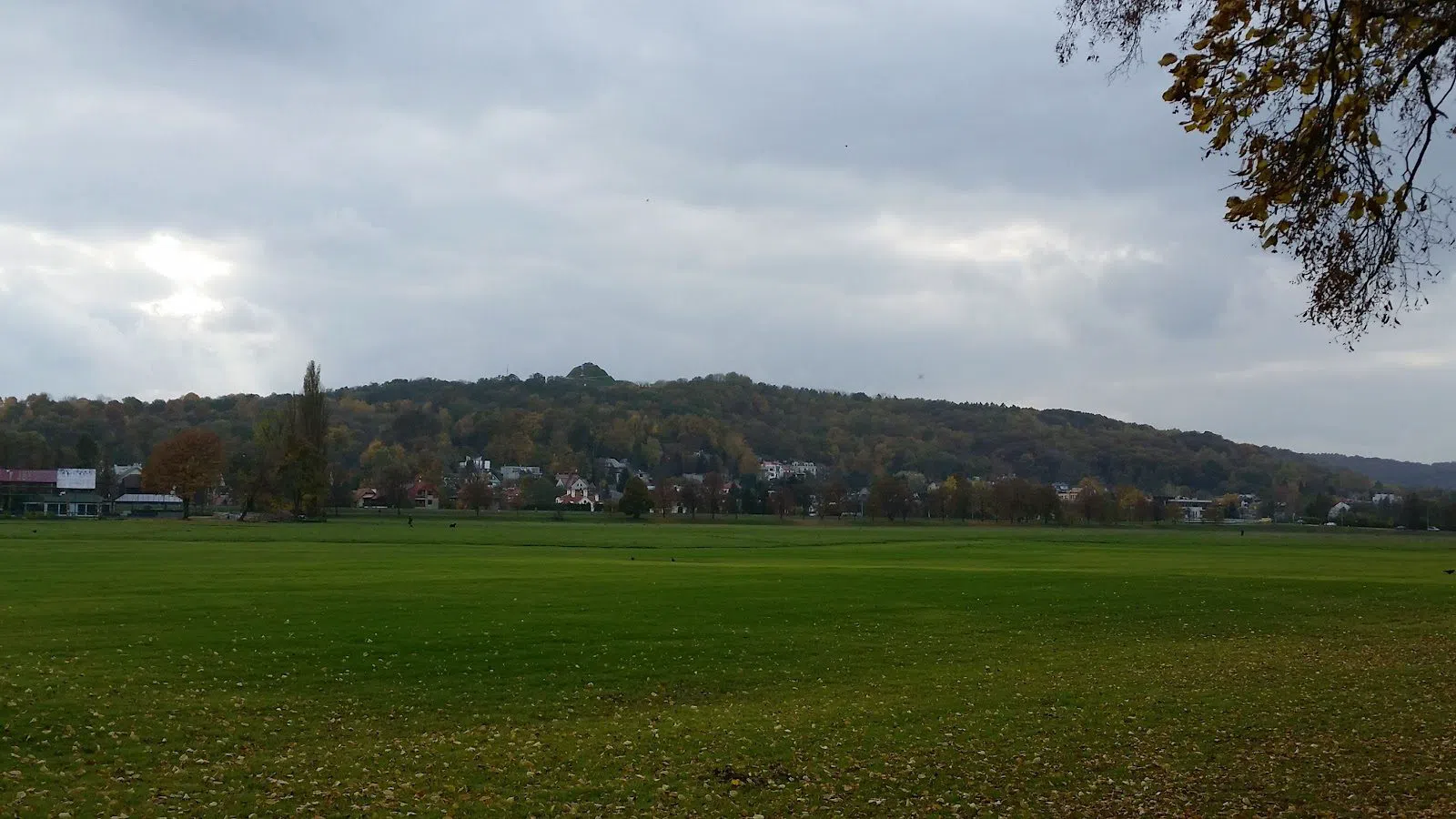
Błonia (the meadow on the western edge of the centre, by Piasek) is flat ground, and the flatness is the attraction: it hands you the full sky from horizon to horizon and a clean silhouette of Kościuszko Mound sitting in the sunset direction, a view of a viewpoint. It is open public ground with no restriction on numbers, the city's default gathering field for picnics and for events at civic scale, and it has stayed unbuilt since it was common grazing land handed to the city in the fourteenth century. Minutes from the Old Town, it is the honest option when the mounds are too far for the time you have.
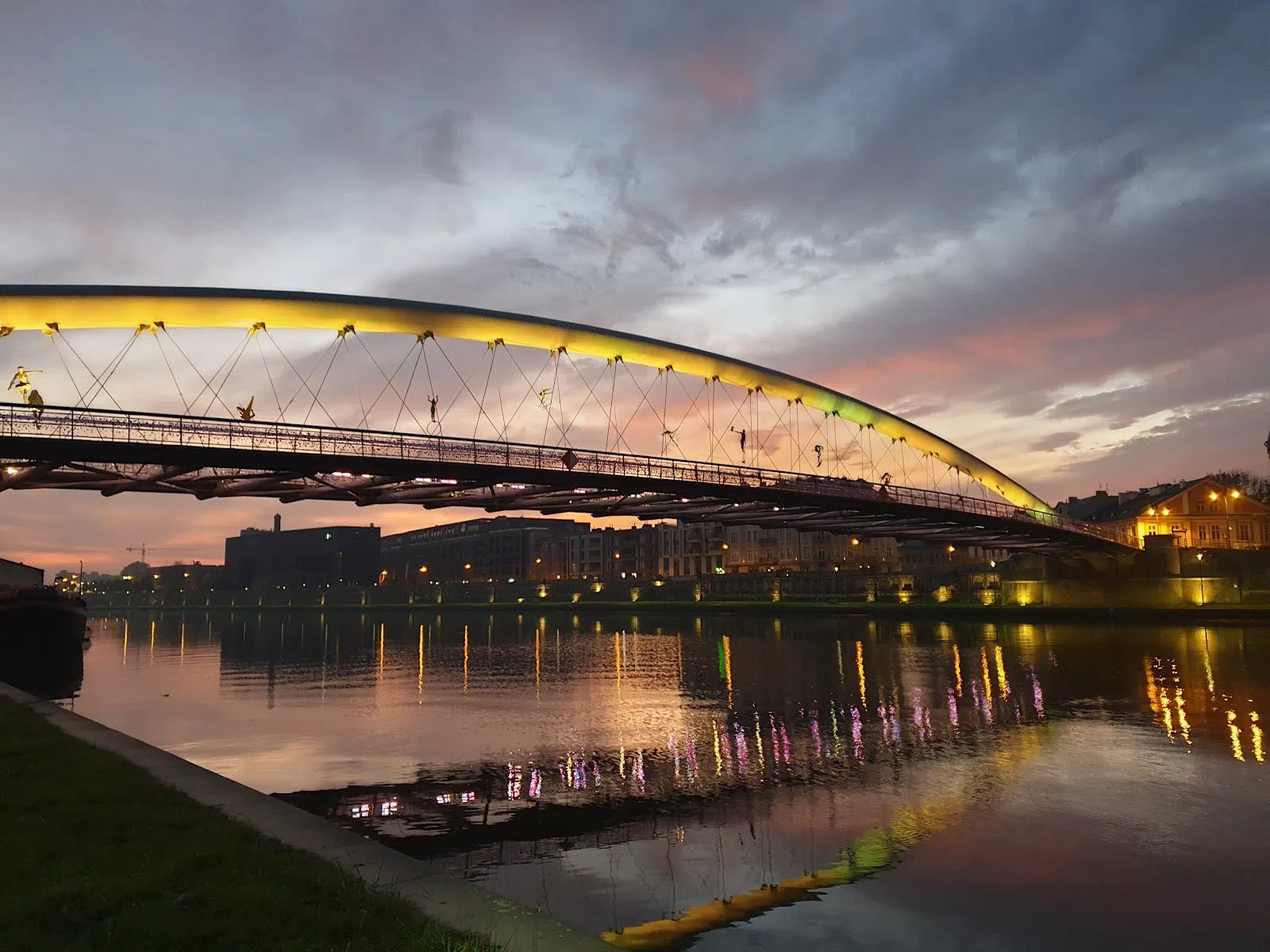
Bernatka Footbridge and the Vistula Boulevards (linking Kazimierz and Podgórze) is the reliable low-effort choice, with water doubling the light and Wawel in the frame, and it works facing either way depending on which bank you stand on. Fully public, open at all hours. The bridge deck is narrow, so a big group should spread along the embankment rather than bunch on the span, and in warm weather the padlocks and the crowd on the bridge itself make a tripod awkward. The bridge opened in 2010 and carries the name of Father Laetus Bernatek, of the hospital order in Kazimierz. Because it connects the two banks on foot, it pairs naturally with a walk out to Krakus Mound.
Looking down on the Main Square
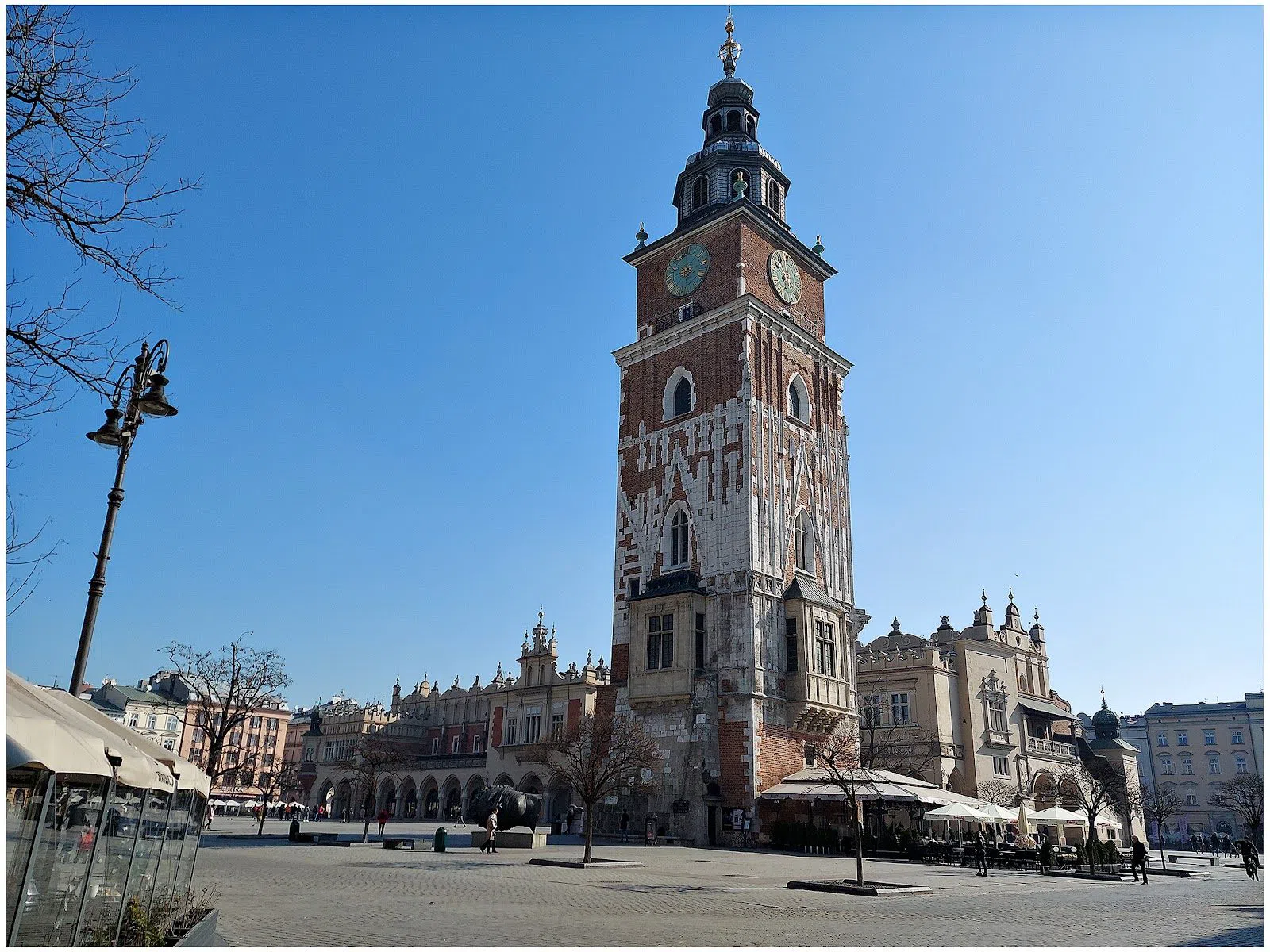
Town Hall Tower (Wieża Ratuszowa, Main Square, Old Town) is the only tower that puts you directly over the square rather than beside it, the fourteenth-century survivor of a town hall demolished in the 1820s. It is a Museum of Krakow branch on a standard low ticket band, and it does handle booked groups, but the staircase and viewing level are narrow, so parties go up in small batches. Hours are Monday 11:00 to 16:00 and Tuesday to Sunday 10:00 to 18:00, last entry 30 minutes before close, and it generally shuts through the deep winter months. Treat it as a late-afternoon view rather than a sunset one.
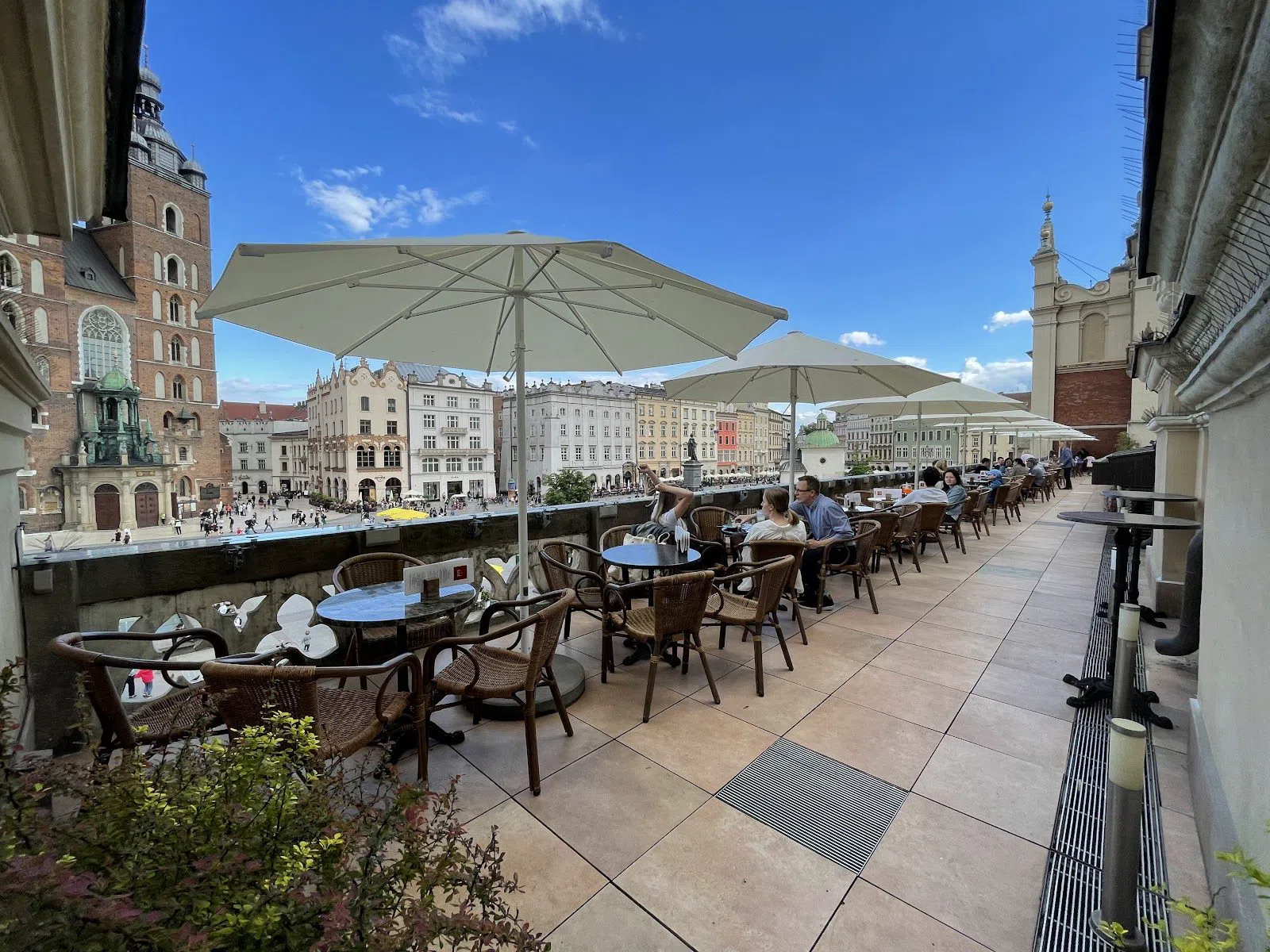
Cafe Szał (Cloth Hall, Main Square) is the rare Old Town terrace that stays up past sunset all year, open daily 10:00 to 23:30 and heated, so it holds together well outside summer. It is a walk-in café attached to the National Museum's gallery, reached through the Cloth Hall arcades on the left by stairs or lift, and it takes its name from the Podkowiński canvas hanging in the rooms below. It is comfortable for two or three; the terrace fills fast on warm evenings and there is no large-party seating, so a group of eight should have a second plan.
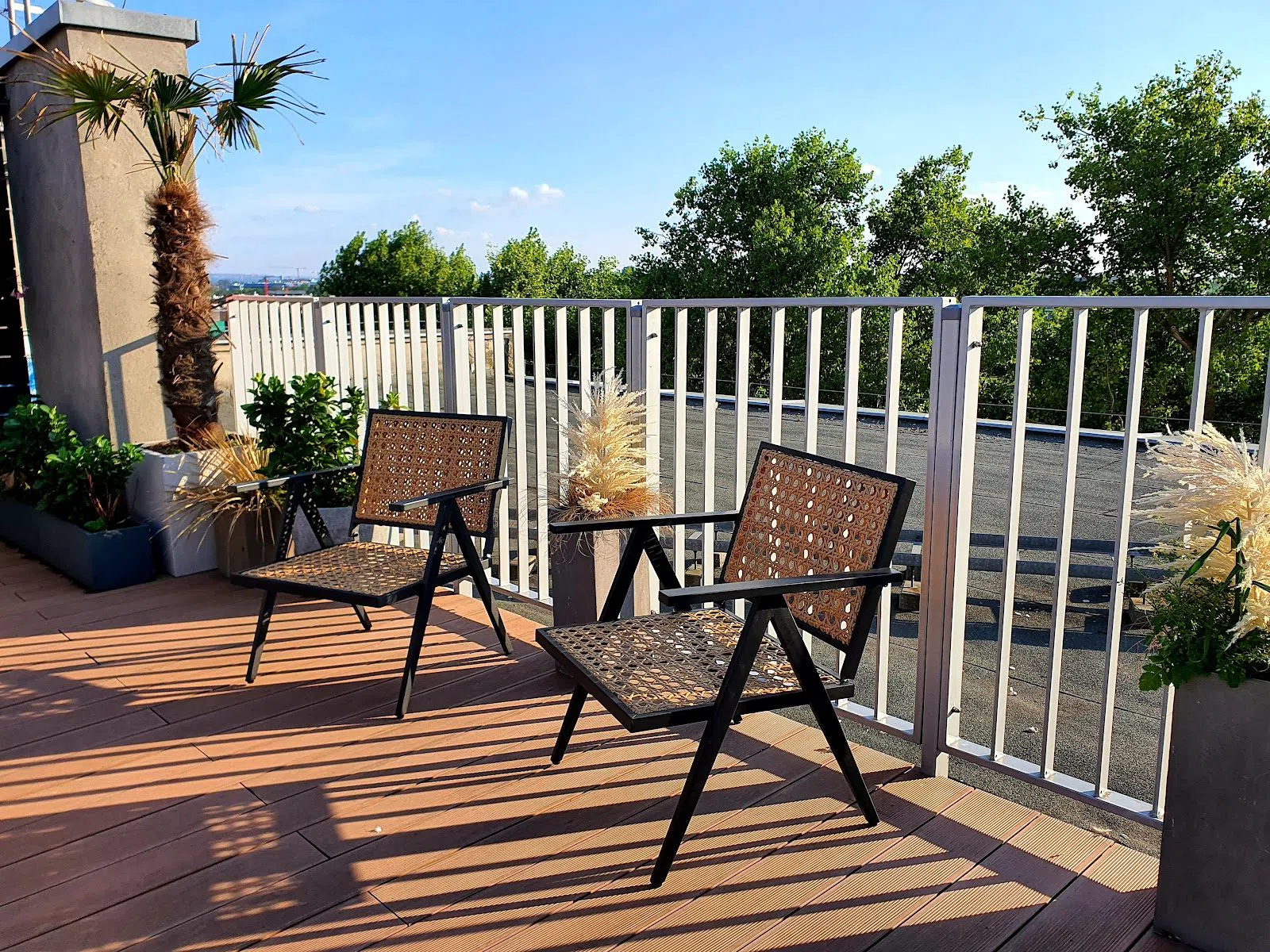
SIX RoofTop (Old Town) is the only genuine 360-degree terrace bar in the city and pours the most serious cocktails on this list, at prices to match. Entry is speakeasy-style, with a doorbell, and the terrace is small, so reserve ahead. Turning up unannounced at golden hour with more than four people rarely works.
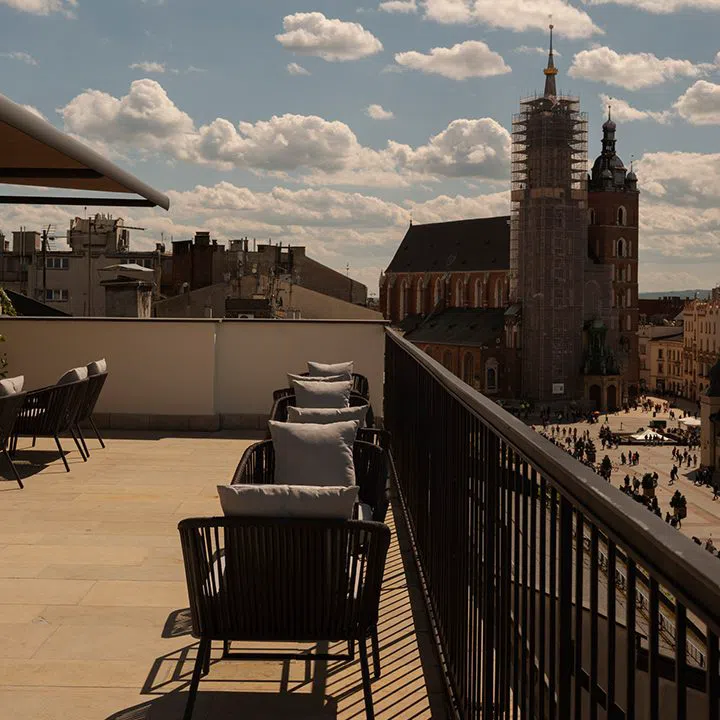
Sky Bar at Hotel Stary (Old Town) is the closest thing to standing inside the Main Square skyline rather than looking at it, with the roofs and towers at eye level around you. It is open to non-residents as well as guests. Small groups are fine; larger parties should book, because the roof has limited covers. It is strictly seasonal, roughly April to the end of September, 12:00 to 23:00 daily, with the roof shut in winter apart from occasional special openings. Pricing is hotel-bar upper.
Sit-down sunsets
Panorama Forum (Podgórze, on the riverside) reopened in August after around 25 years dark, and it is now the best all-weather sunset room in Krakow: Wawel, the bend of the river and the Tatras on a clear day, all from a seat. It opens 12:00 to 22:00, to midnight on Friday and Saturday, and reservations are strongly recommended; it takes group bookings and private events, and the terrace is large enough to absorb a proper party. The building beneath it is a 1970s concrete hotel slab that stood empty for a long while. Forum Przestrzenie, the old café-club in the same building, closed for good in 2024 and has not been replaced, so do not go looking for it.
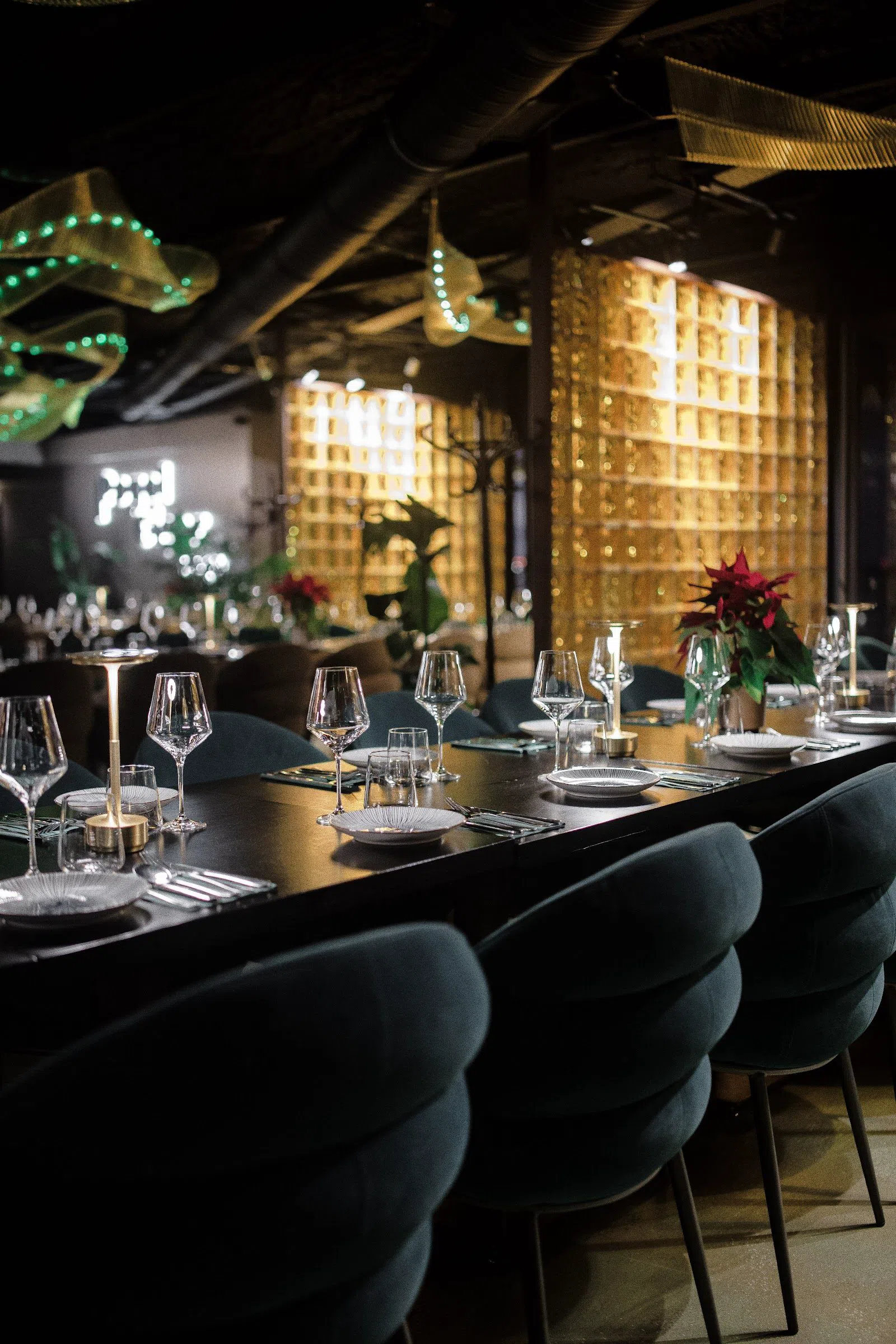
Café Oranżeria at Hotel Kossak (Stradom, by the river) is the sensible answer when your group wants to sit and eat through sunset rather than stand holding a drink. It is a full restaurant of roughly 84 covers with an events trade, one of very few view rooms in the city that seats a large group comfortably, so book ahead. The glass walls mean the view survives bad weather, which matters here more than it would in a drier climate; the terrace itself opens spring to autumn. Pricing is mid to upper, breakfast through dinner. The square it stands on carries the name of the Kossak painters, whose house stood nearby.
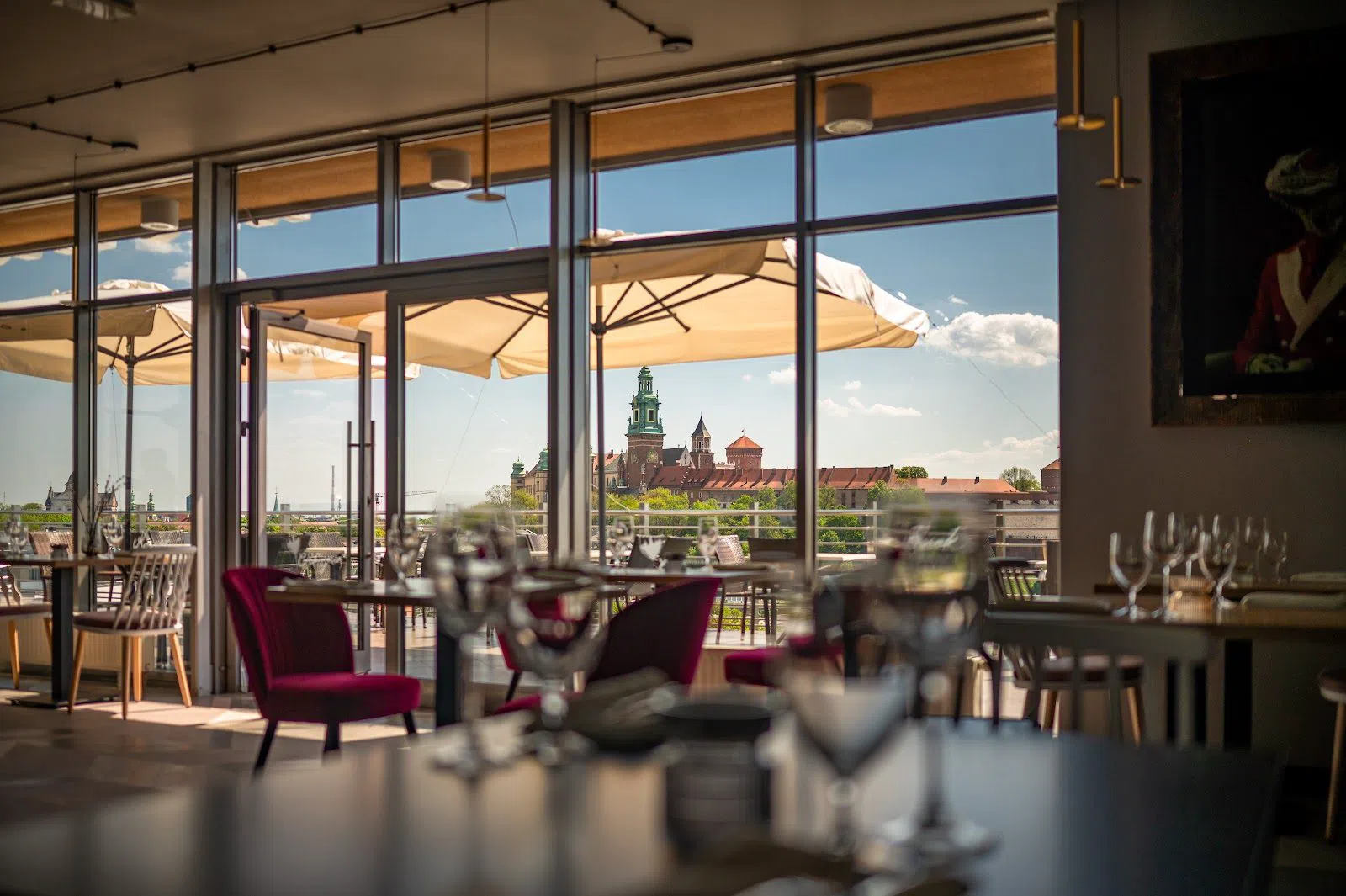
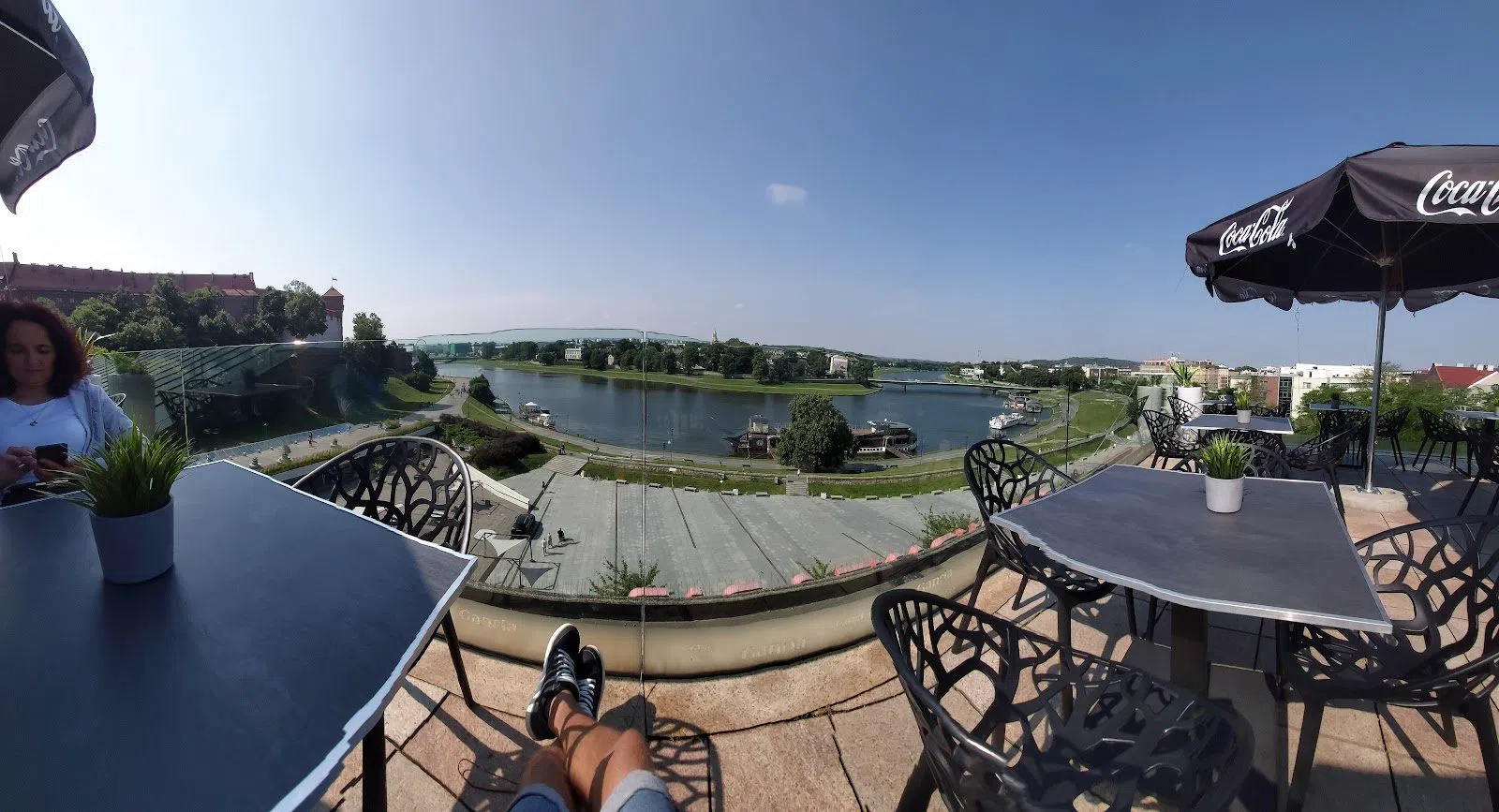
Groble Sky Bar & Restaurant (Groble, under Wawel) gives the closest sit-down view of Wawel anywhere, which is a different proposition from a wide panorama: you are looking at the castle, not over the city. For a group that wants one landmark held steady through the last light, that is the right trade. It takes groups and private hire for around 90 people, and a 10% service charge applies to parties of six or more, so check the bill against the headline prices.
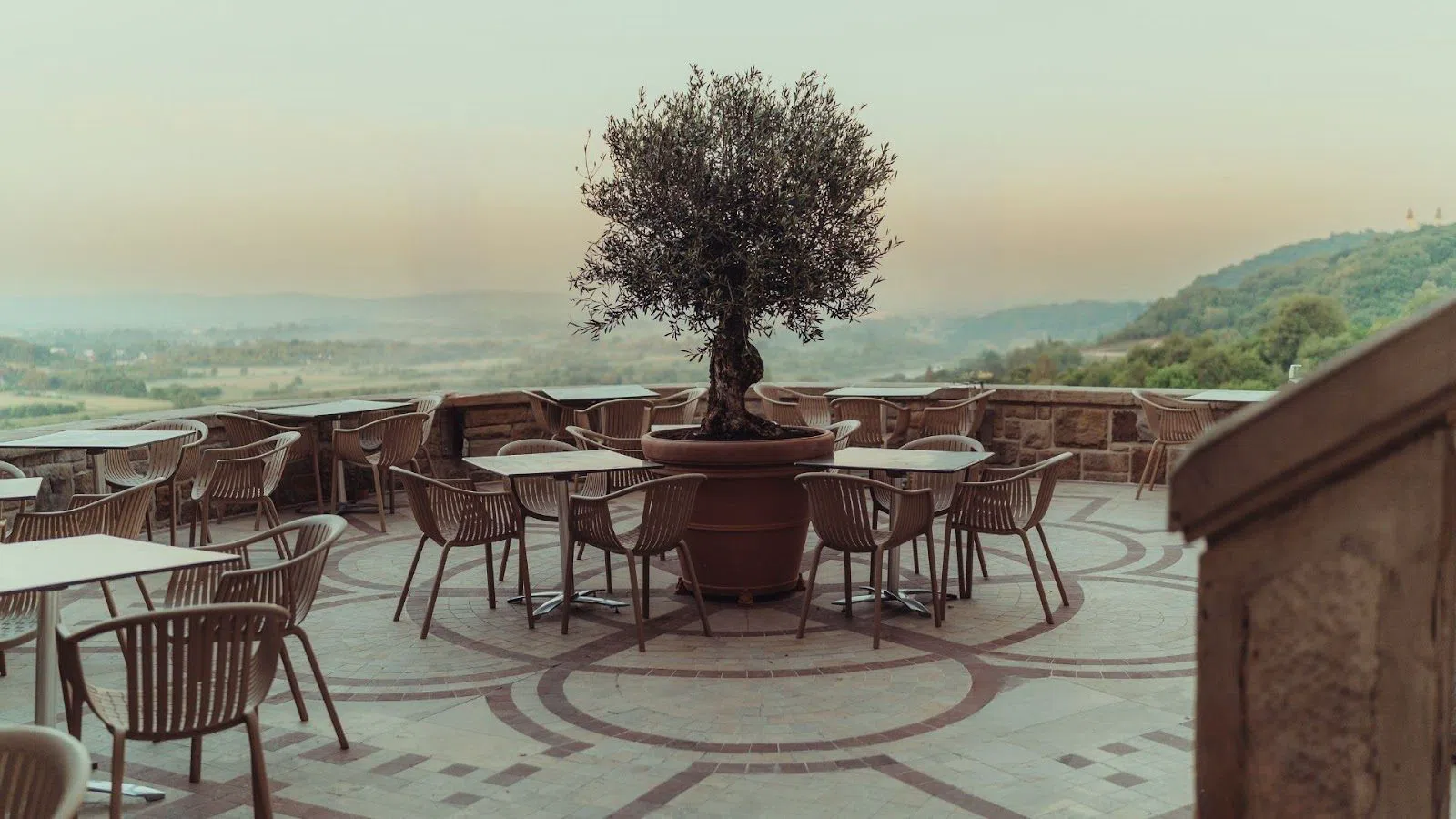
Ziyad Restaurant at Zinar Castle (Przegorzały, about 5km west of the centre) is the highest-quality sit-down sunset in Krakow, with a terrace looking over the river valley towards the Tatras. The name has changed and the old one still circulates: Przegorzały Castle is now the five-star Zinar Castle, and the long-running U Ziyada restaurant continues inside it as ZIYAD, listed in the Michelin Guide. It is a two-level room with a ballroom seating up to 200 and terraces built for events, so it absorbs large groups better than anything else here. Book in advance and expect five-star hotel pricing. The castle was begun in the 1920s to a design by Adolf Szyszko-Bohusz, extended during the German occupation, and spent decades afterwards in the hands of the university.
Two walks that link up
For sunrise, start in Kazimierz well before first light, cross the Bernatka Footbridge, turn left along the Podgórze bank and walk out to Krakus Mound, roughly half an hour at a steady pace and flat until the final cone. You get the river in the dark on the way out and the city lighting up behind you on the way back. If you would rather have the industrial skyline, take the tram east instead and walk up Wanda Mound.
For sunset, work west. Cross Błonia in the late afternoon with Kościuszko Mound ahead of you, climb it while the ticket desk is still open, then come down to the Panorama Cafe terrace for the part of the evening the mound will not give you. If you want the whole thing seated and indoors-optional, skip the climb and book a table on the river instead. For where to base yourself, the Krakow hotel search covers the districts these walks start from, and the wider Krakow guide fills in the rest of the city between them.
Practical notes
Transport. Trams and buses reach every mound but Piłsudski, which needs the bus to the zoo plus a 30 to 40 minute forest walk. Buy tickets from the machine on board, contactless works, and validate them. Before sunrise the network is thin, so check the first departure the night before rather than trusting the app at 4am.
Cash and cards. The three free mounds, Błonia, Zakrzówek, Bagry and the boulevards cost nothing at any hour. Kościuszko Mound sells tickets on site only, cash or card, with no online option. Rooftops all take cards; remember the 10% service charge at Groble for six or more.
Timing. In midsummer, sunrise lands around 04:30 and the sun does not set until after 20:30, which rules out every ticketed viewpoint for sunset and leaves the free mounds, the meadow, the river and the rooftops. In December it is the reverse, sunrise near 07:30 and sunset before 16:00, and that is the one season the Town Hall Tower and Kościuszko Mound can coincide with last light, weather and winter closures permitting.
Budget. A sunrise on the mounds costs the tram fare. A full sunset evening with the mound ticket, a coffee on a terrace and a cocktail afterwards runs from roughly 60 zł to well past 200 zł depending on which roof you end up on. Wear something with grip, bring a torch for anything after dark, and accept that on low-cloud days the honest move is the river, not the climb.
Before you go
Which Krakow mound is best for sunrise?
Wanda Mound in Nowa Huta faces east and is the quietest of the four, which makes it the best sunrise option, though the picture is industrial Krakow rather than the Old Town. Krakus Mound in Podgórze is the easier one to reach on foot from Kazimierz and is open at any hour with no gate. On clear cold mornings Piłsudski Mound is the one that shows the Tatras, but allow a 30 to 40 minute forest walk in the dark to get there.
Can you watch the sunset from Kościuszko Mound?
Almost never. It closes at 19:00 in high summer and at 15:00 from late October, so the gate shuts before sunset for most of the year. Instead, the rooftop Panorama Cafe at the Restauracja pod Kopcem, just below the mound, keeps a terrace open from May to September.
Do the free mounds cost anything or need booking?
No. Krakus, Wanda and Piłsudski are unstaffed, unfenced and free at any hour, with no ticket point to book. Only Kościuszko Mound charges, roughly 22 to 30 zł per adult, sold on site at the kiosk by the car park in cash or by card, with a group rate of 22 zł per person for ten or more.
Where should a large group watch sunset in Krakow?
Ziyad at Zinar Castle in Przegorzały takes big parties best, with terraces built for events and a ballroom seating up to 200. Café Oranżeria at Hotel Kossak seats around 84 and Groble Sky Bar handles about 90, both with advance booking. Avoid SIX RoofTop and Sky Bar at Hotel Stary with a crowd, since both are small roofs that fill.
What if the weather is bad or the cloud is low?
Take the view at ground level instead of climbing. Błonia gives you the full sky and a silhouette of Kościuszko Mound, while the Bernatka Footbridge and the Vistula Boulevards put water under the light, and both are free and open at all hours. For a roof that works in rain, Café Oranżeria's glass walls and Panorama Forum's indoor room hold the view through bad weather, and Cafe Szał's heated terrace runs to 23:30 all year.