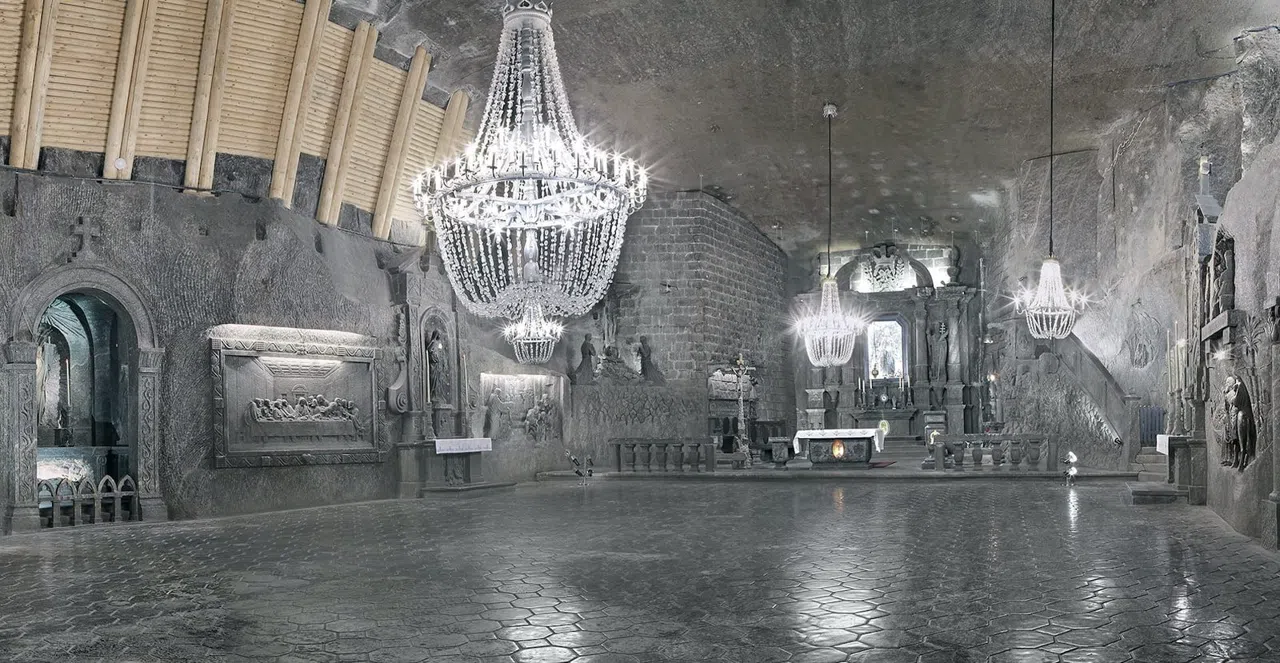

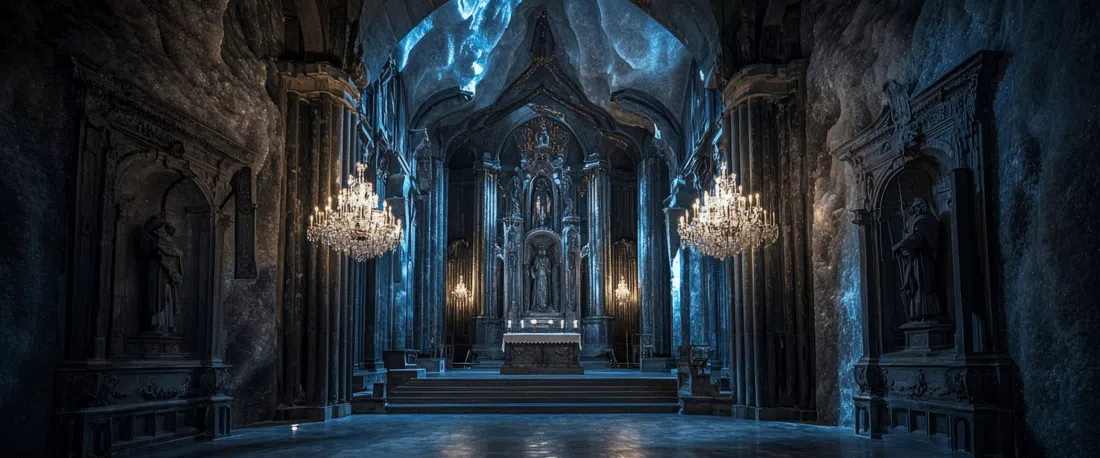
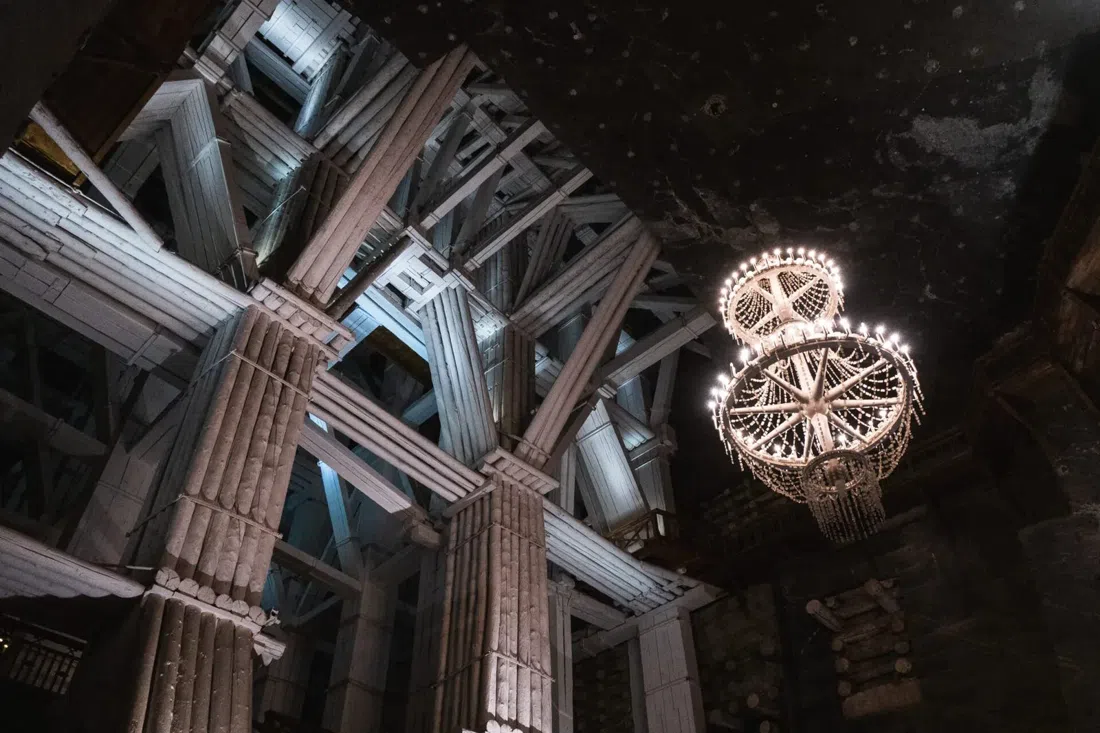
Sixty metres beneath Wieliczka's market square, salt has been carved into something closer to a cathedral than a quarry: a chapel lit by chandeliers spun from rock salt, a lake the colour of gunmetal, and corridors that fold back on themselves for the length of a marathon. Miners chased rock salt through this ground for the best part of seven centuries and left behind, almost as a byproduct of the work, one of the strangest underground worlds open to the public anywhere in Europe. This isn't a quick detour from Krakow — it's a half-day expedition, and it rewards a bit of planning before you go.
The chapel, the lake, the labyrinth: what the Tourist Route actually shows you
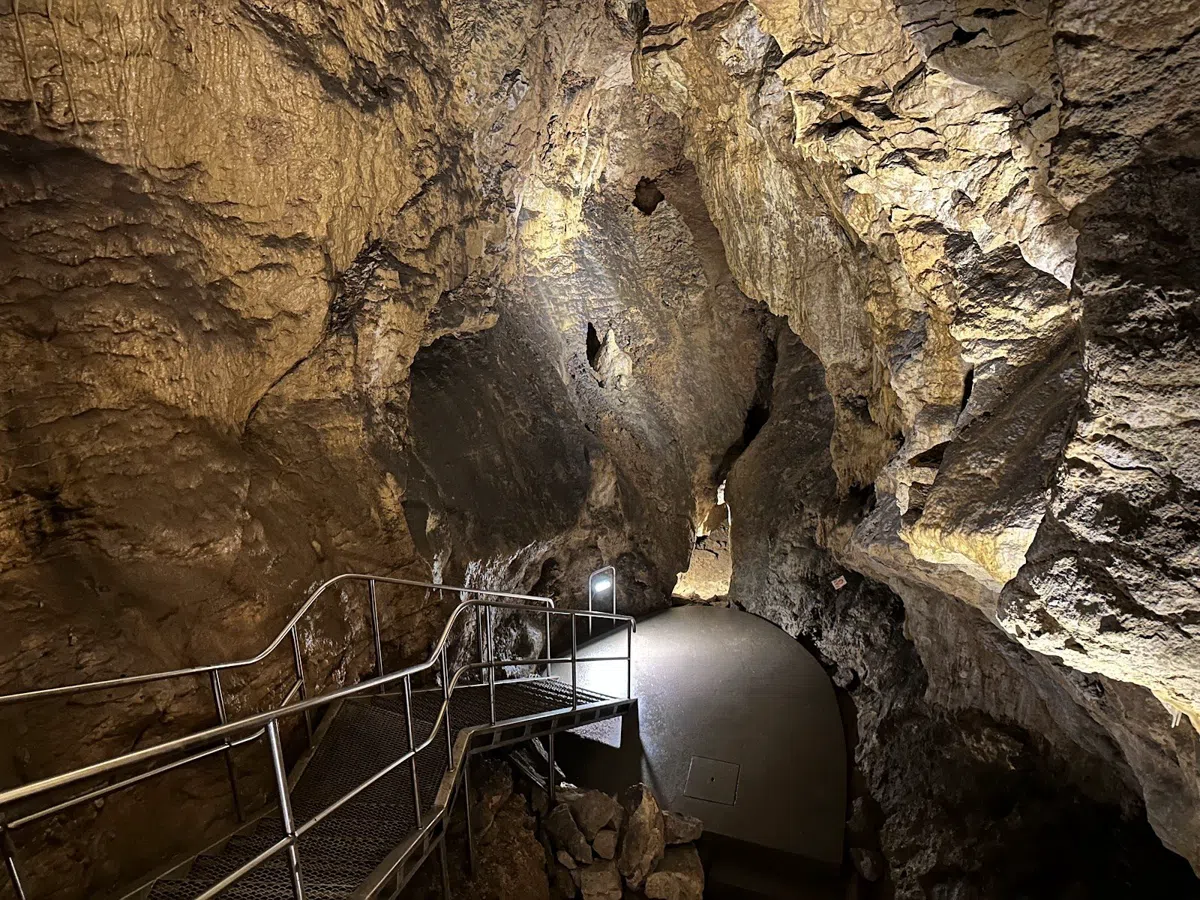
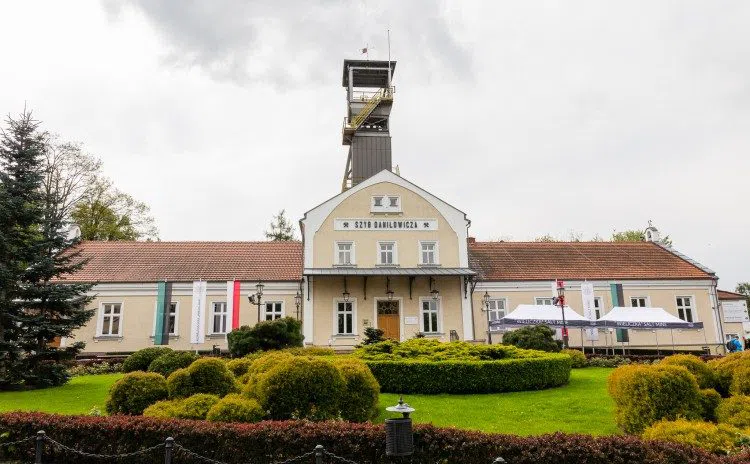
Almost everyone who comes to Wieliczka comes for one thing: the Wieliczka Salt Mine — Tourist Route (Wieliczka, the small town on Krakow's southeastern edge, about a 30-minute drive or train ride from the centre). This is the mine's flagship circuit, and it is also, in a very literal sense, the whole subject of this piece — the chapel, the brine lake and the 3.5km of labyrinthine corridors that give the mine its reputation are all stops on this single ticketed route, spread across three levels of tunnelling.
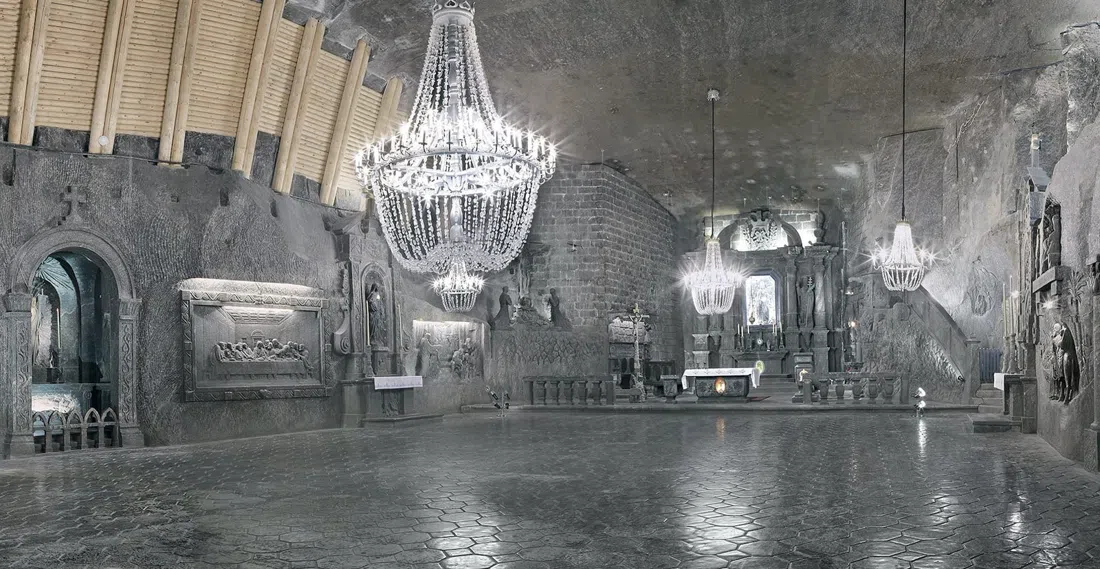
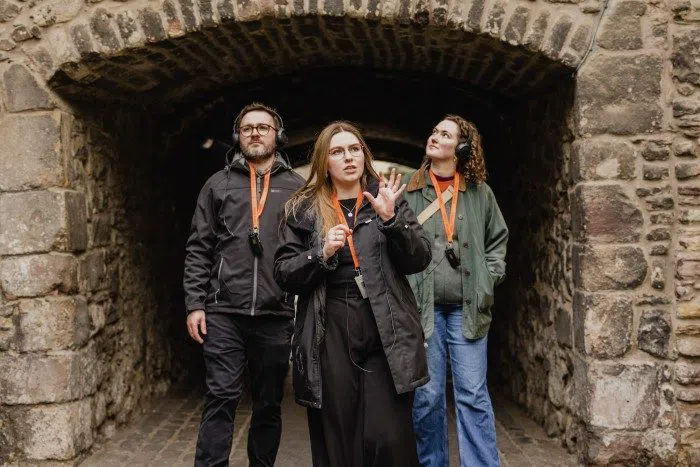
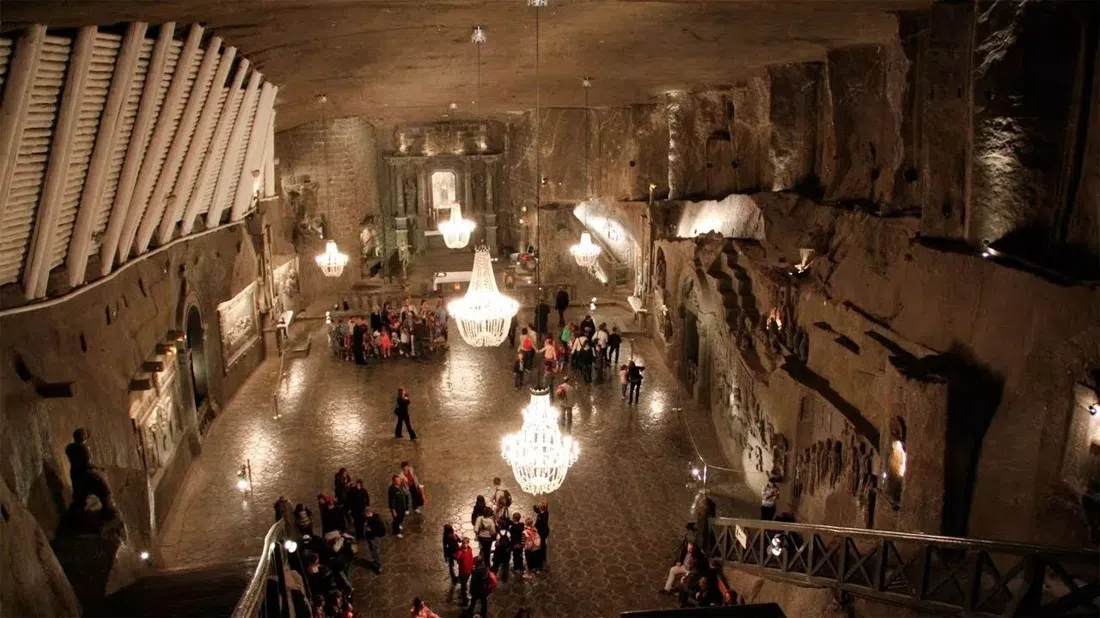
Groups leave roughly every half hour with a multilingual guide, standard parties running up to about 35 people, so you'll walk the route as part of a crowd rather than in solitude — worth knowing if you're picturing a quiet, contemplative wander. It doesn't especially matter: the scale of the carving absorbs the noise. Walls give way to whole chambers hollowed out of salt, and the chapel itself is the standout, an underground place of worship where even the altarpieces and wall reliefs have been worked directly out of the rock. Miners built and decorated it in whatever hours weren't spent extracting salt, which tells you something about how central this place was to the people who worked it, not just what they dug out of it.
The corridors are the part photographs never quite capture. Because the route stitches together three separate levels, the sense of scale keeps resetting — you'll drop a level, and the geometry of the tunnels changes again, narrow galleries opening suddenly into chambers the size of a hall. It's easy to lose your sense of direction entirely, which is rather the point of calling it a labyrinth rather than a corridor.
Tickets run 143 PLN for an adult and 121 PLN reduced (roughly €33 and €28), and the mine's own booking site, bilety.kopalnia.pl, is worth using directly rather than turning up and hoping. In summer, timed slots sell out — this is one of Poland's most visited sights, and a wasted trip to Wieliczka with no ticket is a wasted half-day. If you'd rather have someone else handle the logistics entirely, several Krakow operators run this same route as a packaged group trip, covered further down.
Groups of any size are genuinely welcome here — this is built for volume, with wide galleries and handrails throughout — but couples and solo travellers shouldn't expect intimacy. You move at the pace of your group, stop where your guide stops, and the atmosphere is closer to a well-run museum tour than a private exploration.
A note on the mine's age, since it explains why the carving feels so unhurried: this wasn't dug out in a single building campaign but worked continuously across generations, from the medieval period through to when commercial extraction finally wound down toward the end of the twentieth century. Nothing here was built to a deadline. The chapel in particular reads like a project people returned to over years, which is a different kind of craftsmanship than anything commissioned and finished on schedule.
The lake: Erazm Barącz Chamber
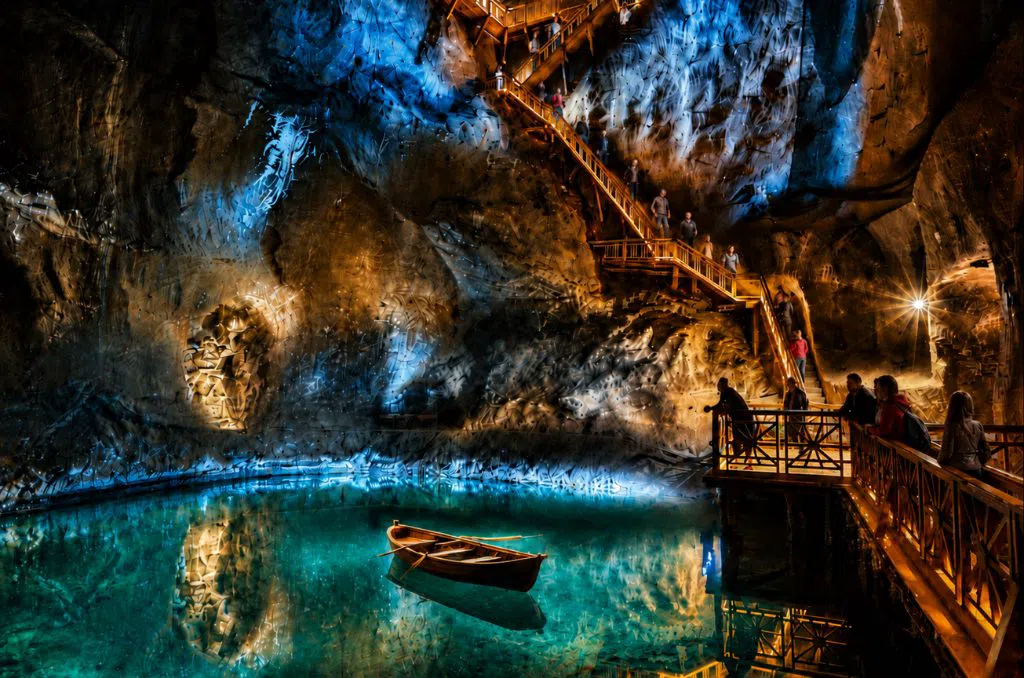
The other image everyone remembers from Wieliczka is water — dark, still, and improbable this far underground. That's the Erazm Barącz Chamber (a fixed stop within the mine, on the same Tourist Route circuit), the brine lake that gives this whole underground world its most photographed moment after the chapel itself.
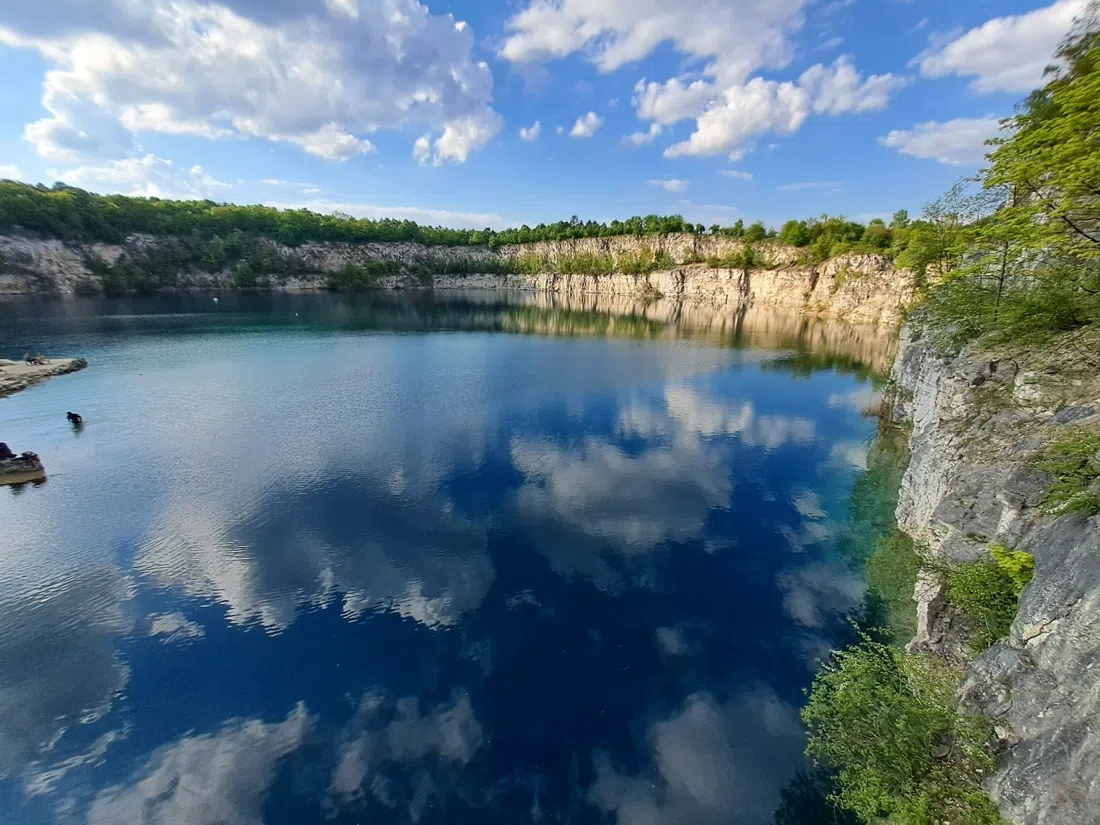
There's no separate ticket and no separate booking: your guide simply walks the group through it as one of the scheduled stops on the route, and it's included in the standard Tourist Route price. What's worth knowing before you get there is the water itself — the brine pooling in this chamber is denser than the Dead Sea, a function of centuries of salt leaching straight into standing groundwater. It doesn't invite swimming (nobody's offering that here), but it does explain the strange stillness of the surface and the faint sheen across it under the chamber lighting. It's a short stop on the route, not a lingering one, so if photography matters to you, don't assume you'll get a second pass.
A different descent: the Miners' Route
If the Tourist Route sounds too polished, there's a genuinely separate way into the same mountain of salt: the Wieliczka Salt Mine — Miners' Route (entered via the Regis Shaft, also in Wieliczka), a hands-on circuit built for people who want to feel like they're doing the mining rather than watching a museum piece walk past.
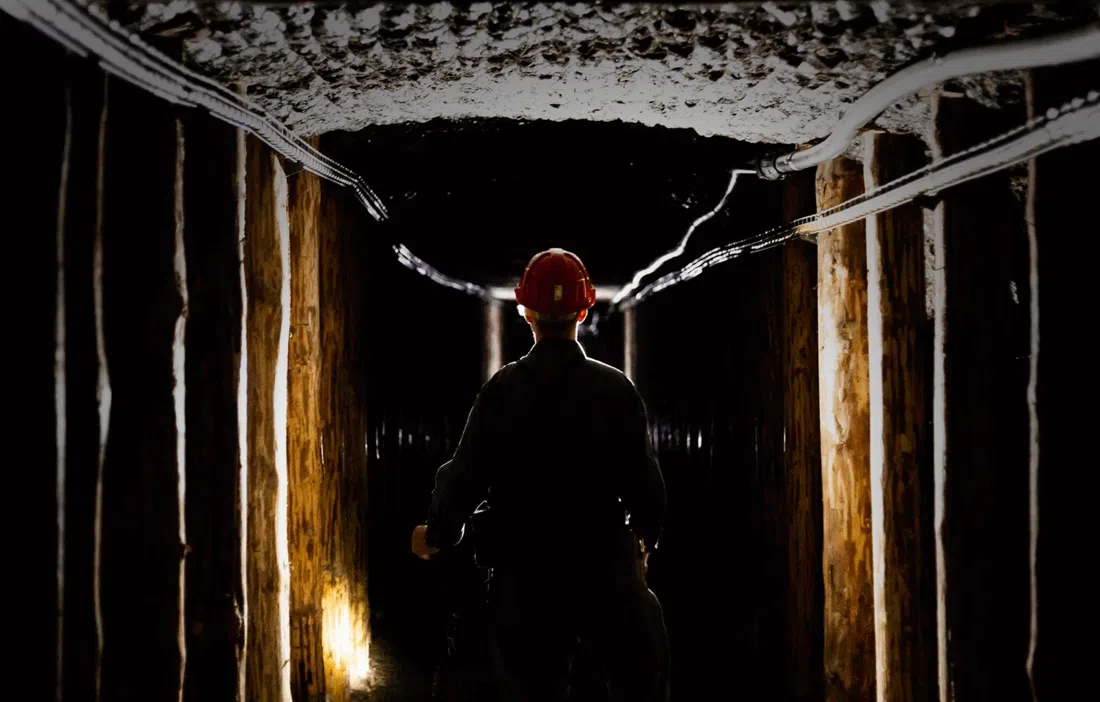
This isn't a rebadged version of the main tour. It uses a different entrance, reaches a different depth, and threads through a genuinely separate set of tunnels — its own labyrinth, distinct from the one on the Tourist Route rather than an overlapping stretch of it. Groups are kept deliberately small and fixed in size, with English-language departures typically at 10:15 and 14:15, which makes booking ahead more important here than on the main route, since there's no rolling every-30-minutes schedule to fall back on if you miss your slot. Expect protective overalls, lamps, and a route that asks a bit more physically than a flat walking tour — it suits adventurous groups and older teenagers better than very young children or anyone with mobility concerns.
Pricing starts from 131 PLN (about €30), broadly comparable to the Tourist Route once you account for the smaller-group premium. If you're choosing between the two and only have time for one, the honest answer is that the Tourist Route is the one this article is actually about — chapel, lake, labyrinth — and the Miners' Route is the one to add on a second visit, or to swap in if your group specifically wants something more physical than a guided walk.
Coming up for air: the Saltworks Castle and the Graduation Tower
Not everything worth seeing in Wieliczka involves going back underground, and it's worth building at least one above-ground stop into the day, both to break up the descents and to fill in context the tunnels themselves don't give you.
The Cracow Saltworks Museum — Saltworks Castle (Zamek Żupny, in Wieliczka's town centre) is the above-ground counterpart to the mine's own underground museum route on level three, and it's a genuinely useful stop for anyone who wants the industrial and administrative history of the salt trade without descending again. Groups are small here compared with the mine itself — this isn't a high-traffic site — and you can go self-guided or book a museum guide. Entry is low-cost, somewhere in the 20–30 PLN range (worth confirming the exact figure on site, since it isn't clearly itemised online at the time of writing).

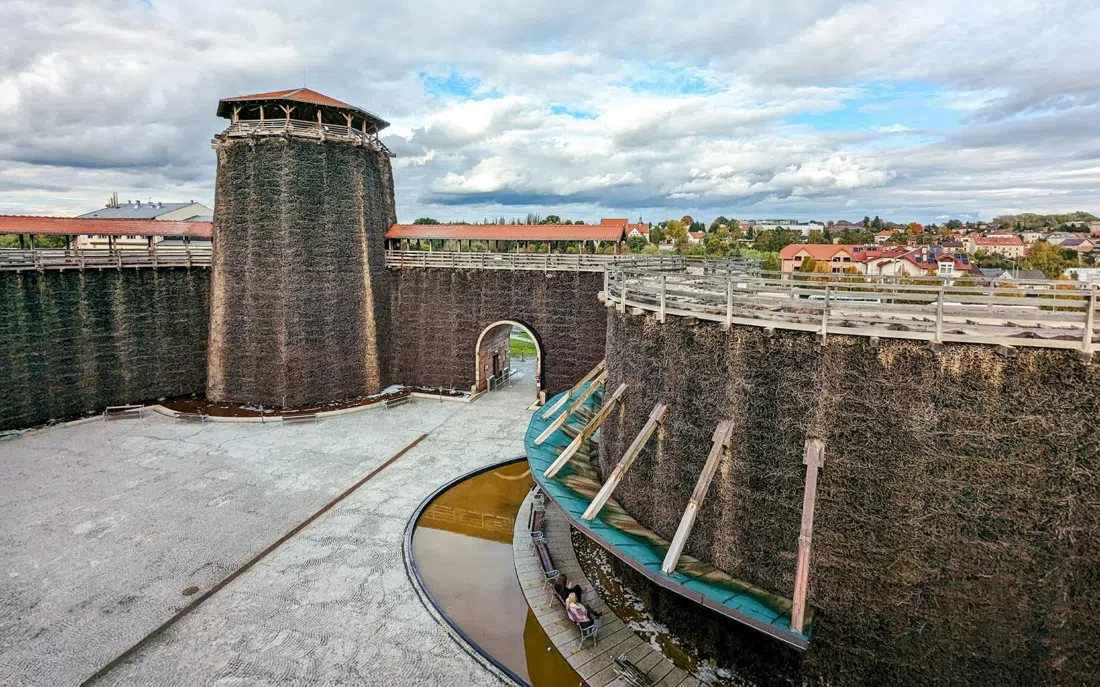
A short walk from there is the Wieliczka Graduation Tower & St Kinga Park, an open-air brine health-spa attraction and public park that couldn't feel more different from the tunnels — daylight, greenery, and the particular saline mist that graduation towers are built to produce, historically for respiratory health rather than tourism. It's freely walkable by groups of any size with no booking required, entry is a token 7 PLN (children under four go free), and there's a discounted combo rate if you buy it alongside your Tourist Route ticket. It runs seasonally and is closed during the coldest winter months, but it's open now, in August, and makes a genuinely good breather between two underground legs of the same day — a chance to stand in the sun for twenty minutes before you go back down.
Eating underground: Karczma Górnicza
The most unusual close to a Wieliczka day is also underground. Karczma Górnicza (The Miner's Tavern), inside the mine complex, is a proper restaurant carved into the rock rather than a snack kiosk bolted onto the end of the tour — and eating a full Polish meal several dozen metres underground is rare enough that it's worth planning around rather than stumbling into.
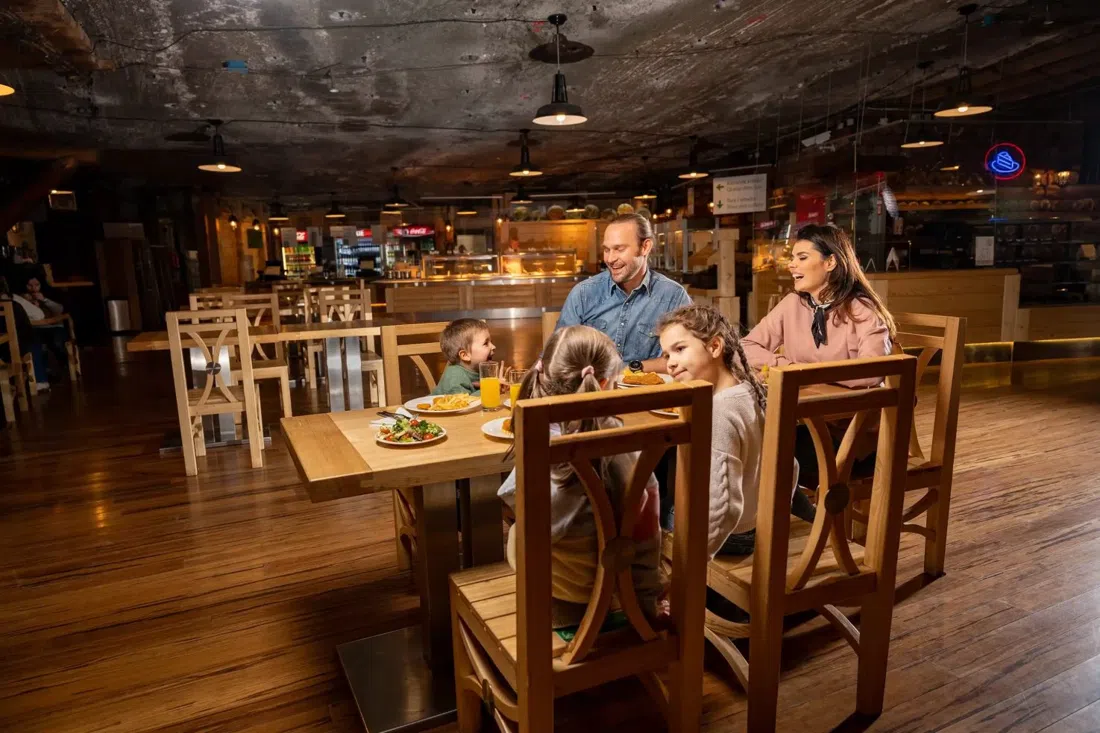
It's pre-bookable as an add-on to a Tourist Route visit or a private tour, and it has function-room capacity for larger parties, which makes it a sensible option for group trips, work outings or family visits that want a proper sit-down finish to the day rather than a quick coffee at the surface. Pricing sits mid-range, with mains running roughly 40–80 PLN. Book it ahead of your visit rather than assuming you can walk in after the tour — capacity for groups fills, and it's a genuinely different logistical booking from your mine ticket.
Booking the trip: going it alone or letting an operator handle it
There are two honest ways to do a Wieliczka day: book the mine ticket yourself and make your own way out from Krakow, or let one of the city's tour operators bundle transport, ticket and guiding into a single booking. Both work. Which suits you depends on how much you want to think about logistics versus how much you want to control your own pace.
Krakow Direct is one of the city's largest and most consistently well-reviewed operators for exactly this trip, running scheduled shared-group departures of around 30 people as well as private and custom group bookings, with combo options that pair the mine with Auschwitz or Schindler's Factory if you're building a bigger day. Expect to pay roughly 150–250 PLN (about €35–58) per person including transport and your mine ticket — a premium over booking direct, but one that buys you door-to-door logistics.
Discover Cracow is a long-running, high-volume operator offering both shared-group tours and private or custom group options, with free cancellation up to 24 hours out and live English guiding throughout. At roughly 130–220 PLN (€30–51) depending on the transport and ticket bundle you choose, it's a reliable fallback specifically for readers who find their preferred slot sold out on the mine's own booking site.
Hello Cracow runs smaller, well-managed groups with a door policy that's explicitly inclusive of families and mixed-age groups, and it's specifically praised for smoother, less rushed logistics than the bigger coach operators. It costs a little more — roughly 140–230 PLN (€32–53) — for what amounts to a calmer version of the same trip, which is worth the difference if you're travelling with children or older relatives.
Cracow City Tours is a solid mid-market operator offering standard shared-group tours with around two hours of guided time underground, plus private options, priced from roughly 120–200 PLN (€28–46) — a useful value-priced alternative if the bigger names above feel like overkill for what you need.
Walkative (Free Walking Tour Wieliczka trip), from Krakow's well-known free-tour brand, extends its casual, storytelling-driven format underground, and it's a distinctly different voice from the coach-operator pack — a good fit for solo travellers and younger groups who want a livelier narrative rather than a formal museum guide. It runs on a tip-based or bundled ticket-plus-transport model, typically working out to around 130–200 PLN (€30–46).
If you're staying in the city itself, sort your base first — a Krakow hotel search makes it easy to pick somewhere with straightforward access to wherever your Wieliczka transport departs from, whether that's a specific pickup point for an operator or Krakow Główny for the train.
Getting there, timing it right, and what to budget
Transport. Wieliczka sits close enough to central Krakow that a dedicated tour bus isn't strictly necessary if you'd rather manage the trip yourself: regional trains and minibuses run from the city out to the town regularly, and a taxi or rideshare is a straightforward option too if you're travelling as a small group and want to skip the coordination. If you've booked through one of the operators above, transport is handled as part of the package — just confirm your pickup point and time the night before.
Cash. Card payment is standard at the mine's ticket desks and larger operators, but it's worth carrying some PLN cash regardless, particularly for the Saltworks Castle entry, the Graduation Tower's 7 PLN fee, and any incidentals at Karczma Górnicza if you're settling a group bill informally.
Timing. Budget the better part of a day for this if you want to do it properly: the Tourist Route alone runs a couple of hours underground, and once you add travel time, a stop at the Graduation Tower, and lunch at Karczma Górnicza, you're realistically looking at five to seven hours door to door. Go early if you can — both to beat the crowds on the Tourist Route and to leave slack in case your first-choice slot is booked out and you need a later one.
Budget. As a rough guide per person: 143 PLN for a Tourist Route adult ticket if booking direct, plus 7 PLN for the Graduation Tower, plus whatever you spend at Karczma Górnicza (40–80 PLN a main) if you're eating underground — call it 200–250 PLN all in in 2026 for a self-organised day, or 130–250 PLN for an all-inclusive operator package depending on which of the five above you choose.
However you organise it, this is one of the rare Krakow-area trips where the destination genuinely earns the half-day it costs you — and once you've done it, the rest of your Krakow guide itinerary will feel comparatively quick by comparison.