
Most visitors to Kraków never really leave the right bank. They stand on the Old Town side of the Vistula, photograph Wawel Hill across the water, and go home believing they've seen the river. They haven't. Cross to Dębniki and Zwierzyniec and the Vistula becomes something else entirely — a working green belt where locals launch kayaks under the castle walls, picnic on a meadow grazed since the Middle Ages, and swim in what used to be a limestone quarry. None of it is hidden, exactly. It's just on the other side of a bridge most itineraries never mention.
Onto the Water: Paddling and Drifting Past Wawel
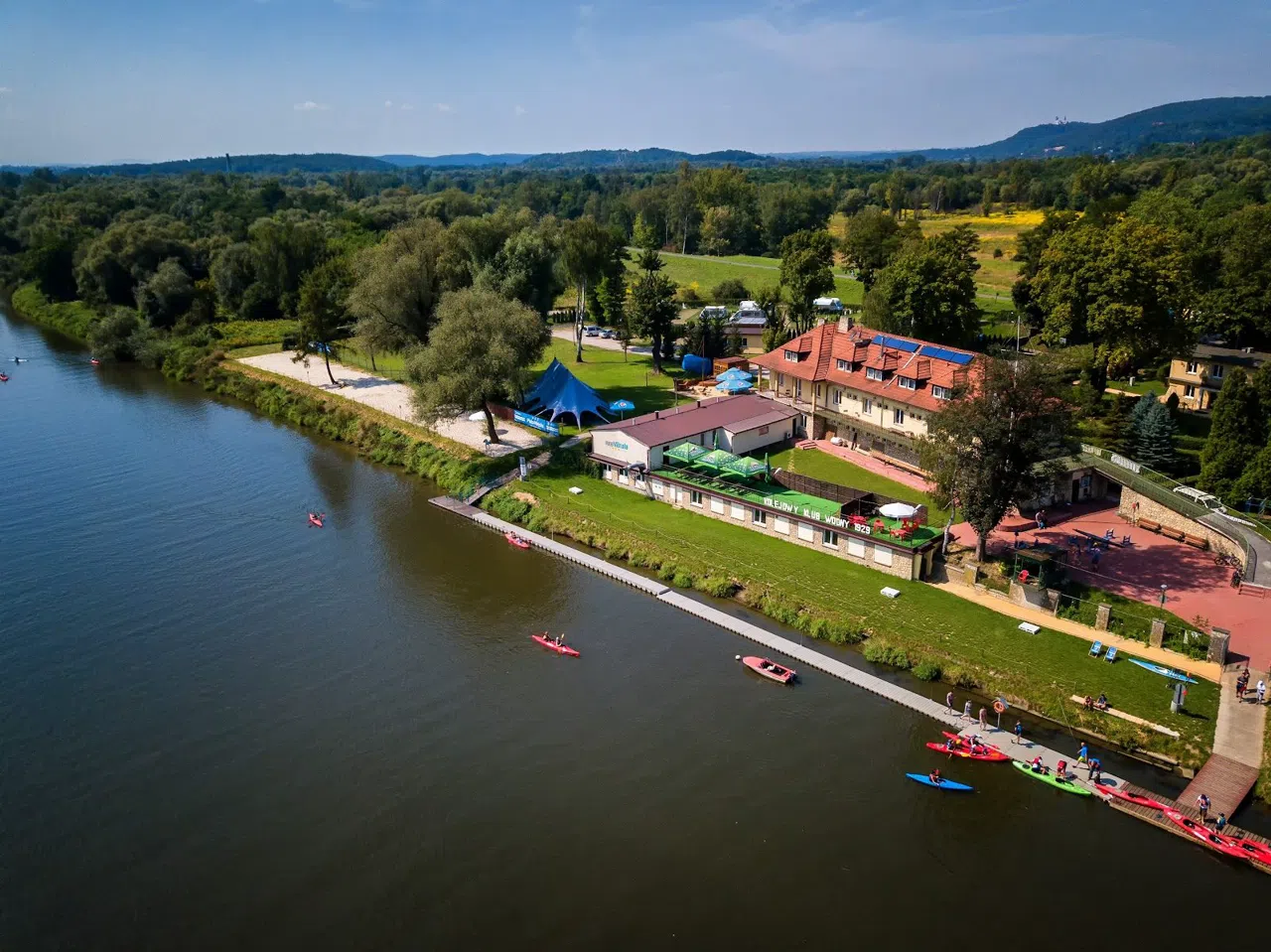
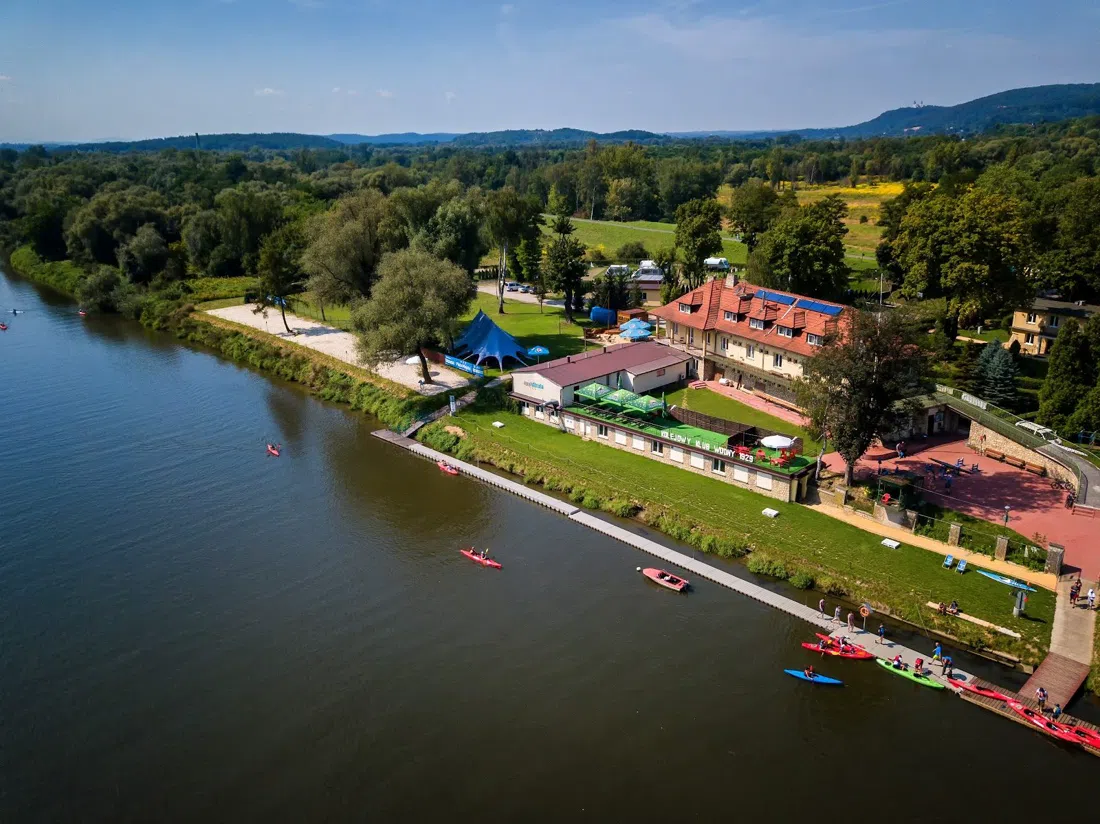
The defining view of this stretch of river is Wawel Castle seen from water level, and three outfits will get you there. Kolejowy Klub Wodny 1929, based on the Zwierzyniec bank, is the oldest operator on this list — a railway workers' sports club founded in the last years of the Second Polish Republic, when river clubs like it sprang up along the Vistula as cheap, democratic recreation for a city that had just got its independence back. Almost a century on, KKW 1929 is still the most dependable launch point for a straightforward paddle: a single kayak runs 20 zł for an hour, 30 zł for two, 35 zł for three; a double kayak is 30/45/55 zł across the same windows. It also runs a program for paddlers with disabilities, a detail worth knowing if you're travelling with a mixed-ability group. The one friction point is booking — there's no online form for larger parties, so phone ahead if you're bringing more than a couple of boats.
For the more theatrical version of the same trip, walk to Przystań pod Wawelem in Dębniki, the rental run by SKS Nadwiślan that puts you in the water directly beneath the castle's retaining walls. This is the launch actually built for groups: alongside standard kayaks it rents 4-person motorboats and a 12-seat catamaran, and it organizes a guided kayak route out to the Benedictine abbey at Tyniec, a few bends downriver — arguably the single best half-day on this stretch of the Vistula. Nothing here is published online; you book by calling 606 22 55 55, and it helps to know roughly what comparable Kraków rentals charge before you do — figure 20–40 zł an hour as your reference point.
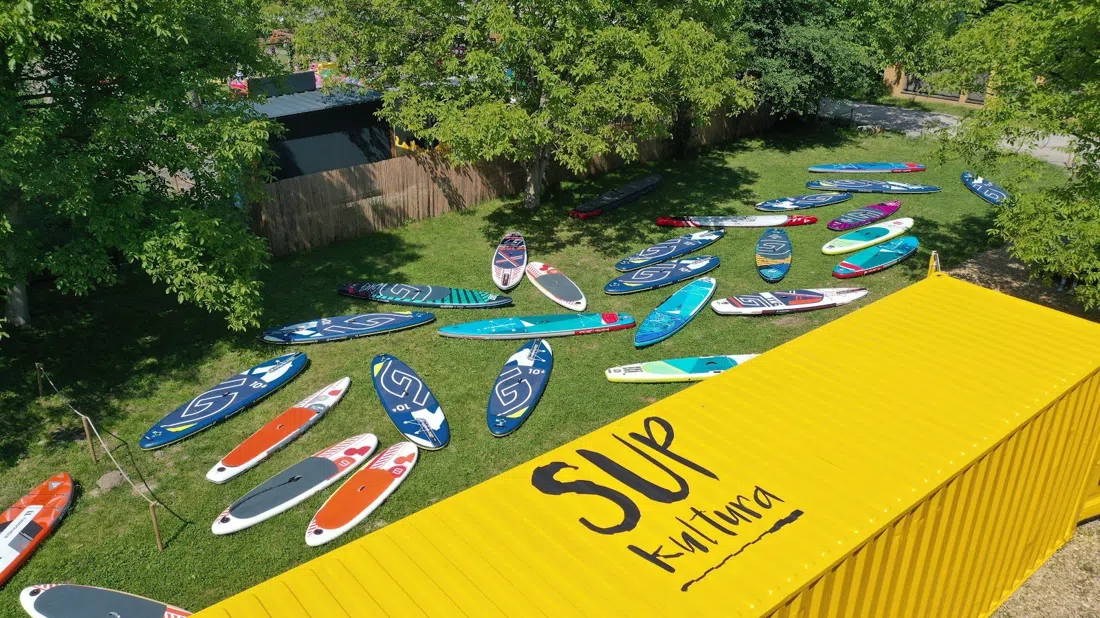
If paddling technique isn't the point and the view is, SUP Kultura Kraków offers the slower alternative: stand-up paddleboards rather than kayaks, with a dedicated SUP School for beginners and sessions built explicitly around corporate team-building and other group outings. Pricing isn't published — you request it through their contact form or by calling +48 790 305 190 — but it's worth the extra step if your group includes people who've never held a paddle and would rather stand still and look at Wawel than capsize trying to steer around it.
The Green Belt: Bulwary, Błonia, and the Rudawa
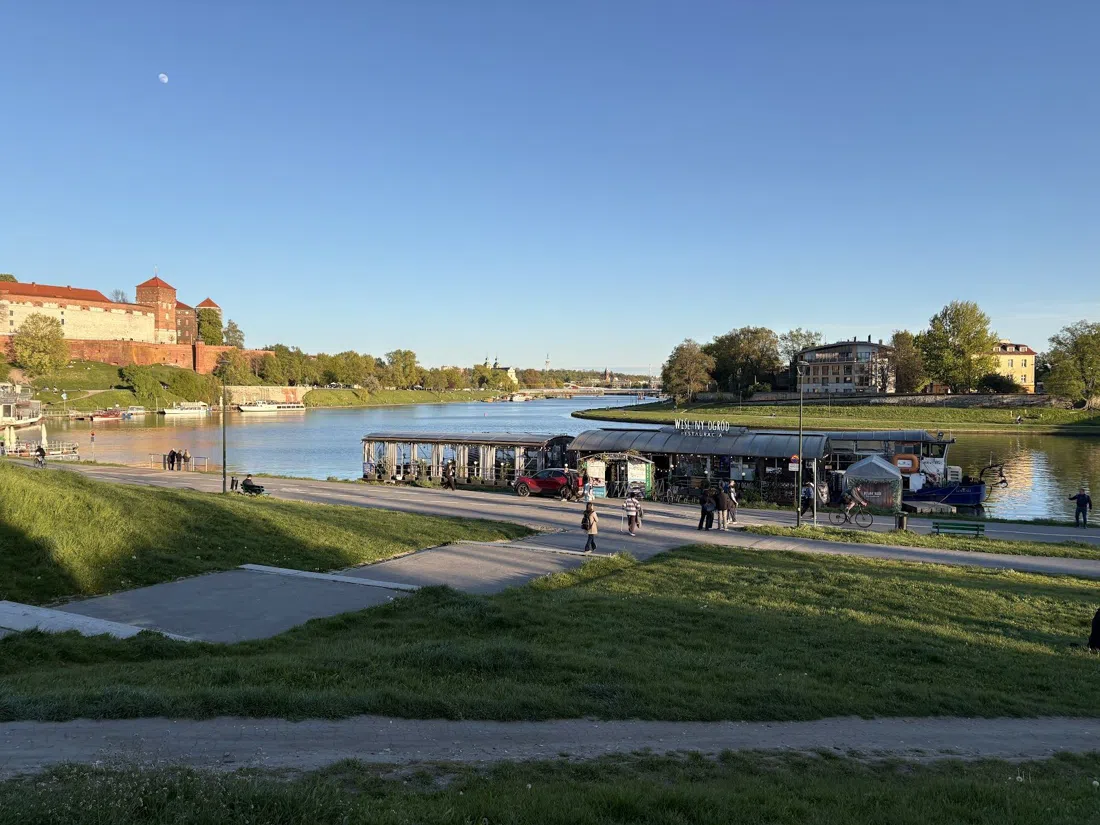
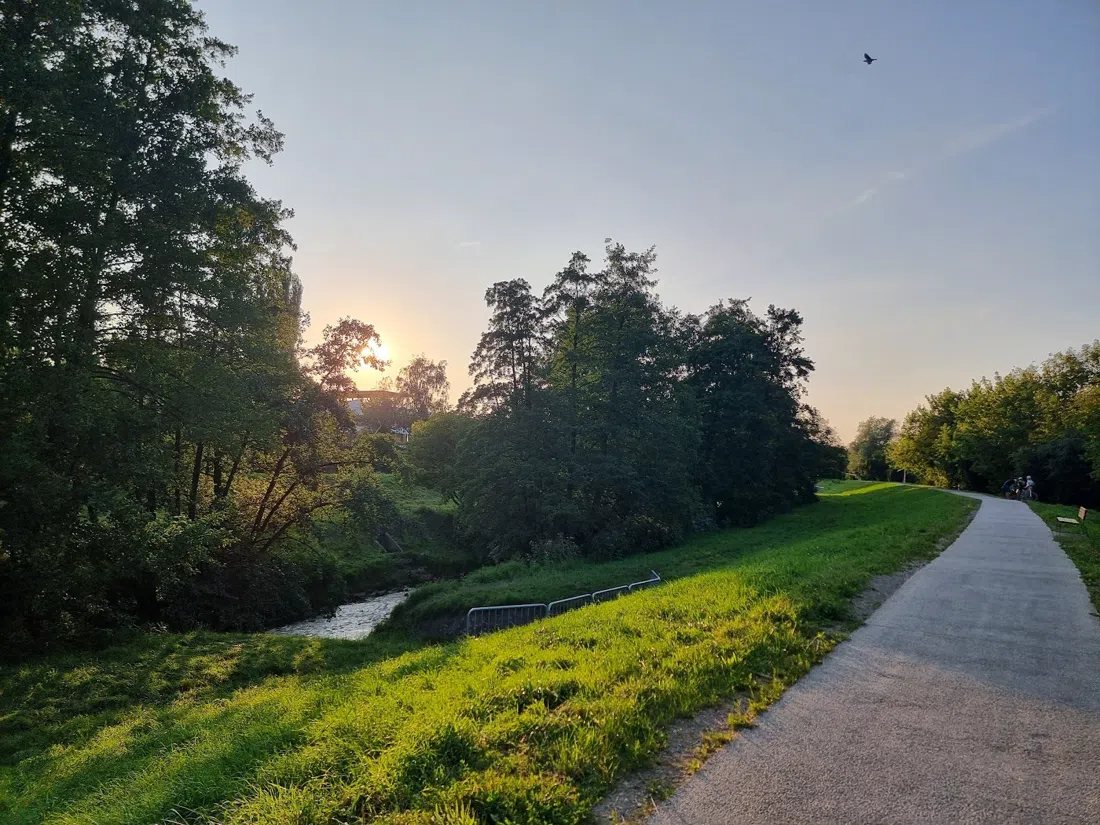
Everything else on this side of the river connects along the Bulwary Wiślane – Zwierzyniec/Dębniki embankments, known locally as Bulwar Rodła — the paved, tree-lined spine that ties the kayak launches, the meadow, and the quarry into one walkable afternoon. It's free, fully open, and genuinely built for groups: cyclists, joggers, and picnicking families share it without much friction. The one caveat for 2026 is that the city has renovation works starting on this left-bank stretch through the year, so budget for a fenced section or two and a short detour rather than a continuous riverside walk.
Walk the embankment north and it feeds naturally into Błonia Meadow, the vast open field that sits at the hinge between the Old Town's crowds and Zwierzyniec's quiet. Błonia has been common land since the medieval period, when it served as shared pasture for the city's herds — a use so entrenched that when Kraków tried to formally annex and develop the field in the nineteenth century, residents fought and won a decades-long legal battle to keep it public. It's now a National Heritage Site, still functioning exactly as it always did: as the meadow every local heads to with a blanket and a bottle of something cold. It routinely absorbs mass gatherings — Papal Masses, concerts, marathons — so there's no group too large for it.
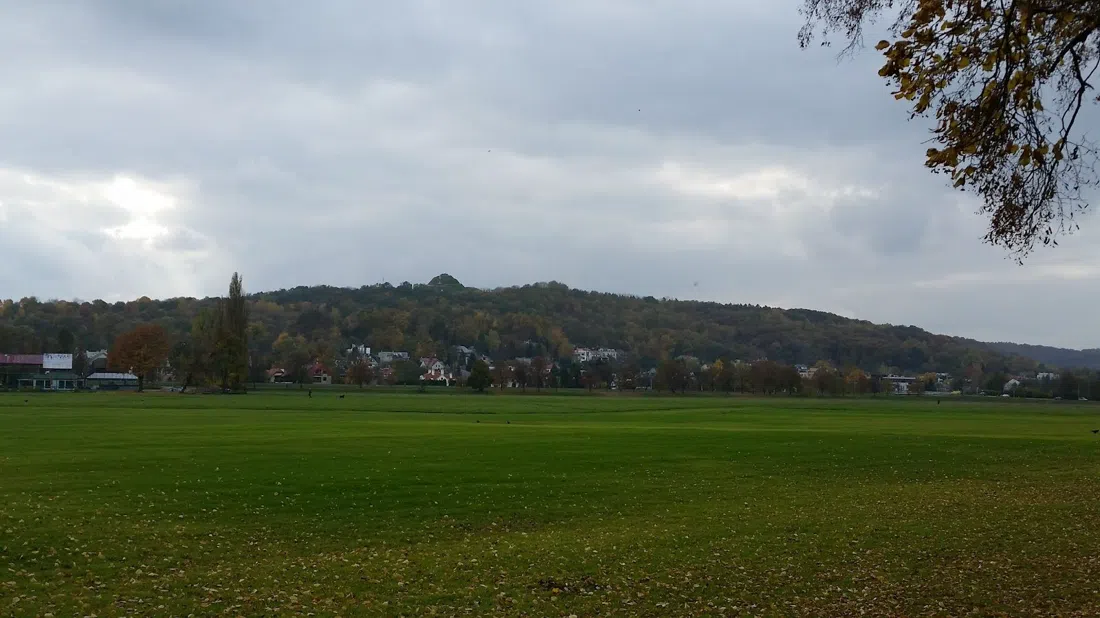
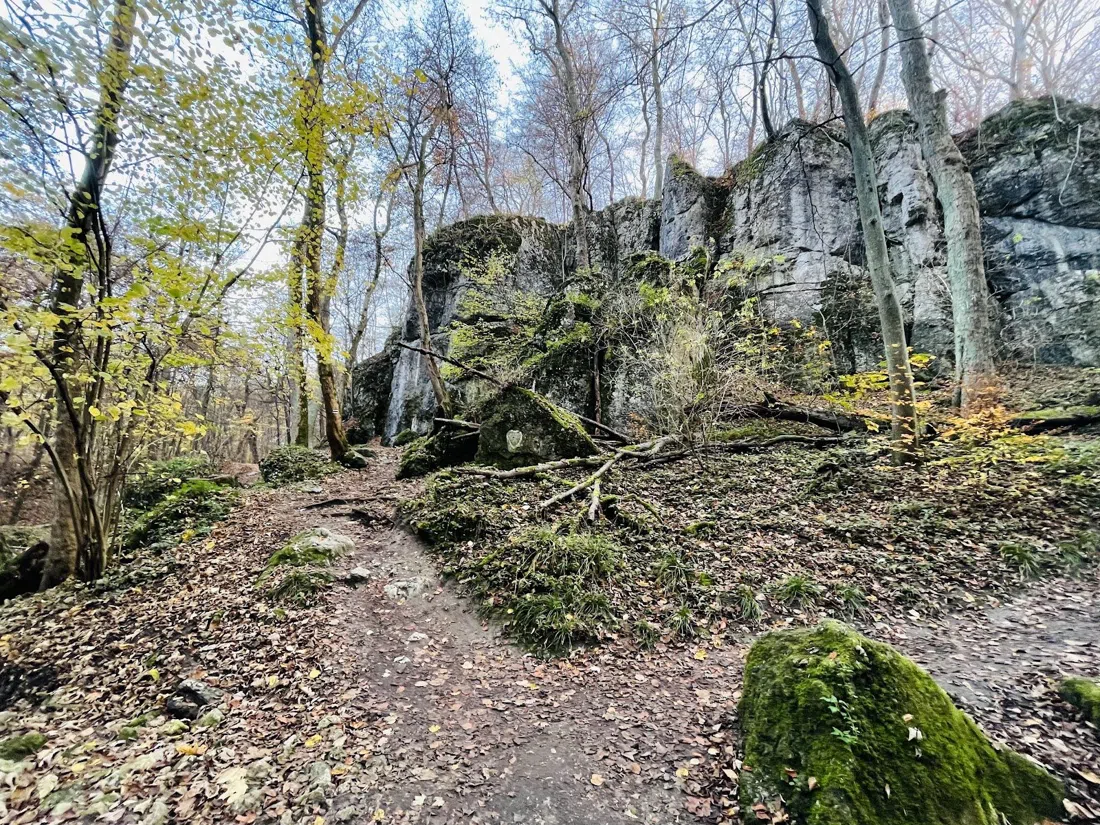
From Błonia's edge, the walk that actually earns the "other Kraków" description is the Dolina Rudawy — the Rudawa Valley path that follows the smaller river from its confluence with the Vistula at Salwator almost to Mydlniki. It's a public path, narrow in places, so larger groups do better walking in a loose single file than a wide clump, but the payoff is a genuinely quiet green corridor that runs parallel to, and just far enough from, the tourist density of the Royal Route. If you have an extra hour, detour into the hills above the valley to the Panieńskie Skały nature reserve, a small cluster of limestone outcrops in forested Zwierzyniec. It's an open-access reserve, but stick to the marked trail — this is protected ground, not a scramble park — and it pairs naturally with the climb up to the Kościuszko Mound nearby if you want the wilder, more vertical counterpoint to a day that's otherwise flat river meadow.
From Quarry to Reserve: Zakrzówek
The clearest post-industrial story on this whole route is Park Zakrzówek and the Skałki Twardowskiego rock formations in Dębniki. This was a working limestone quarry until 1991; once extraction stopped, groundwater filled the pit and turned it, over three decades, into a turquoise lake ringed by sheer rock faces — the kind of accidental landscape that no planner would have designed on purpose. It's now a protected nature reserve with free, unrestricted entry, which makes it the single best illustration of this article's whole premise: industrial Kraków quietly rewilding itself on the same riverbank where locals now swim.
The swimming platforms open for the 2026 season from 27 June to 30 September, Tuesday through Sunday, 10:00 to 18:00, and entry costs nothing. The one real constraint is capacity — the city caps the platforms at 300 people at once on peak weekends, so a hot Saturday afternoon in July is not the time to arrive expecting empty water. Come on a weekday morning, or treat it as a walking and viewpoint destination outside those hours rather than a swim.
Eating and Drinking on the Riverbank
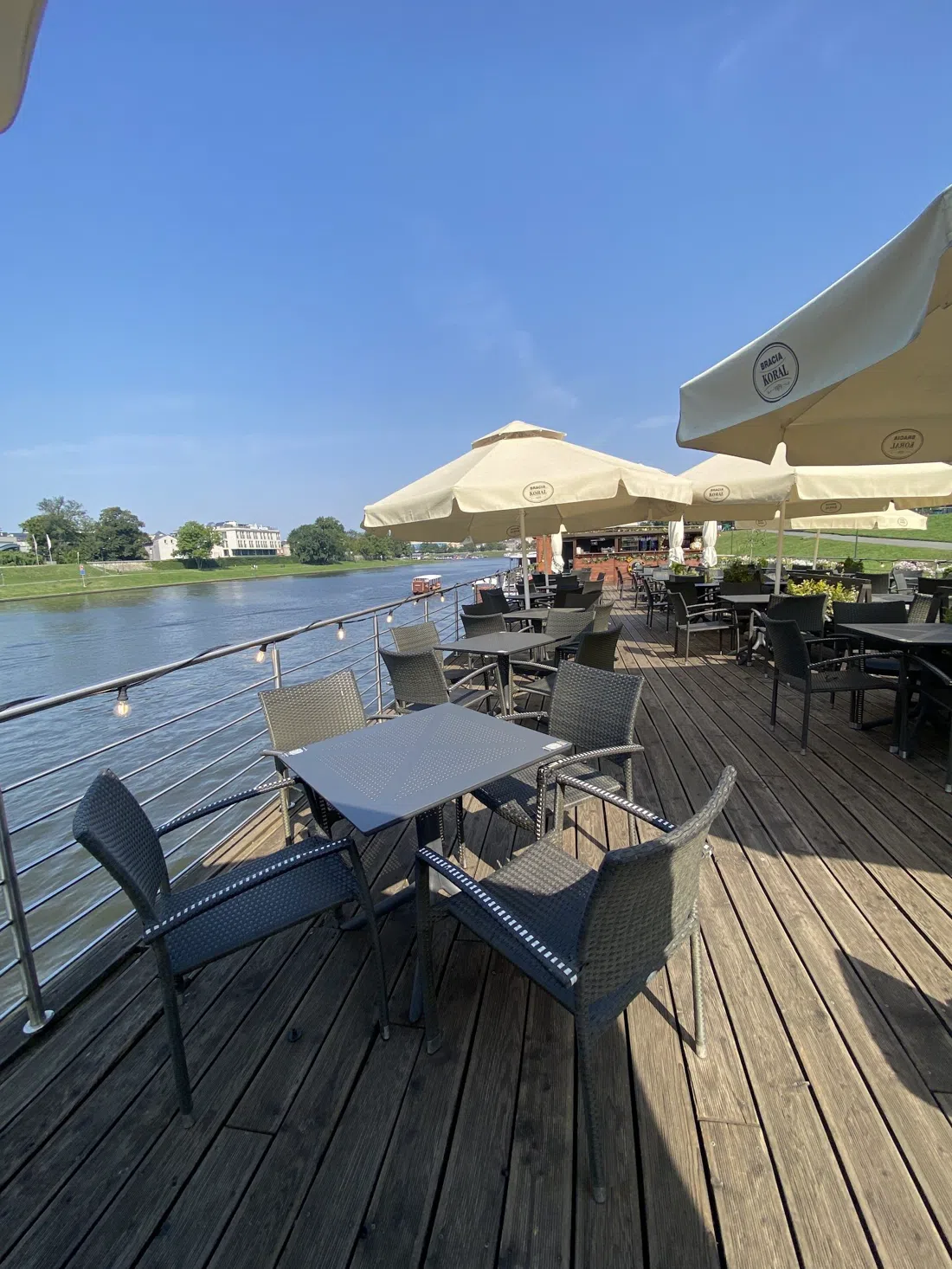
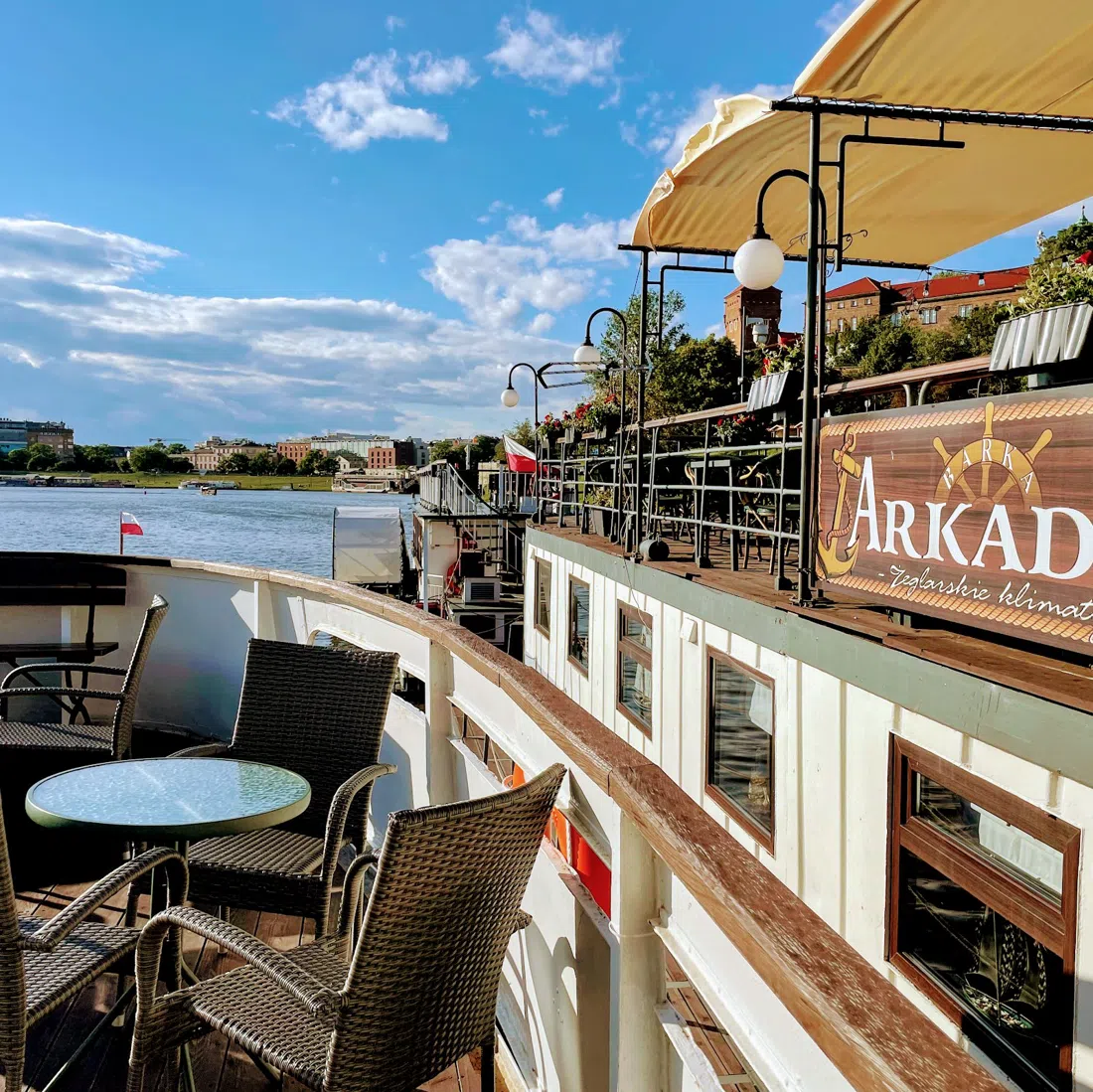
Three venues let you finish the day actually on the water rather than just beside it, and they suit very different groups. Barka Arkadia is a barge restaurant moored on the Vistula, and it's the closest you'll get to dining on the river itself, with Wawel framed across the bend all evening. Regular dining is walk-in only — no table reservations for casual meals — though it does take corporate and event bookings separately, and its river cruise add-on tickets start around 70 zł if you want the view in motion rather than at anchor. Prices sit mid-range.
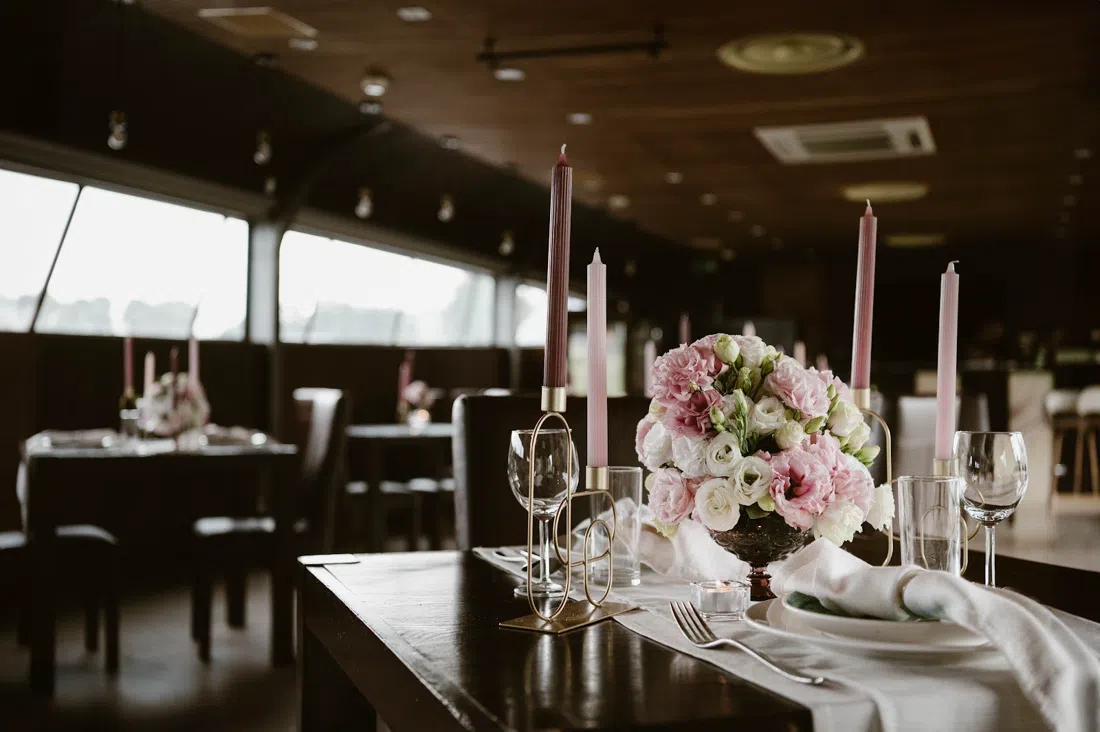
For anything larger — a wedding, a corporate function, a proper private party — Nasza Rzeka Resto Bar, housed on the barge Stefan Batory, is built for it. It's explicitly the biggest-capacity river barge on this stretch, taking bookings up to roughly 200–300 guests, with bar and café pricing at the mid-range end and private event costs available on request. Book ahead; this isn't a venue that improvises around a walk-in crowd of that size.
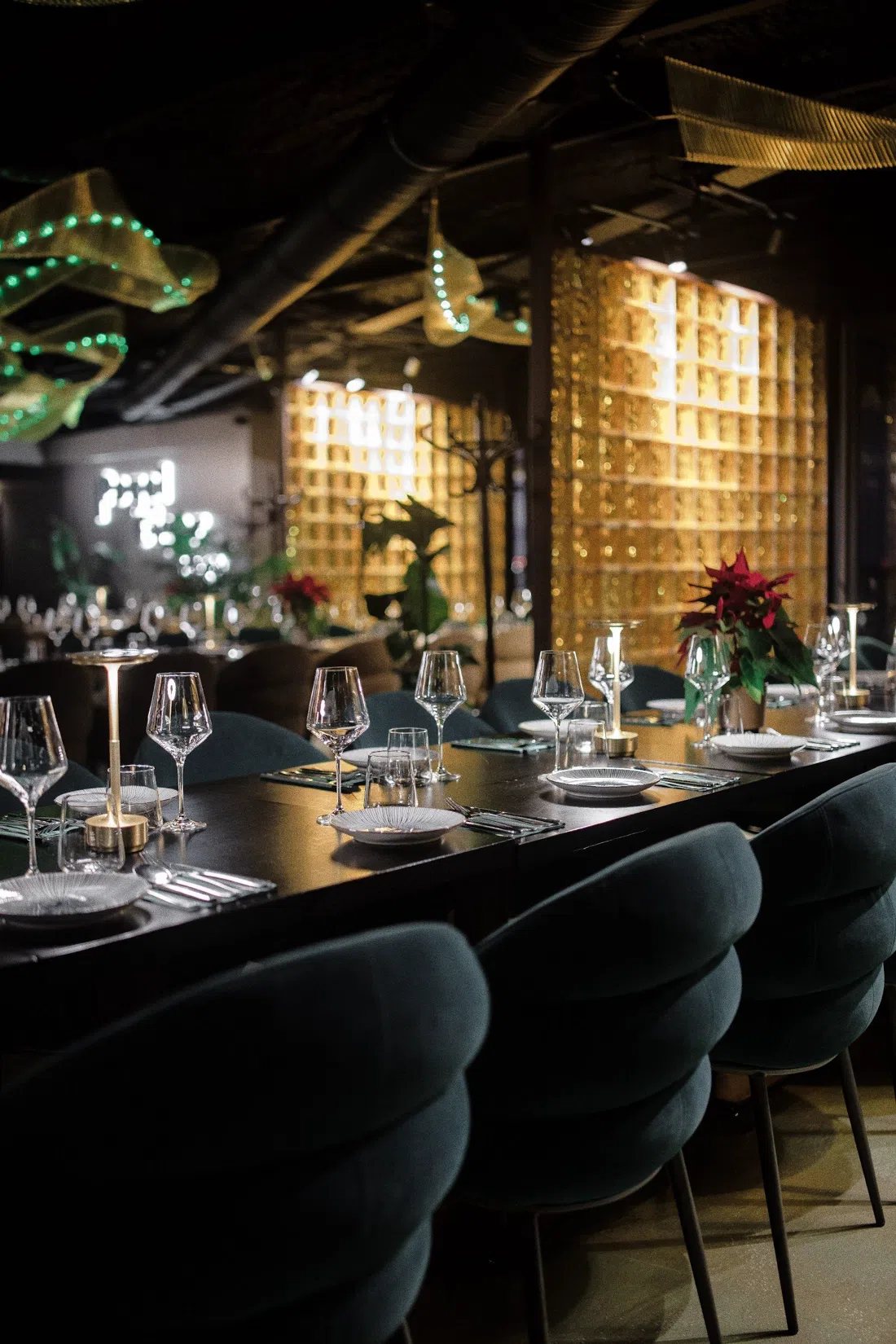
The third option carries a small piece of local history worth knowing before you go. Panorama Forum, a rooftop restaurant in a striking post-industrial building in Zwierzyniec, hosts weddings, receptions, and full-service corporate events, with pricing available only on request. The ground floor of that same building used to run as Forum Przestrzenie, a beloved riverside bar that closed for good in March 2024 — if an old guidebook or a friend's five-year-old recommendation sends you looking for it, don't; it's gone. The rooftop reopened under the Panorama Forum name in August 2024, and it's now the legitimate way to see this building and get the elevated river view that made the site famous in the first place.
Practicalities: Getting There, Timing, Budget
Getting there is a short walk or tram ride, not an expedition. From the Main Square, the Bulwary embankment at Dębniki or Zwierzyniec is roughly 20–25 minutes on foot via the Grunwaldzki or Dębnicki bridges; trams running toward Salwator or Zwierzyniec cut that to under 10 minutes if the day is hot and you'd rather save your legs for the walking. Once you're on the left bank, everything in this article — the launches, the meadow, the quarry, the barges — sits within a few kilometres of continuous riverside path, so a single day covers it without backtracking through the centre.
Bring cash. The kayak and SUP operators here are small, family-run outfits without online booking systems, and while card payment is increasingly common, a phone booking confirmed with cash on arrival is still the safer assumption — call ahead regardless, since none of the three rental venues take group bookings through a website. Budget-wise, this is one of the cheapest good days Kraków offers: the embankments, Błonia, Zakrzówek, the Rudawa valley walk, and Panieńskie Skały cost nothing to enter, kayak rental runs 20–55 zł an hour depending on boat size, and a barge meal sits comfortably in the mid-range bracket. Time it for late spring through early autumn — the Zakrzówek swimming platforms only run 27 June to 30 September in 2026, and the riverside walk is genuinely better with the meadow green and the barges open for the season. If you're building a longer stay around this route, our Krakow guide covers the rest of the city, and the Krakow hotel search is the fastest way to find something within walking distance of Dębniki or Zwierzyniec rather than the more crowded Old Town core.