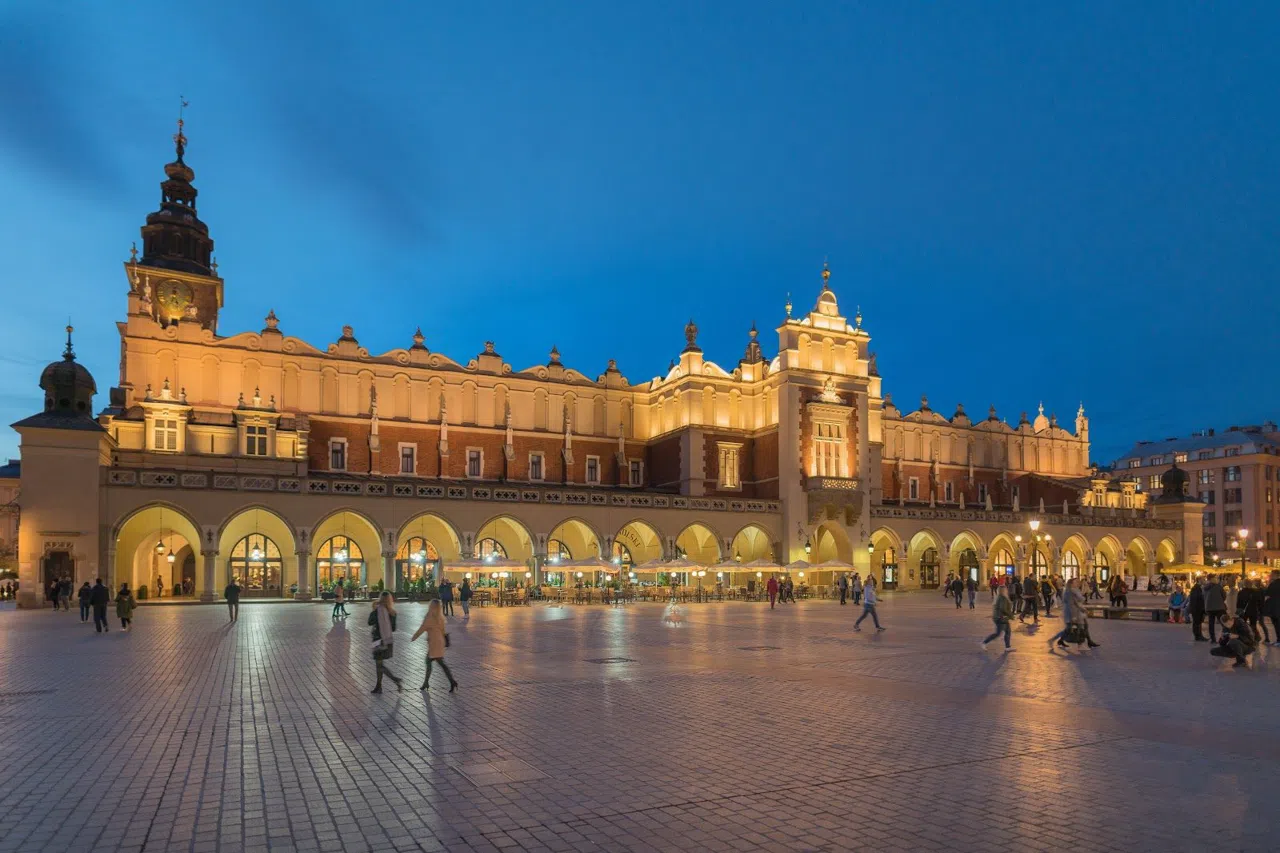

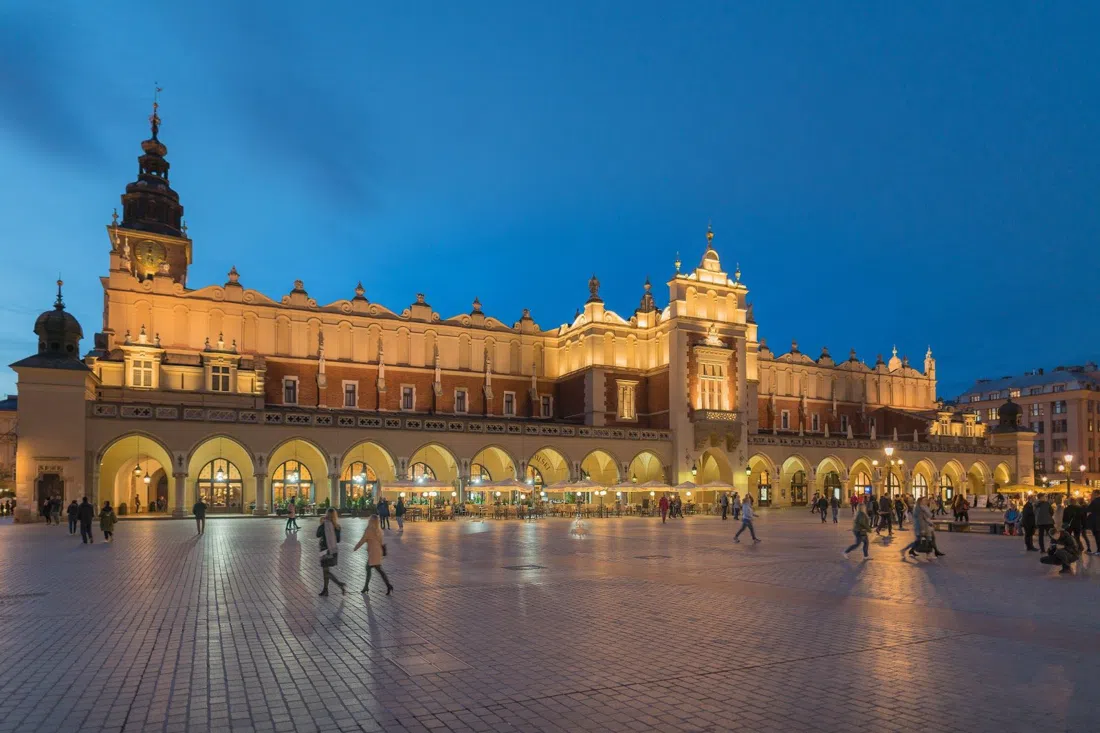
By nine in the evening, the last amber trader in the Sukiennice (Rynek Główny, the market square's dead centre) is folding felt over a tray of unsold rings, and a waiter two arches down is already laying cutlery for the late sitting at Café Noworolski. Nobody in Kraków finds this overlap strange. The Cloth Hall has been closing one kind of trade and opening another under the same roof since the 14th century, when Kazimierz Wielki — Casimir the Great — had the original wooden stalls rebuilt in brick and stone so that Kraków's cloth merchants could weigh and sell bolts of cloth out of the rain. A fire in 1555 took the Gothic structure down; the Renaissance attic and arcaded parapet that make the building recognisable today, with its stone gargoyles and stepped roofline, were added in the rebuild that followed, and the ground-floor arcades that let you walk straight through from one side of the square to the other were a later addition again, cut into the building in the 1870s. Three eras of construction, one continuous use. That's the case for treating the Sukiennice as a living building rather than a monument you tick off at ten in the morning and leave.
Seven Centuries Under One Roof
The Sukiennice (Cloth Hall) is free to walk through at any hour, day or night — it's a public arcade as much as a market, and the ground-floor stalls sell everything from folk woodcarving to amber jewellery, with pieces running roughly 50 to 2,000 złoty depending on size and setting. It's the busiest single attraction in the city, and the stallholders are used to tour groups moving through in blocks; if you're travelling with a party of ten or more, you won't be the first that hour. What most day-trippers miss is that the building keeps working after the stalls close — the arcade itself stays open, lit and walkable, long after the last vendor has cashed out, which is really the whole argument for visiting Kraków's market square after dark rather than only in the rush of midday.
Upstairs, the Gallery of 19th-Century Polish Art in the Sukiennice is the oldest branch of the National Museum in Kraków, occupying the same first floor the merchants' guild once used for their own business. A standard adult ticket runs around 30 złoty, and group visits with a guide can be booked in advance through the museum (check mnk.pl for the day's opening hours before you plan around it, since they shift seasonally). It's worth the twenty minutes even if you're not usually a gallery person — this is the room where the building's second life as a civic institution, rather than a trading floor, actually started.
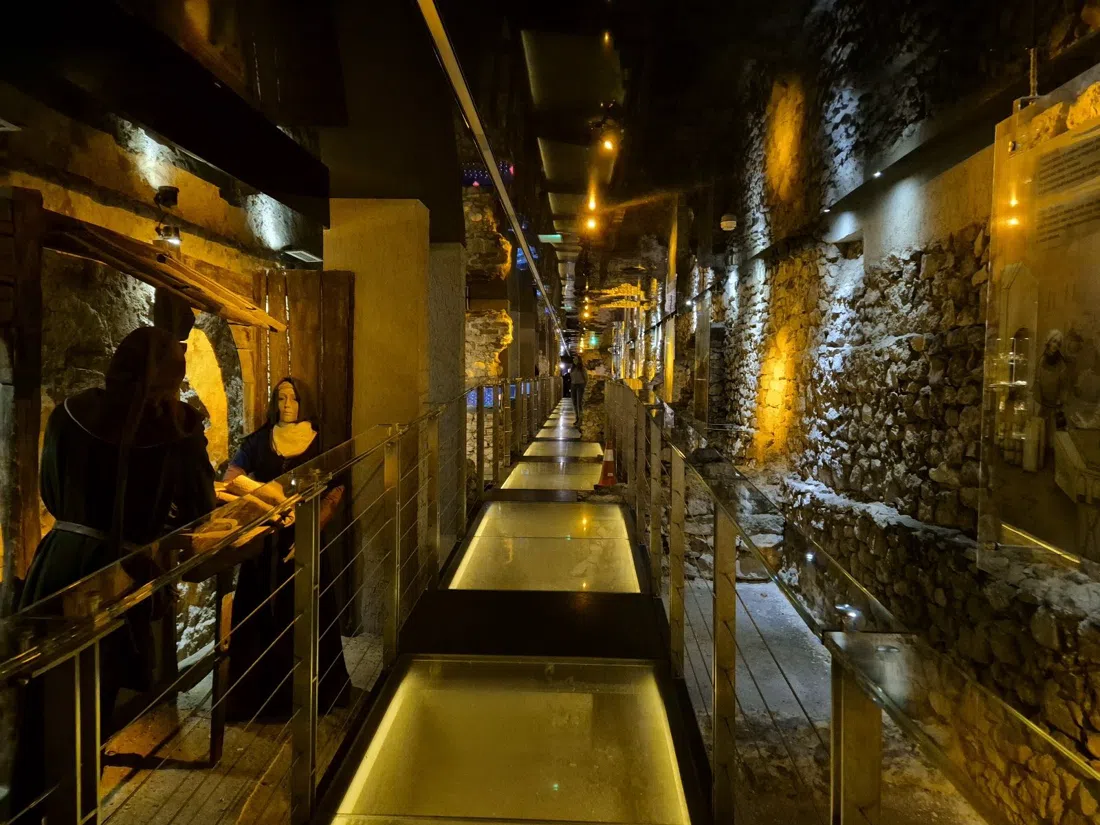
For the trading floor itself, go down rather than up. The Rynek Underground Museum, reached from a stairwell near the Hall, is the literal buried market beneath the square — foundations, coin hoards and trade-route relics excavated when the city dug up the Rynek for restoration work in the 2000s. Entry is timed and capacity-limited, so groups have to pre-book a slot rather than turning up; tickets are 36 złoty for an adult and 32 reduced, and it's free on Tuesdays if you collect a same-day ticket. If the Sukiennice above ground is the 700-year story told in Renaissance stone, this is the same story told in the dirt underneath it, and the two make more sense visited on the same day than either does alone.
The Square's Other Clock
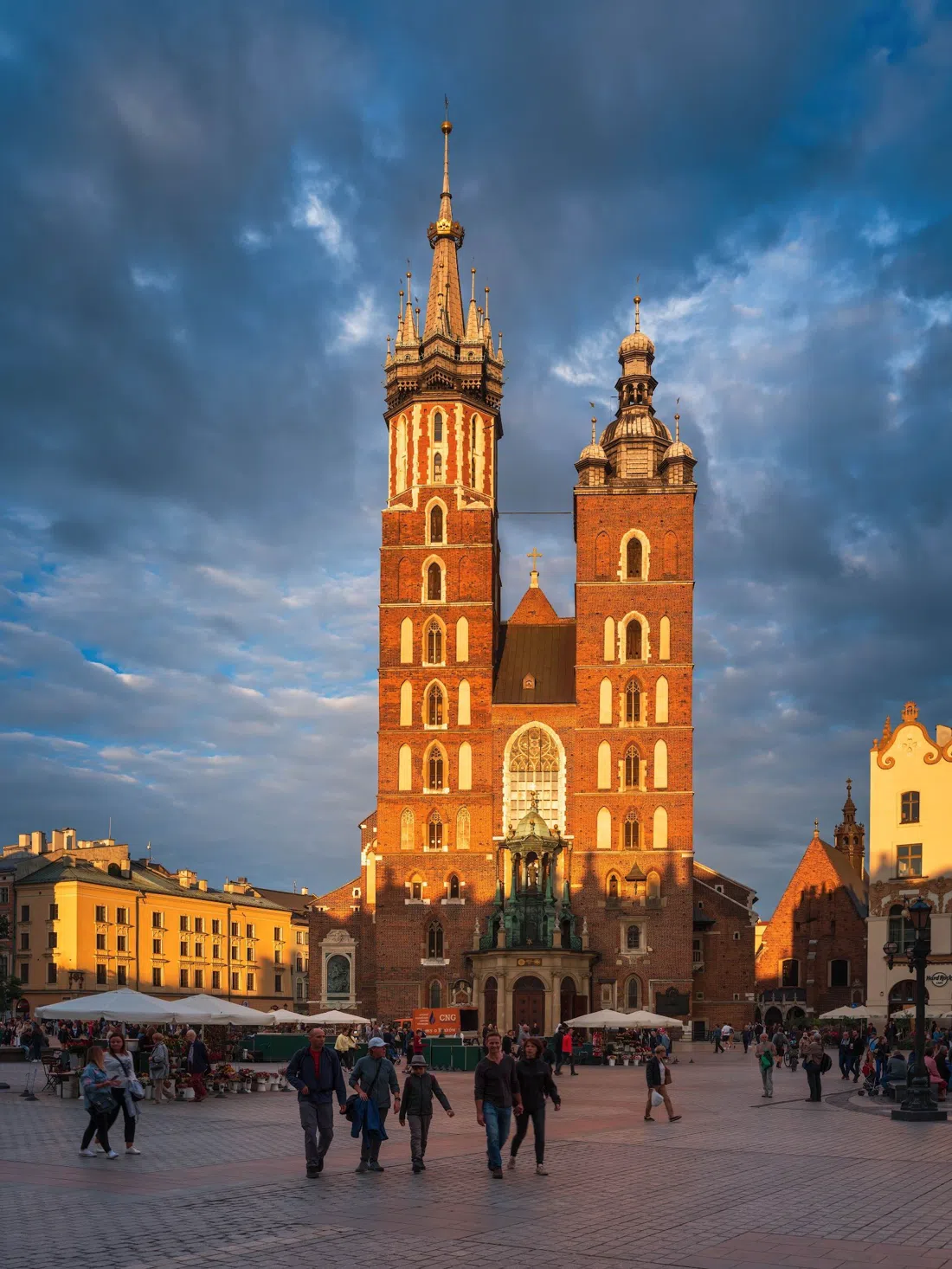
Across the cobbles, St Mary's Basilica & the Hejnał Trumpet Call (northeast corner of the Rynek) runs its own daily ritual that's worth timing your visit around. Every hour, a trumpeter plays the hejnał from the taller of the two towers — a call that stops abruptly mid-phrase, a tradition that Kraków traces back to a bugler shot while sounding the alarm during a 13th-century Mongol raid. Whether or not you take the legend at face value, the effect on a quiet evening, with the Cloth Hall's arcade lit up behind you, is the closest thing the square has to its own heartbeat. The basilica's interior takes groups on timed tickets for about 15 złoty; the tower climb — 239 steps, small-group capacity only — runs seasonally and needs a separate ticket. It pairs naturally with an evening at the Hall: do the hejnał on the hour, then cross to the arcade for a drink while it's still ringing in your ears.
Inside the Hall After the Stalls Close
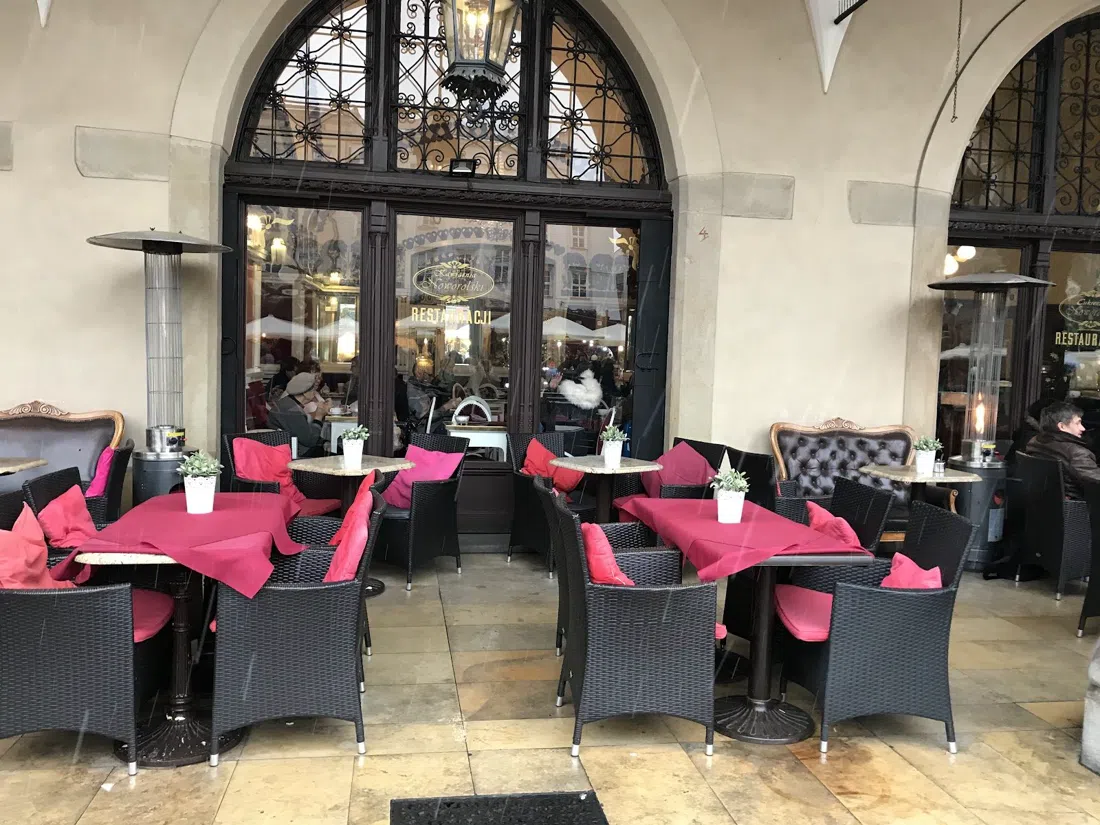
The cleanest way to experience the Cloth Hall's after-hours life is without leaving the building. Café Noworolski, tucked into the Hall's eastern end, has been open here since the early 1900s, and Piłsudski reportedly kept a regular table — it's still pointed out to regulars. Three separate rooms give it more flexibility than its grand décor suggests, so it takes groups comfortably, though it's cash only, which is worth flagging in advance if you're travelling with a mixed-nationality party who might assume otherwise. It stays open until 1am, which makes it the natural anchor for an evening that starts and ends inside the Hall itself rather than just passing through it. Expect to pay café-plus prices for the setting — count on €€ a head — but you're paying for sitting inside a 700-year-old trading floor after the stalls have gone dark, which isn't nothing.
Dinner on the Square
Step outside the arcades and the Rynek itself is ringed with restaurants old enough to have their own founding legends, several of them a direct line back to the Hall's original trading function.
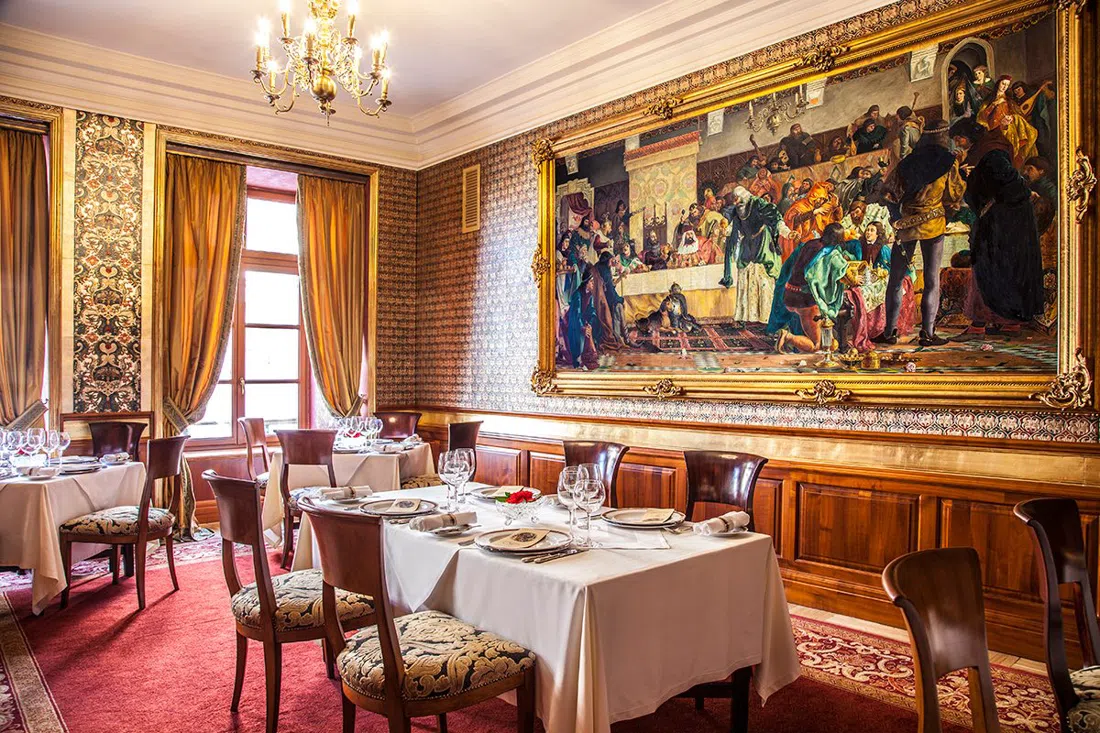
Wierzynek, on the square's southeast corner, dates its founding feast to 1364, when it's said to have hosted a congress of European monarchs — making it arguably the deepest-rooted trading-square institution still operating on the Rynek. It takes groups and private dining rooms across its floors, up to roughly 200 covers, which is why it's a standing choice for delegations and larger parties; it's open daily, 1pm to 11pm, and sits at the top of the price scale, €€€€.
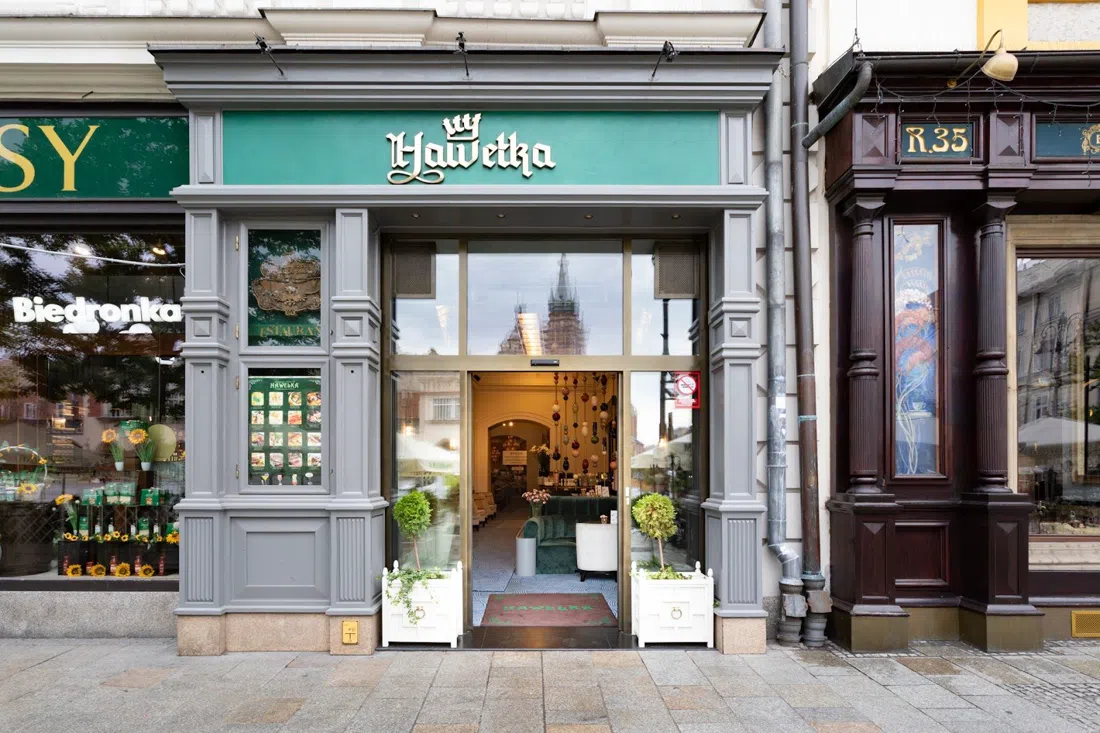
Hawełka, also on the square, has been serving continuously since 1876 and once held a royal purveyor's warrant. It runs several dining rooms and handles groups well, open 11am to 11:45pm daily, at €€€.
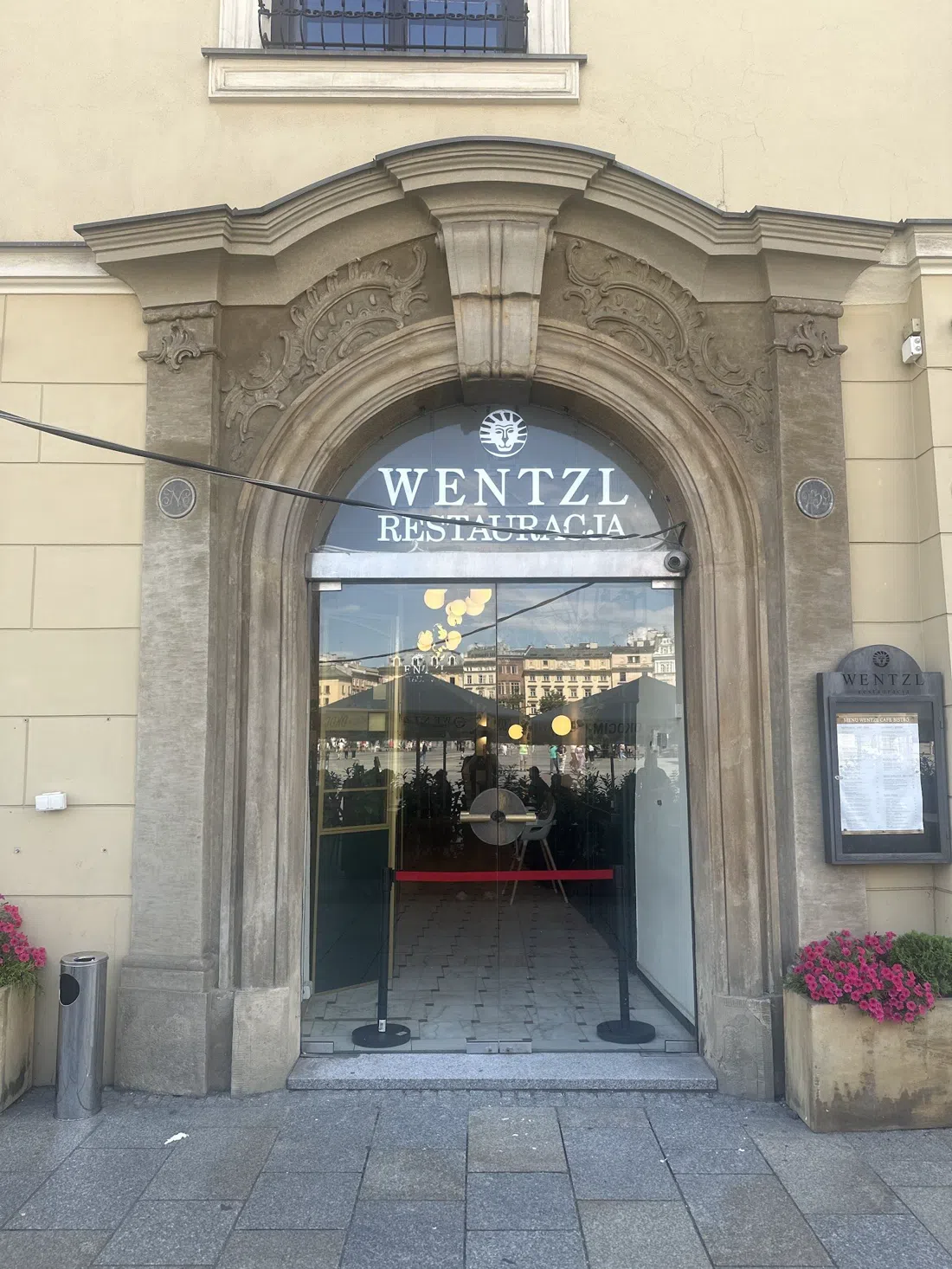
Wentzl, on the southwest corner, has occupied the same tenement since 1792. The upstairs restaurant takes groups by reservation (€€€), but the ground-floor bistro is the better find for a solo traveller or a couple — it's walk-in casual, cheaper (€€), and it happens to be the best cheap seat in the building for watching the Hall's evening crowd thin out from a window table.
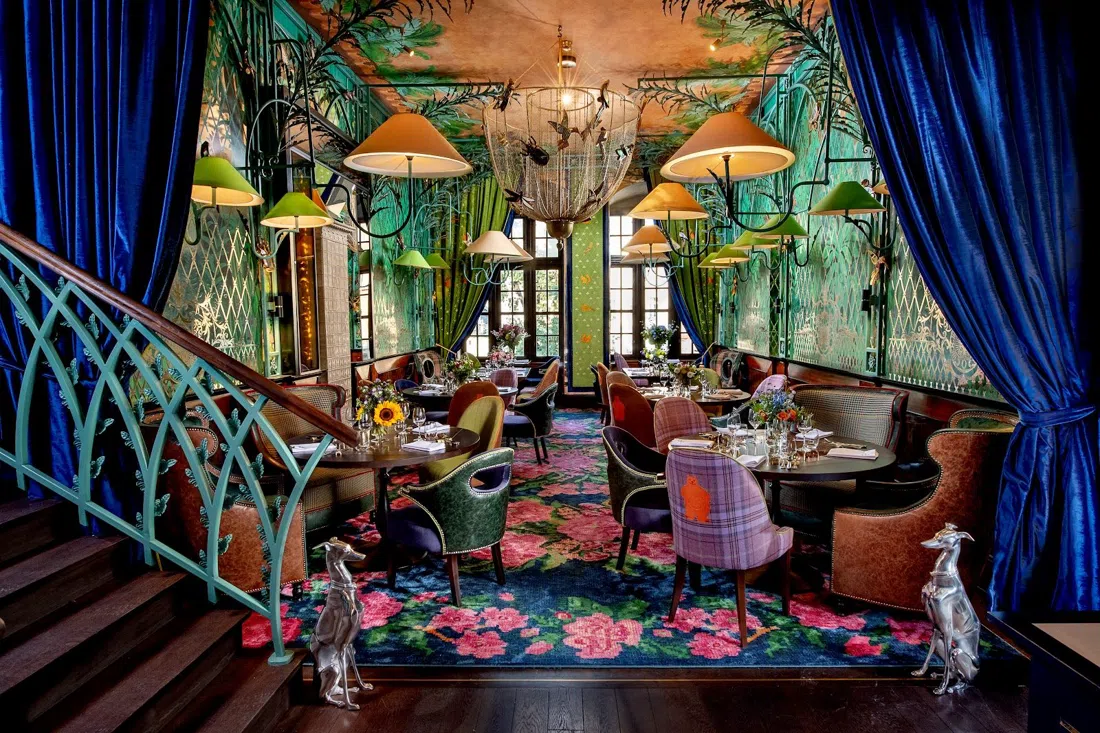
Szara Gęś, just off the square, is the credibility anchor for anyone who wants a Michelin-grade meal to go with the history: Michelin-recommended, with what's been ranked Poland's top wine list two years running. It takes groups with advance reservation, and the terrace — prime real estate looking straight at the Hall — books out fast in summer, so reserve that specifically if the view matters to you. Expect €€€€.
Book any of the four ahead if you're arriving as a group of six or more; walk-in space on the Rynek in the evening, even on a Tuesday, is thinner than the number of restaurants suggests.
Late and Low-Key, a Few Streets Off the Square
Once dinner's done, the Rynek's immediate orbit has a handful of places built for staying later without paying restaurant prices for the privilege.
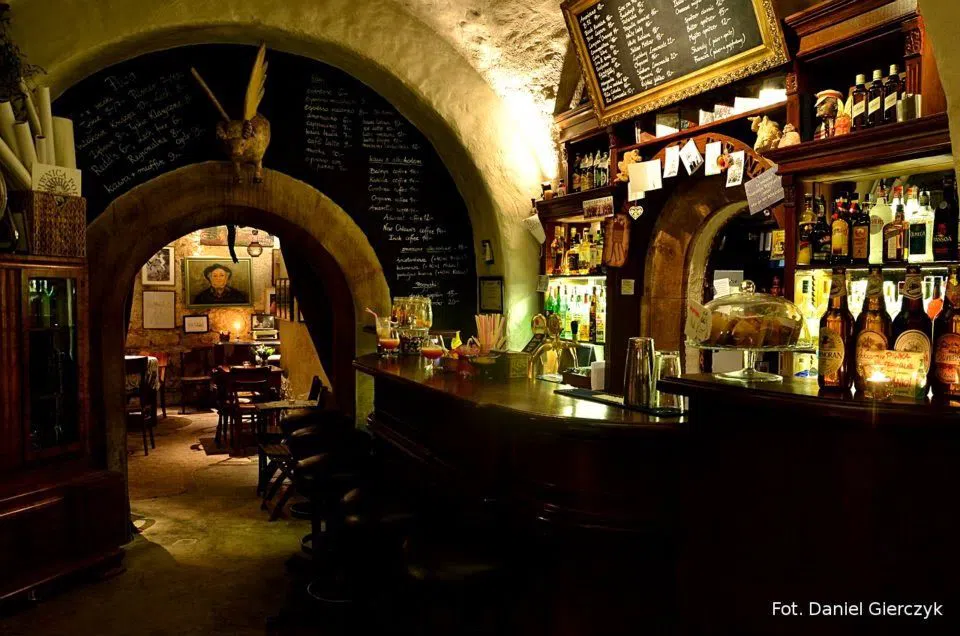
Piwnica pod Baranami, a cellar venue just off the square, has run as a literary cabaret since 1956 — genuinely one of the city's after-dark institutions, with a reputation that predates the fall of communism, when its satirical shows were as much political theatre as entertainment. It's ticketed and seated, with shows running roughly 50 to 80 złoty; book ahead for a shared table, especially for live jazz on Thursdays or cabaret on Saturdays, since walk-up seats aren't guaranteed.
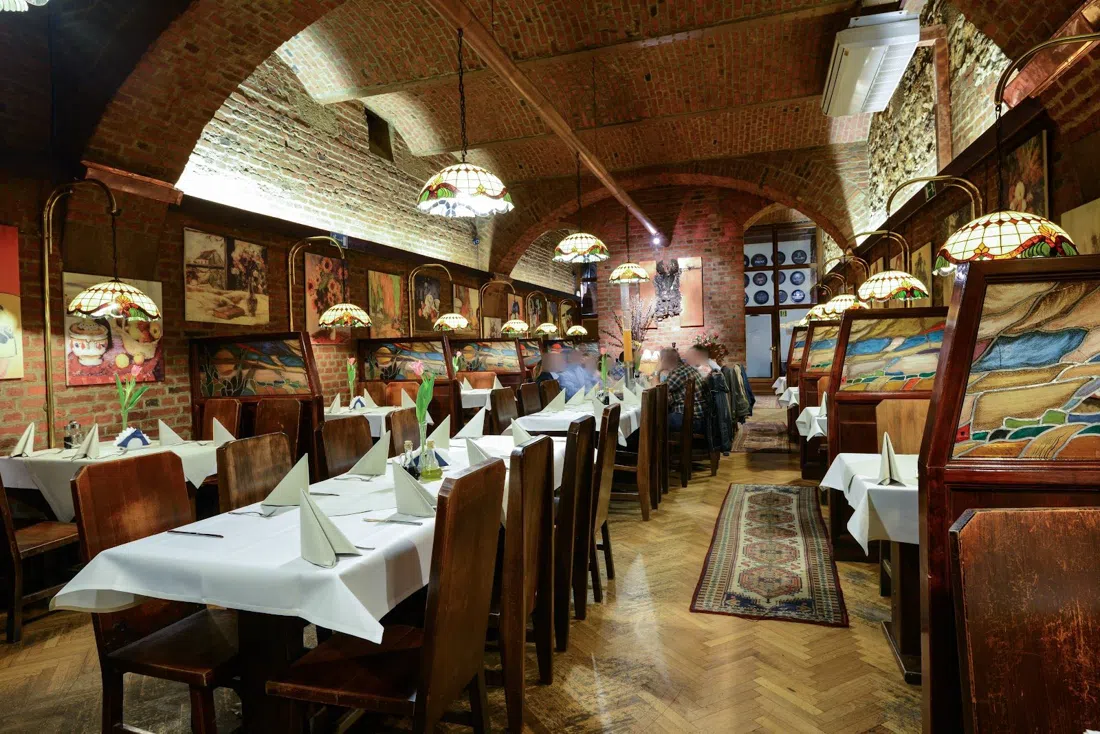
C.K. Browar, a short walk from the Hall, is Kraków's oldest brewpub, with unfiltered house beer poured tableside across a multi-room layout that suits parties well. Booking is recommended on weekends, when the wait at the door gets long; it sits at €€, a genuine counterpoint to the grandeur of the square you've just left.
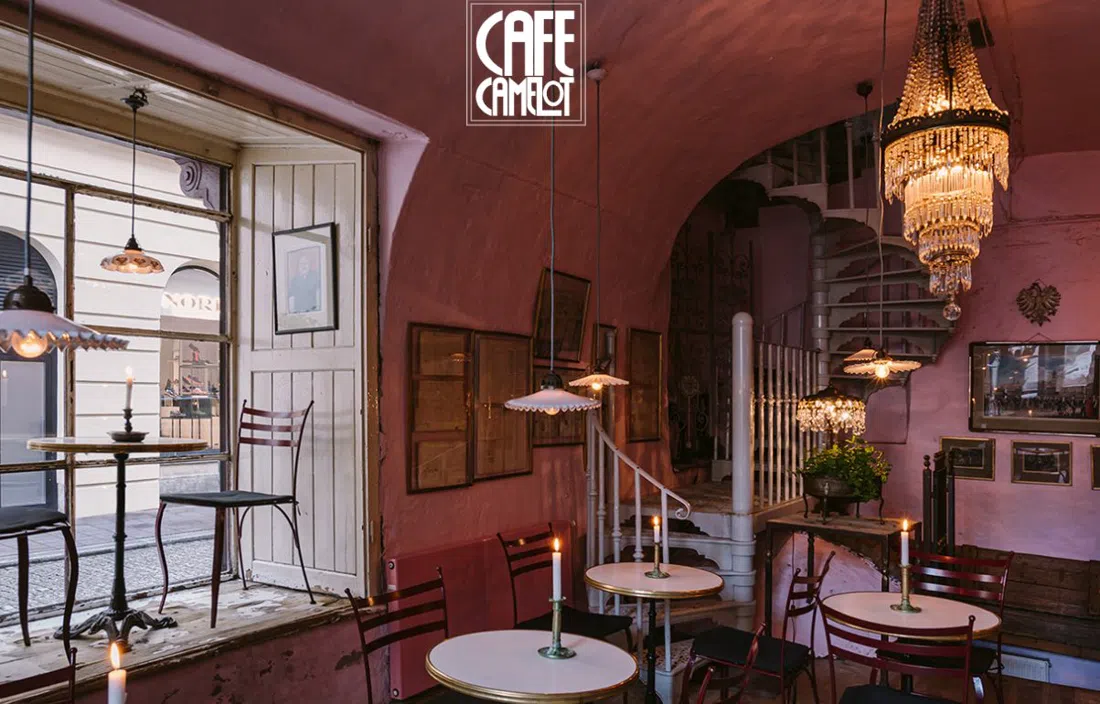
Café Camelot, tucked near St Mary's Basilica, is a smaller, more bohemian room — better suited to a pair or a small group than a party of eight, with tight, characterful seating. It stays open until midnight and runs at €€, a quieter register than anywhere else on this list.
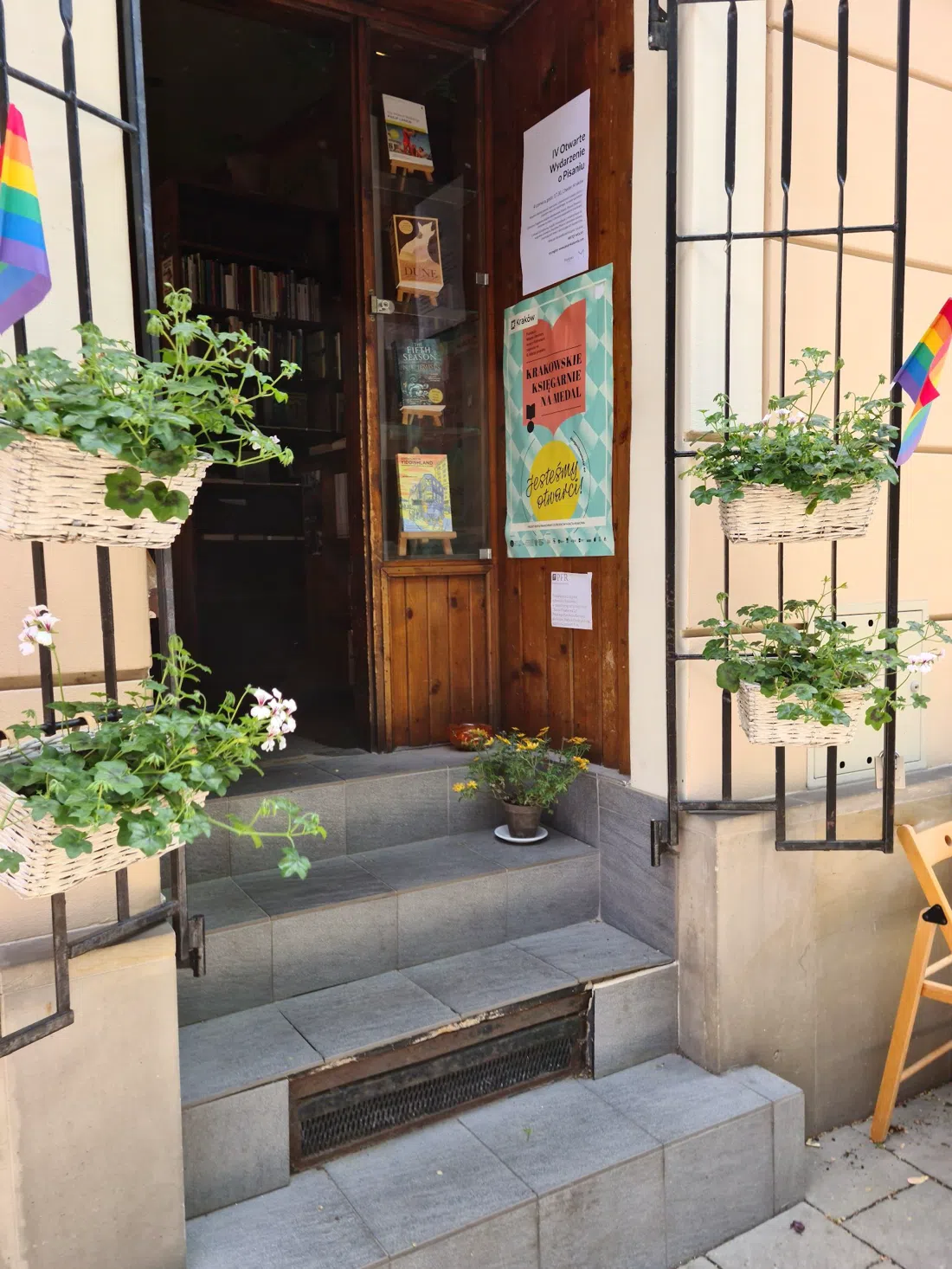
Massolit Books & Café, a short walk from the square, is the calmest bookend of the night: an independent bookshop-café that takes casual groups fine for coffee and browsing, though it's not a booking venue in the reservation sense. It closes earlier than the rest, around 8 or 9pm, so treat it as an early-evening detour on the way to dinner rather than a late stop — it's the cheapest thing on this list, at €.
The View Down
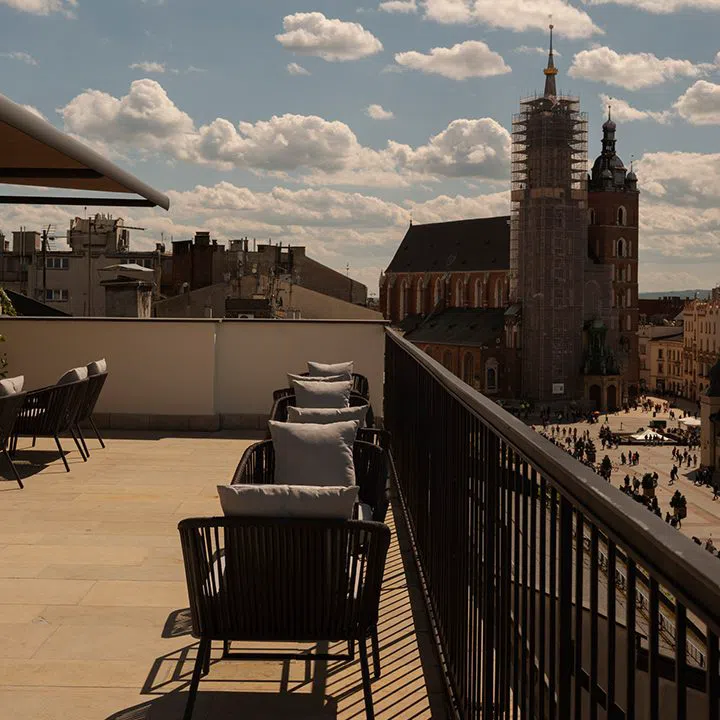
For a last look at the Hall from above, Sky Bar at Hotel Stary, just off the square, is the single best elevated vantage point over the Sukiennice's rooftop and the Rynek beyond it. It's seasonal — open April through September only, so check before you plan an evening around it — and takes groups with a reservation, which is worth making in peak months when tables go fast. At €€€€, it's priced for the view rather than the drinks list, and it's the natural closing image for a night that started at street level in a 700-year-old market and ends looking down on it.
Getting There, Cash, Timing and Budget
The Sukiennice sits dead centre of Rynek Główny, which is pedestrianised — there's no driving to it, and you shouldn't try. From Kraków Główny train station it's a flat 15-minute walk through the Planty park, or a short tram hop to any stop marked Rynek Główny or Teatr Bagatela. Trams and buses run on a zone-based ticket system, purchasable from machines at most stops or via the city's mobile app; a single ride is a couple of złoty and barely worth arranging in advance if you're staying central.
Cash matters more here than in most European capitals' old towns — Café Noworolski is cash only, and while most restaurants on this list take cards, it's worth carrying złoty for the cabaret door at Piwnica pod Baranami and for smaller stalls inside the Hall itself. ATMs ring the square, but rates and fees vary wildly; a bank-affiliated machine beats a standalone tourist one every time.
Timing: the Hall's stalls are busiest between 10am and 6pm, when the tour groups move through in waves — if you want the arcade closer to empty, aim for the hour after the stalls shutter, roughly 7 to 8pm, before the restaurant crowd fully arrives. The hejnał sounds on the hour from St Mary's tower day and night, so it's a reliable landmark to build an evening's timing around.
Budget for the evening realistically: a coffee or beer at the lower end runs €2-4, a full dinner at one of the historic restaurants €40-80 a head with wine, and the Sky Bar or a Piwnica pod Baranami show adds another €15-25 on top. If you're building a longer stay around the square, a Krakow hotel search turns up plenty of options within the same five-minute radius as everything on this list — worth prioritising if you want to walk back from Café Noworolski at 1am rather than find a taxi. For the rest of the city beyond the Rynek, the full Krakow guide covers what's outside this one square.