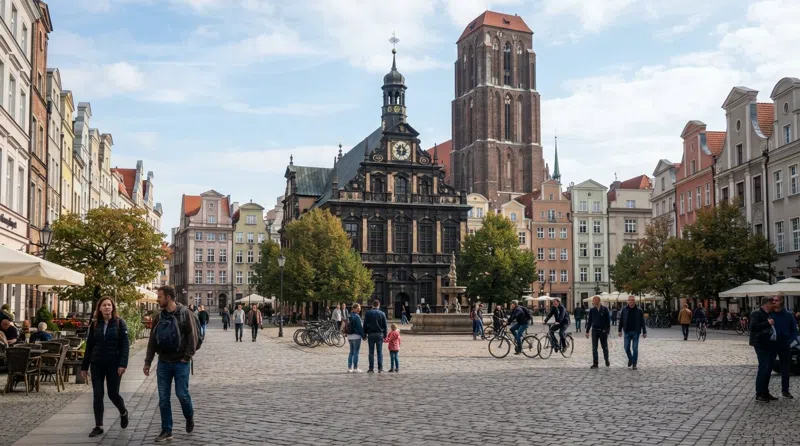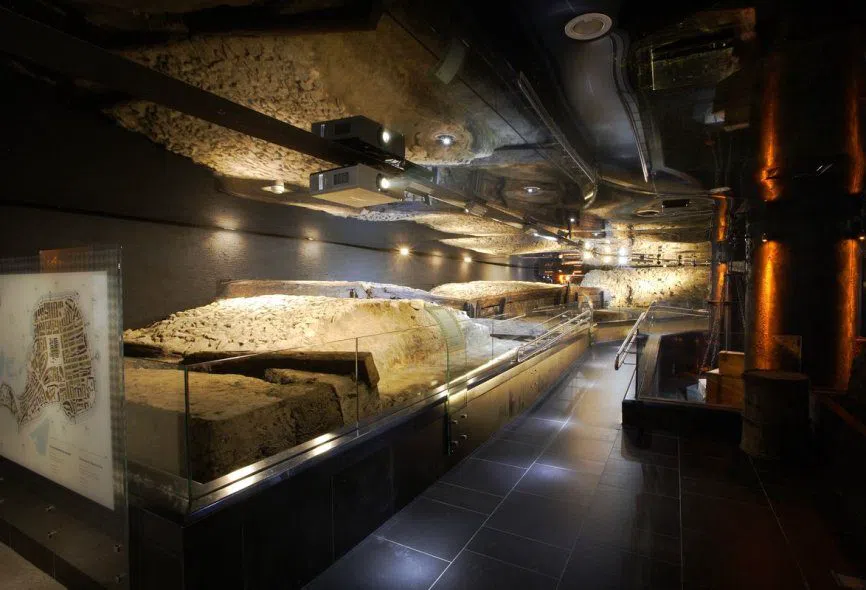

Nine metres below Rynek Główny (the flagstones where street performers work the summer crowds and horse-drawn carriages idle for photographs), Krakow keeps a second city. Market stalls, foundations of medieval workshops, a mint, coin dies, the bones of animals traded here eight centuries ago: all of it excavated over nearly a decade and sealed under glass walkways since 2010. Most travellers treat it as a single ticketed stop wedged between the Cloth Hall and lunch. It rewards being the spine of a whole day instead, with the surface sights read as footnotes to what's underneath.
The excavated city under the square
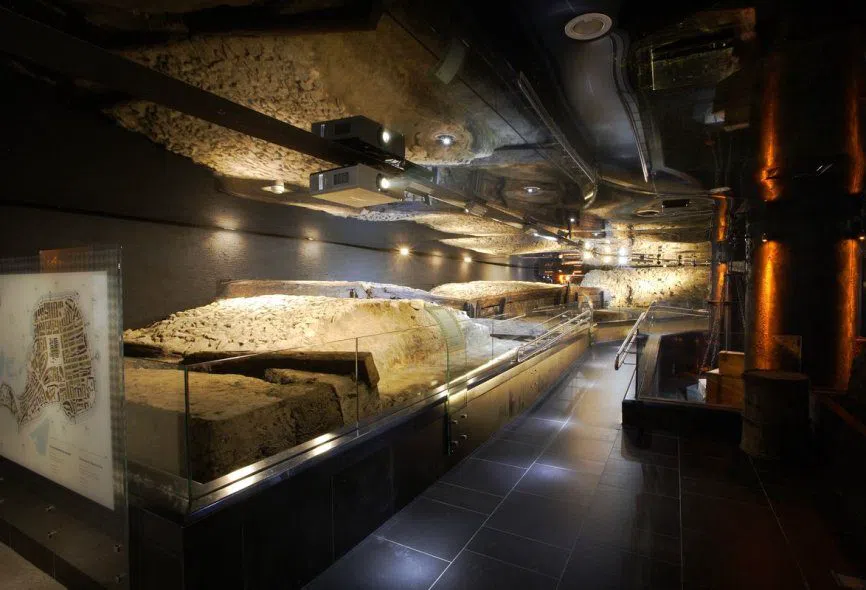
Rynek Underground (Podziemia Rynku), on the Main Square itself, is the anchor of this route, and it earns that position on scale alone: roughly 6,000 square metres of medieval and early-modern street level, four metres below where you're standing when you photograph the Cloth Hall from a café table. The museum runs the standard adult ticket at 45 PLN, a family rate at 90 PLN, and a dedicated group rate of 35 PLN per person for parties who book ahead, worth doing, because the tunnels are narrow and the museum caps guided tours at roughly 29 people for crowd control. A bookable guided tour runs 350 PLN flat per group, which is the difference between reading wall text about a 13th-century market stall and having someone explain why the stalls sit at an angle nobody planned. The historical hook worth knowing before you go down: the square as excavated isn't the square Krakow was granted under Magdeburg law in 1257, but what came after a catastrophic Mongol raid in 1241, rebuilt on a grid that still defines the modern Rynek. You are, literally, standing on the first draft of the city and walking through the second.
The wall that used to ring it
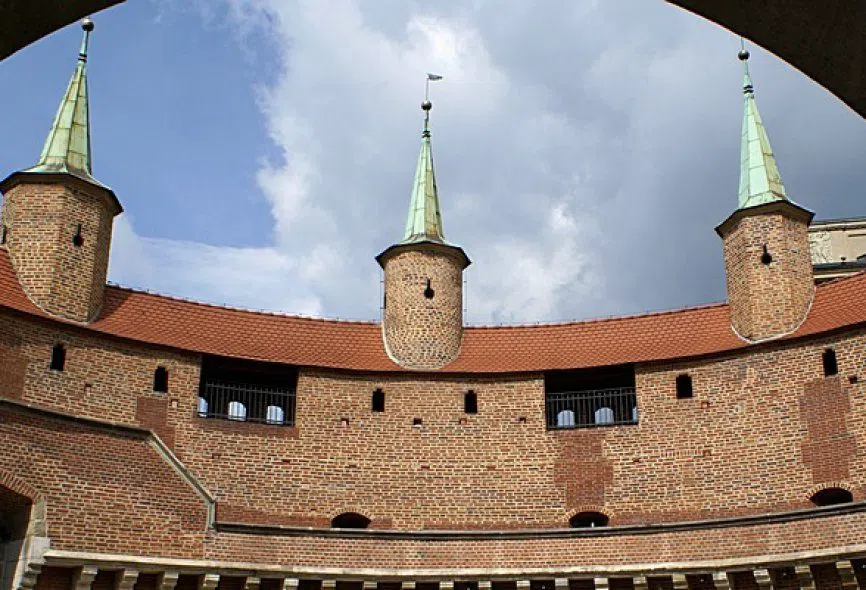
Come back up and walk five minutes north to the Barbican & City Walls, near the Floriańska Gate at the edge of Stare Miasto, for the surface half of the same story. This is what once enclosed the streets now excavated below the square: a squat, red-brick fortress ring built in 1499, one of the few barbicans in Europe still standing complete rather than as a single gatehouse fragment. Entry is a modest 16 PLN standard, with published group and school rates of 16 PLN and 11 PLN per person, plus a combined ticket with the surviving wall segment. It's an outdoor stop, quick, good for groups who've just come from the tunnels' close air and want fifteen minutes in the open before the next thing.
Two small rooms that explain the big one
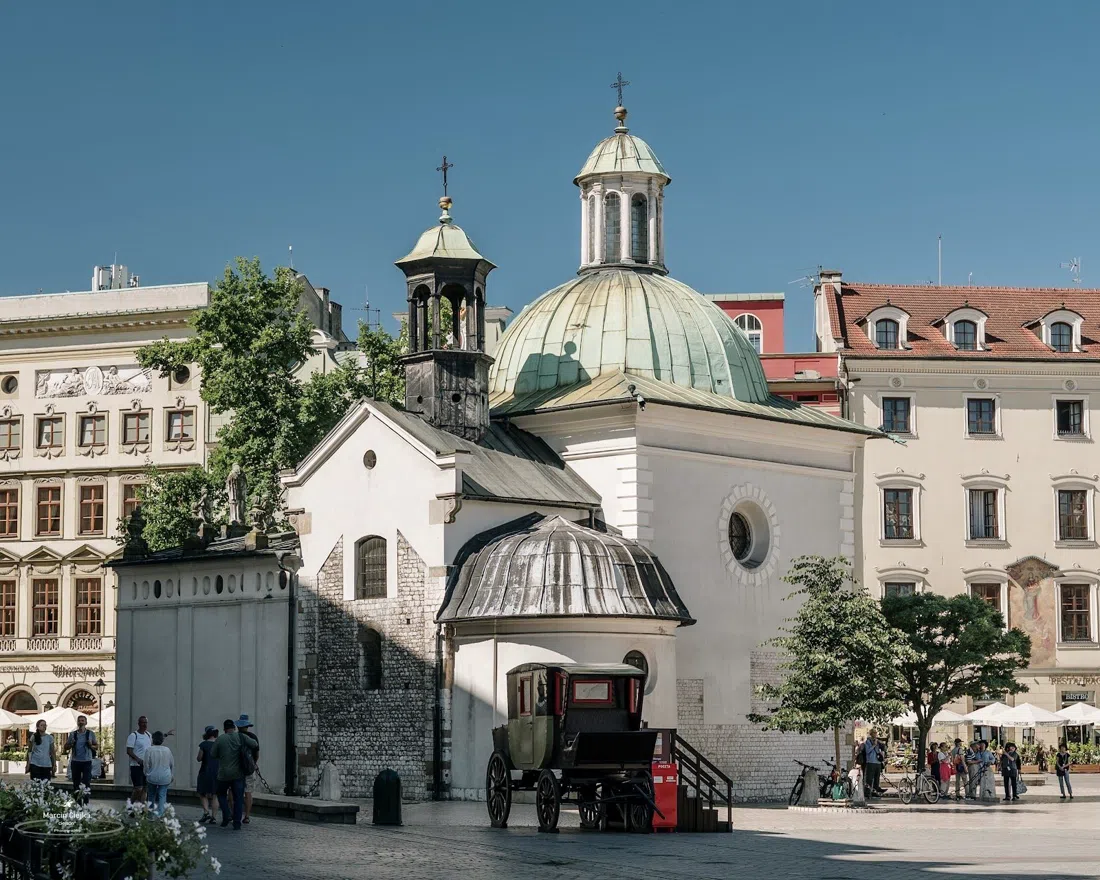
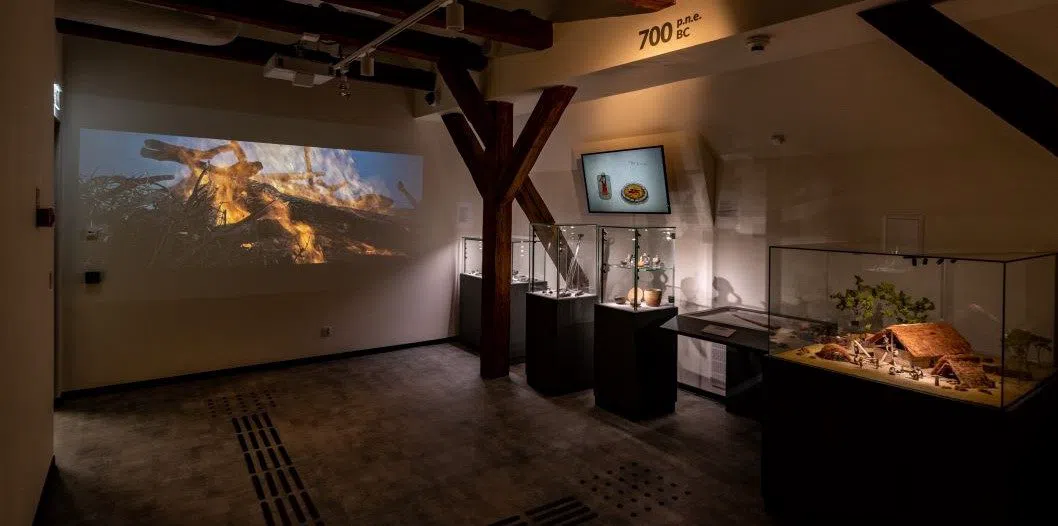
For readers who want the archaeology explained rather than just displayed, pair the Archaeological Museum of Kraków, a short walk from Wawel on the edge of Stare Miasto, with the tiny St. Adalbert's Church archaeological crypt exhibit on the Rynek's southeast corner, both modest, both easy to under-rate. The museum is a standard group booking at roughly 14 PLN entry and gives real context to what you glimpsed as isolated objects underground: full findings from digs across the region, explained rather than lit dramatically and left to speak for themselves. St. Adalbert's is smaller still, a single crypt chamber for very small groups only, often bundled with the museum's admission at low or no extra cost. It may be the most overlooked stop on this whole route, because it sits on the exact patch of ground where the earliest church in the square once stood, meaning you're standing in the same footprint as Rynek Underground's headline exhibit without the queue or the timed slot. Neither venue suits a coach party looking for one big room to fill twenty minutes; both reward two people willing to read the labels.
The older excavation up on the hill
Wawel Hill has its own underground layer, and it predates the one below the square by centuries, worth knowing before you assume Rynek Underground is Krakow's only buried city. The Lost Wawel (Wawel Zaginiony) exhibition, folded into the standard Wawel Castle timed-entry route, shows the oldest documented masonry in Poland: foundations of a rotunda and an early palace that most visitors walk straight past on their way to the State Rooms upstairs. It's part of the general Wawel Castle route ticket, priced in the roughly 14-31 PLN band depending on which combination you book, and because it's bundled into timed entry it suits groups exactly as well as the castle itself does, so book the slot ahead in high season.
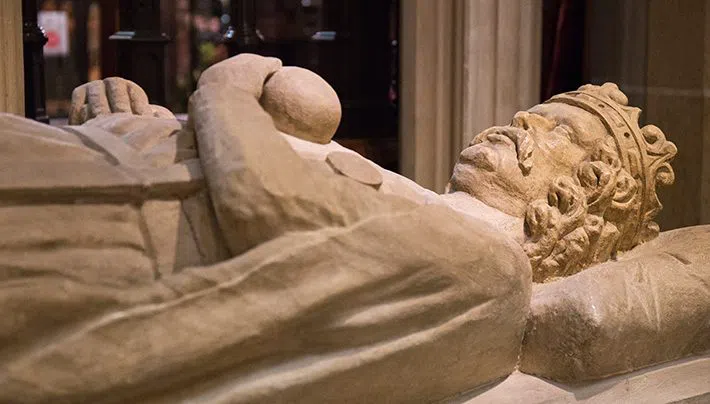
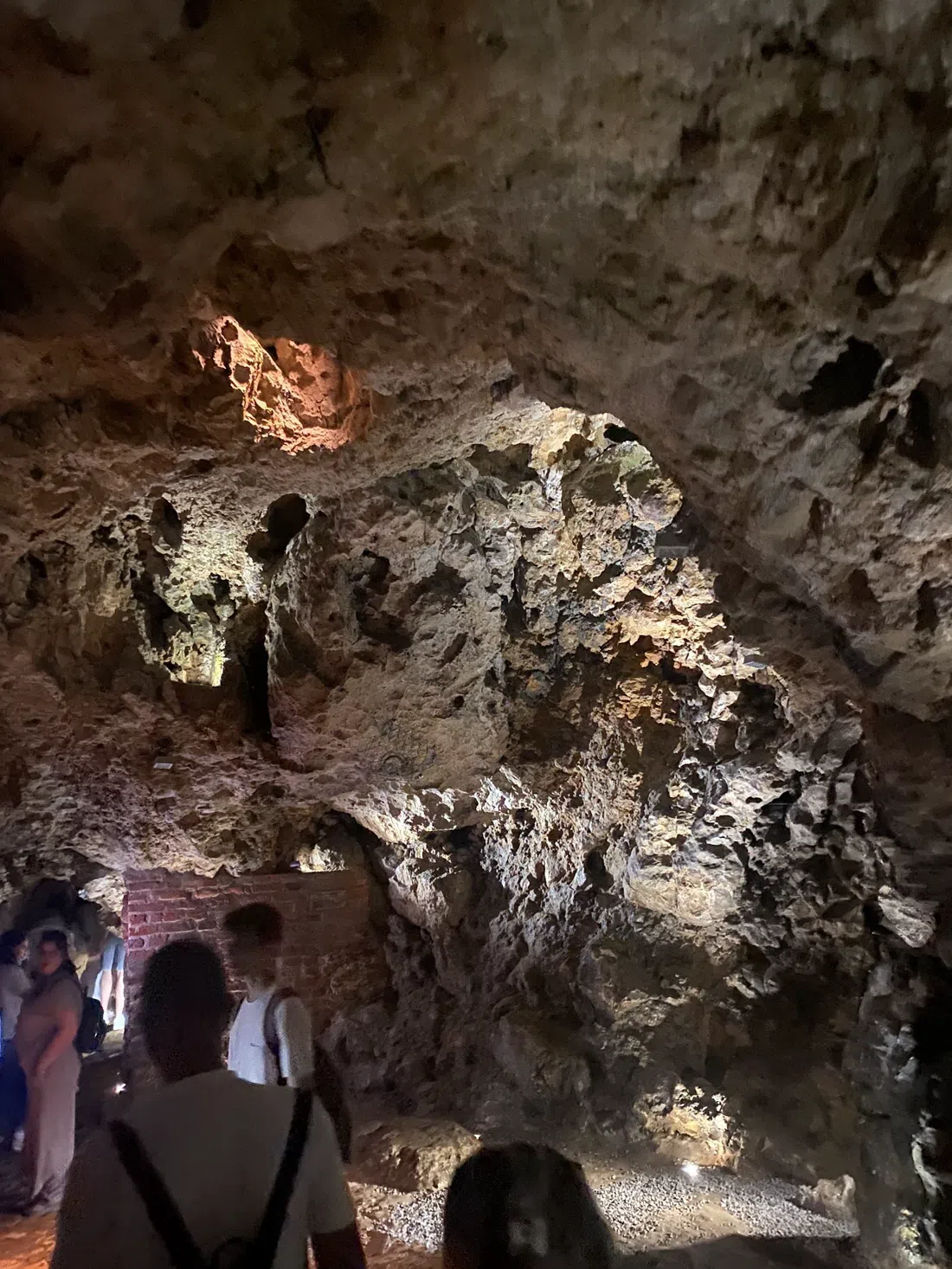
Two Wawel sites sit apart from that bundle and are easy to get wrong. The Dragon's Den (Smocza Jama), at the base of the hill by the river, is a genuine cave rather than a staged exhibition (the source of Krakow's dragon legend), and it's the one entry in this whole route that isn't open year-round: April to October only, with a single-file spiral staircase that bottlenecks flow badly for anything bigger than a small group. Entry is a coin-turnstile 9-10 PLN at the exit, cash in practice. And the Wawel Cathedral Royal Crypts, also on the hill, are ticketed entirely separately, through the Cathedral Chapter's own office rather than the castle administration: 26 PLN adult, 18 PLN reduced. It's the single most common ticketing mistake on the hill: people assume a Wawel Castle ticket covers the crypts, and it doesn't. Groups move through here routinely; it's the one Wawel stop that doesn't bottleneck the way the Dragon's Den does.
Beyond the square's original footprint
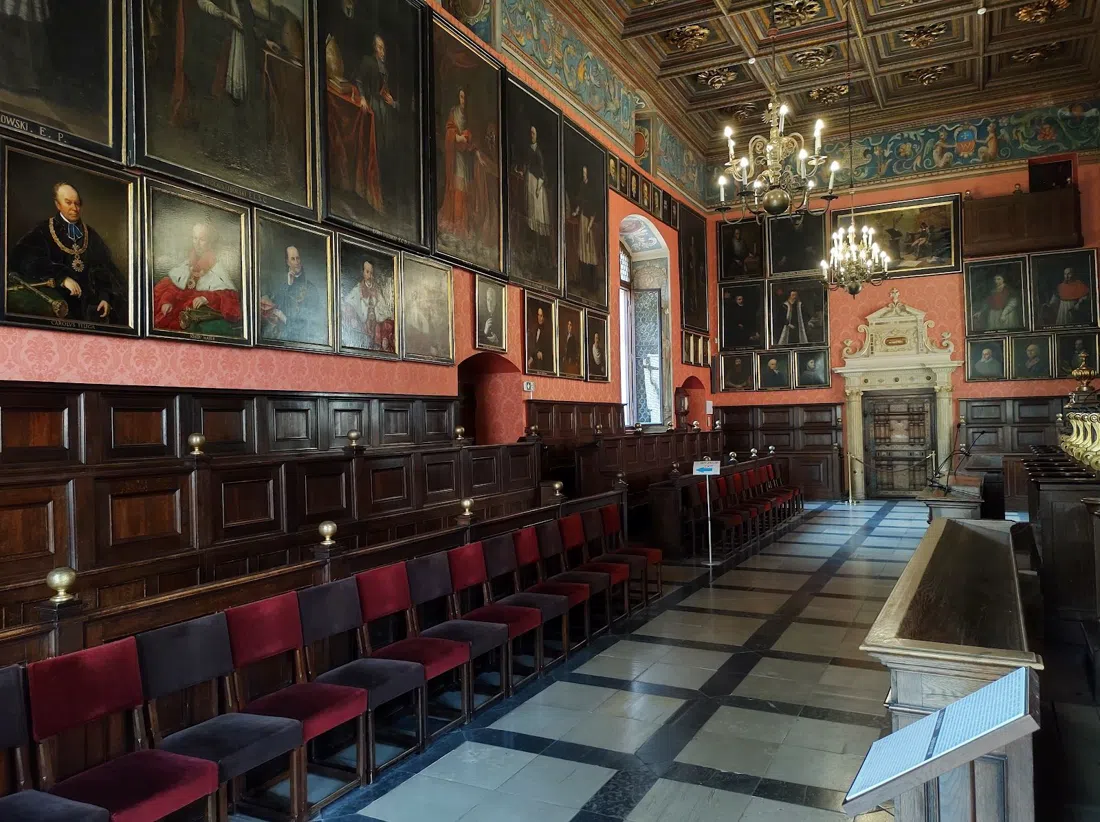
Two stops widen the angle past the Rynek itself, and both are optional rather than essential, include them if the day has room. Collegium Maius, a few minutes from the square near ul. Jagiellońska, is the University of Krakow's oldest building and sits on the same founding-era stratum as everything excavated below the Rynek, just above ground and still in use as a working museum. It's not underground, which makes it a useful contrast piece: the medieval city's intellectual chamber rather than its buried foundations. Visits are guided, by reservation, in timed slots, at roughly 20 PLN. Book the slot rather than turning up, since capacity is genuinely limited.
The Old Synagogue in Kazimierz is the furthest reach of this route, geographically and thematically: Kazimierz was its own chartered medieval town from 1335, walled and administered separately from Krakow proper until the 19th century, so pairing it with the Rynek stops is really a claim that the "medieval city" Krakow shows you was never a single city at all. Entry runs 19-25 PLN, standard museum group booking. Worth it if you're already spending a day in Kazimierz; not worth the detour on its own.
The city's dead, not just its foundations
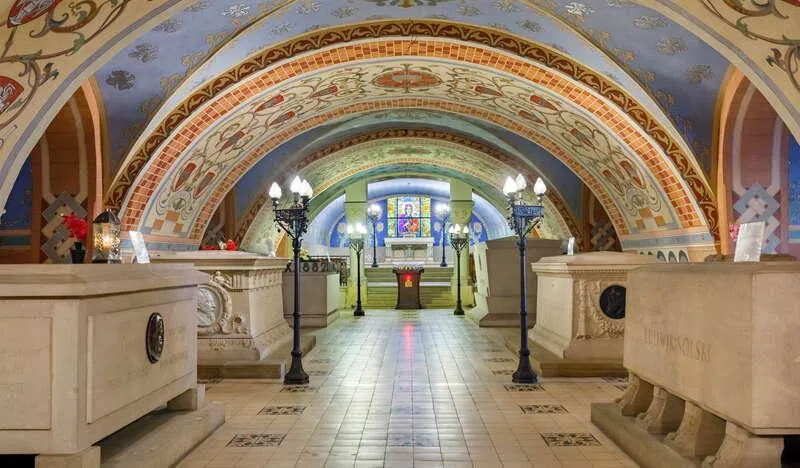
Everything above is about structures: what the medieval city built and how it's been dug up or preserved. The Crypt of the Distinguished at Skałka (Krypta Zasłużonych), south of Stare Miasto near the river at the Pauline monastery, is the counterpoint: Poland's national pantheon, holding the remains of artists, writers and composers rather than kings, and it gets a fraction of the foot traffic of anywhere else on this list. It's a genuine crypt visit rather than a museum experience: donation-typical entry, small groups only and strictly by arrangement with the monastery, so this is the one stop on the route that needs a phone call or an email ahead of time rather than a walk-up ticket. Hours are limited and worth confirming the same week you plan to go, not the month before. It won't suit a coach itinerary; it suits two or three people willing to sit quietly for ten minutes.
A cellar still in use, and the deepest chamber in the region
Two closing stops make the point that Krakow's underground isn't only a museum piece. Piwnica pod Baranami, a cellar cabaret venue right on the Rynek's corner, has been running literary cabaret out of a medieval cellar since the 1950s, proof that the vaults beneath this city are still lived-in, not just excavated and glassed over. Reservations are still handled largely by phone, prices vary by show, and it's worth booking a night here to close a day that started underground with the actual thing still functioning as a room people use.
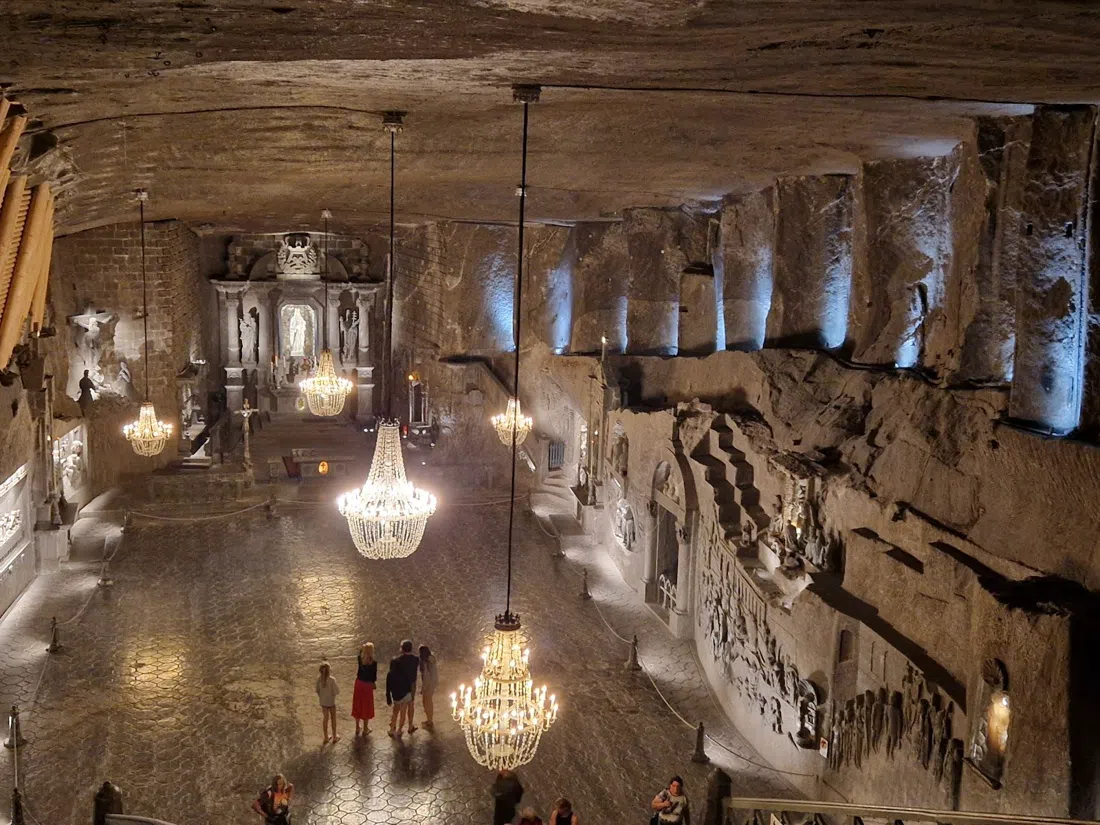
And for readers with a full extra day, the Wieliczka Salt Mine, thirty minutes outside Krakow, is the definitive regional answer to how deep this goes: a UNESCO-listed working mine with chapels, chandeliers and sculptures carved from salt over seven centuries, and by far the largest group operation on this list. Timed-entry groups are the standard product here, not an add-on. The tourist route runs 143 PLN for an adult ticket. It's not a Krakow city-centre stop, and it's not subtle about being a tourist operation at scale, but it's the honest endpoint of the excavation angle this whole route is built on.
Planning the walk
Start at Rynek Underground first thing, since the queues build through the morning and the tunnels feel different with fewer people in them, then surface for the Barbican, the two small archaeology stops, and Wawel Hill in the afternoon; save Skałka and Piwnica pod Baranami for a quieter evening close. Most of Stare Miasto is walkable end to end in twenty minutes, so this route doesn't need transport beyond your own legs, though trams run along the Planty ring if your feet give out. Wieliczka needs a car, a tour minibus, or the regular train from Kraków Główny: it's a half-day commitment on its own, not an add-on to the same afternoon as everything else. Carry cash: several smaller stops (the Dragon's Den turnstile, St. Adalbert's, donation-based Skałka) are cash-only or cash-preferred in practice, even where the bigger museums take cards. Budget roughly 150-200 PLN per person for the core route (Rynek Underground, the Barbican, the two archaeology stops, Wawel's bundle) before food, and treat Wieliczka and Kazimierz as separate half-days if you want them. Book Rynek Underground group tours and Collegium Maius slots in advance in July and August; everything else can be done on the day. For where to stay while working through it, start with Krakow hotel search: Stare Miasto puts you within walking distance of everything on this list except the salt mine. The Krakow guide covers the rest of the city beyond this one underground thread.