
Krakow's Main Square looks solid from above — cobbles, pigeons, the Cloth Hall throwing its long shadow toward St. Mary's twin towers — but scratch the surface and you find a second city stacked beneath the first, market stalls and coin scales and the bones of pack horses pressed into silt since the 13th century. I've walked this square by daylight and dropped through its trapdoors after dark, and the honest version of Krakow isn't the postcard on top; it's four or five metres down, lit low and held at a permanent, mineral cold. This is the 48 hours I'd actually book: one day descending through the archaeology, one day descending through the myth, and three cellar meals wedged between to remind you the city above is still very much alive.
The Centerpiece: Rynek Underground
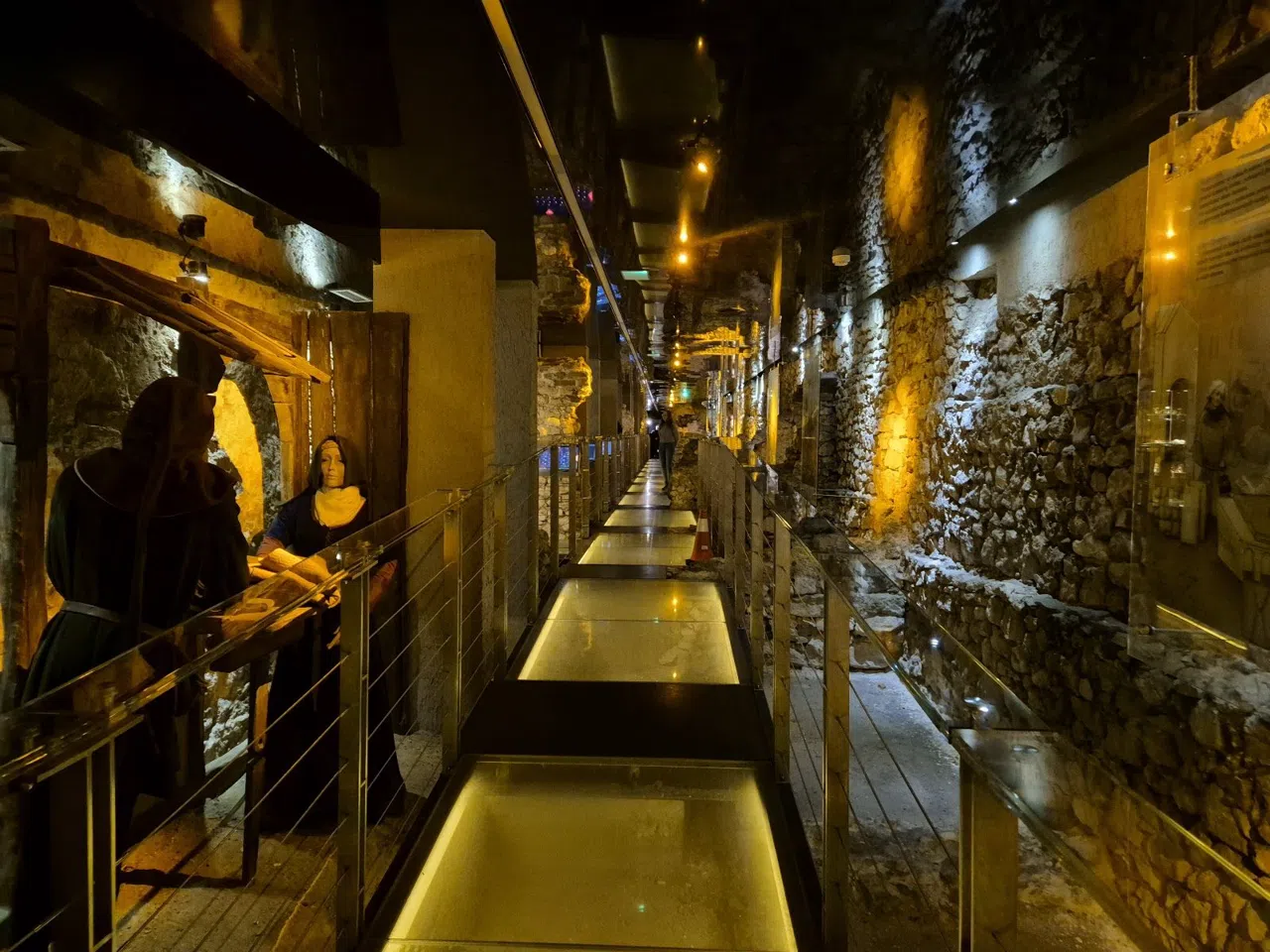
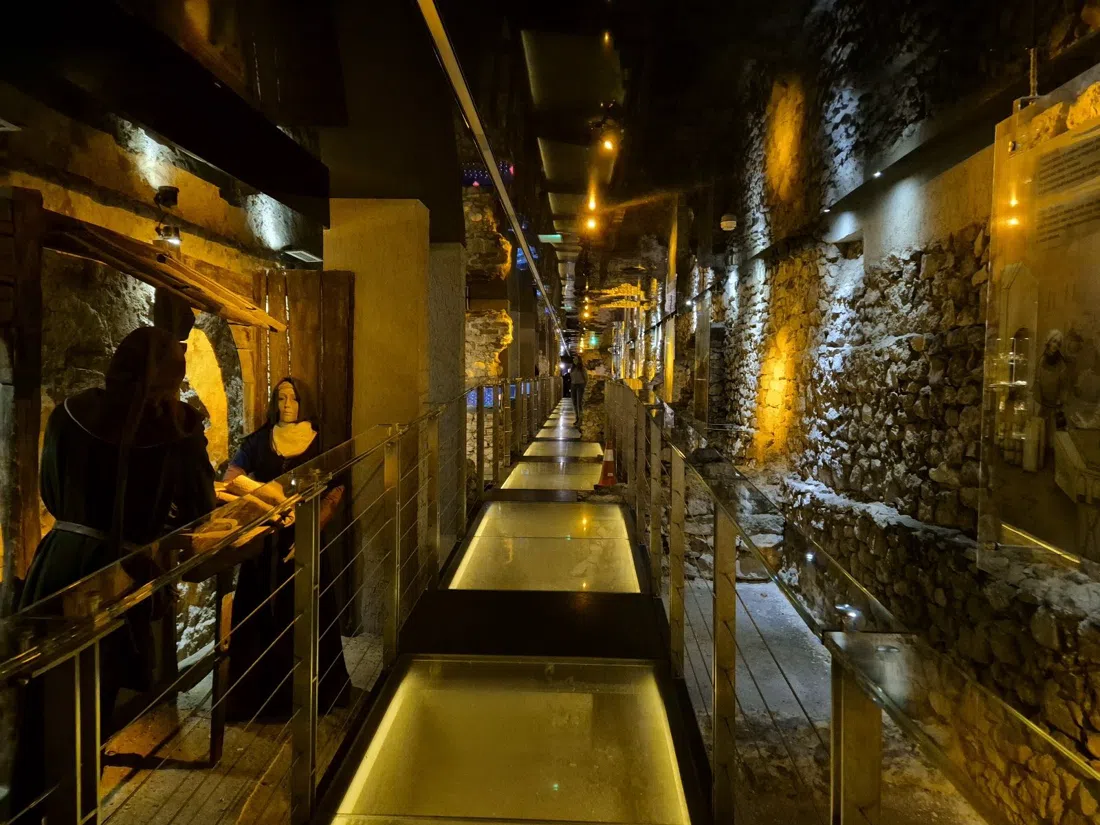
Everything here radiates out from Rynek Underground (Podziemia Rynku), the museum built directly beneath the Cloth Hall on the Main Square, and it deserves the whole morning you'll want to give it. This is Europe's largest underground archaeological route — not a themed tunnel, but the actual excavated footprint of the medieval marketplace, walked on glass floors above real stalls, real coin hoards, real horseshoes. Adult entry is 45 PLN, and it's free on Tuesdays, though the walk-up free slots are limited and go fast, so don't build a Tuesday visit around it without a backup plan. In peak season — which in Krakow means basically May through September, plus any weekend — pre-booking a timed entry slot online is not optional advice, it's the difference between getting in and standing outside reading the closed-for-the-morning sign. Groups get dedicated guided tours at 350 PLN per group on top of individual tickets, which is worth it if you've got six or more people and want the context delivered rather than read off a panel; couples and solo travelers do perfectly well with the self-guided audio route. Give it ninety minutes minimum, closer to two hours if you're the type who reads every caption, and go first thing if you can — the acoustics down there turn a crowded room into a genuinely loud one by midday.
Older Than the Square Itself
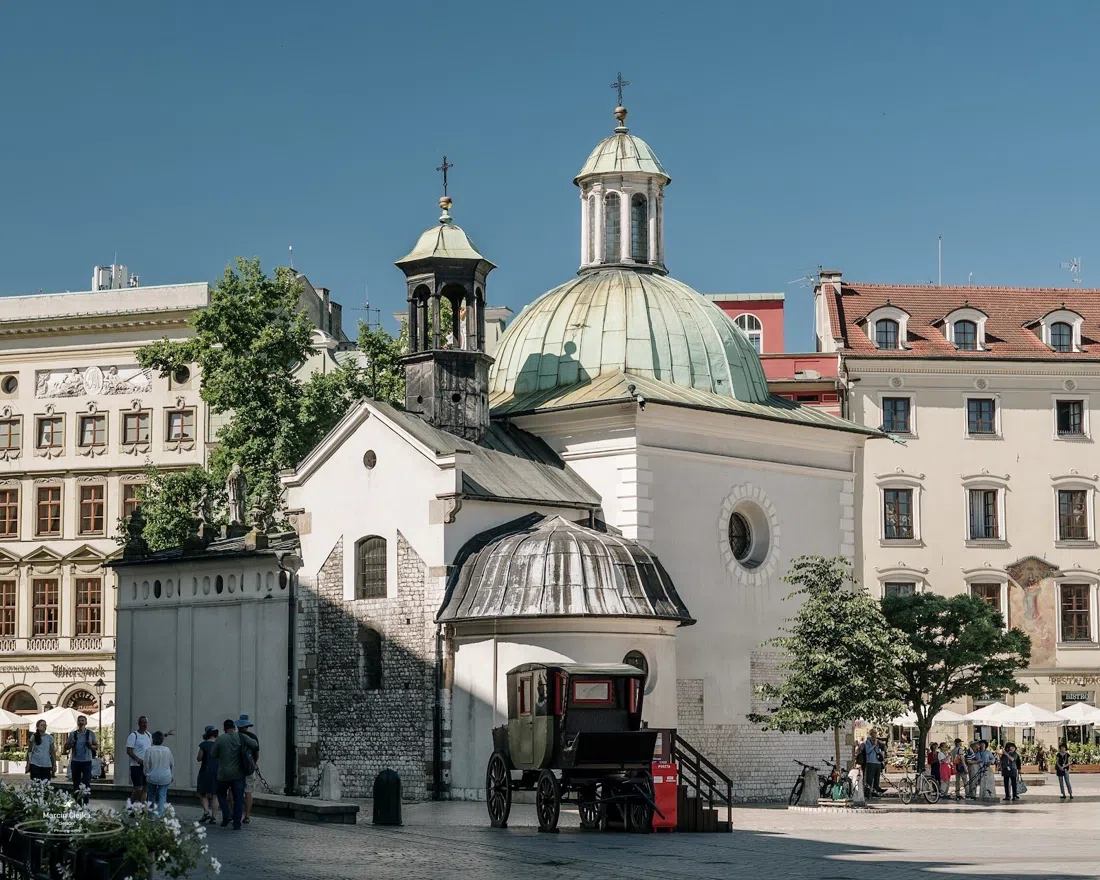
Walk two minutes to the square's southern corner and you'll find St. Adalbert's Church, whose basement exhibition is easy to miss and shouldn't be. It's a small chamber — nothing like the scale of the main museum — but it holds the oldest structure on the square, predating even the market layers next door, and there's something quietly moving about standing under a building that's been watching the square change shape for over a thousand years. No advance booking, informal small groups are fine, and it's open only in season: 1 June to 30 September, Monday to Saturday, 10am to 4pm. Entry is 4 PLN, 2 PLN reduced — genuinely one of the cheapest serious things you'll do in this city. Five minutes is enough time inside, so slot it in right before or after the Rynek Underground visit rather than as a separate trip.
Day Two, Higher Ground: The Two Descents of Wawel Hill
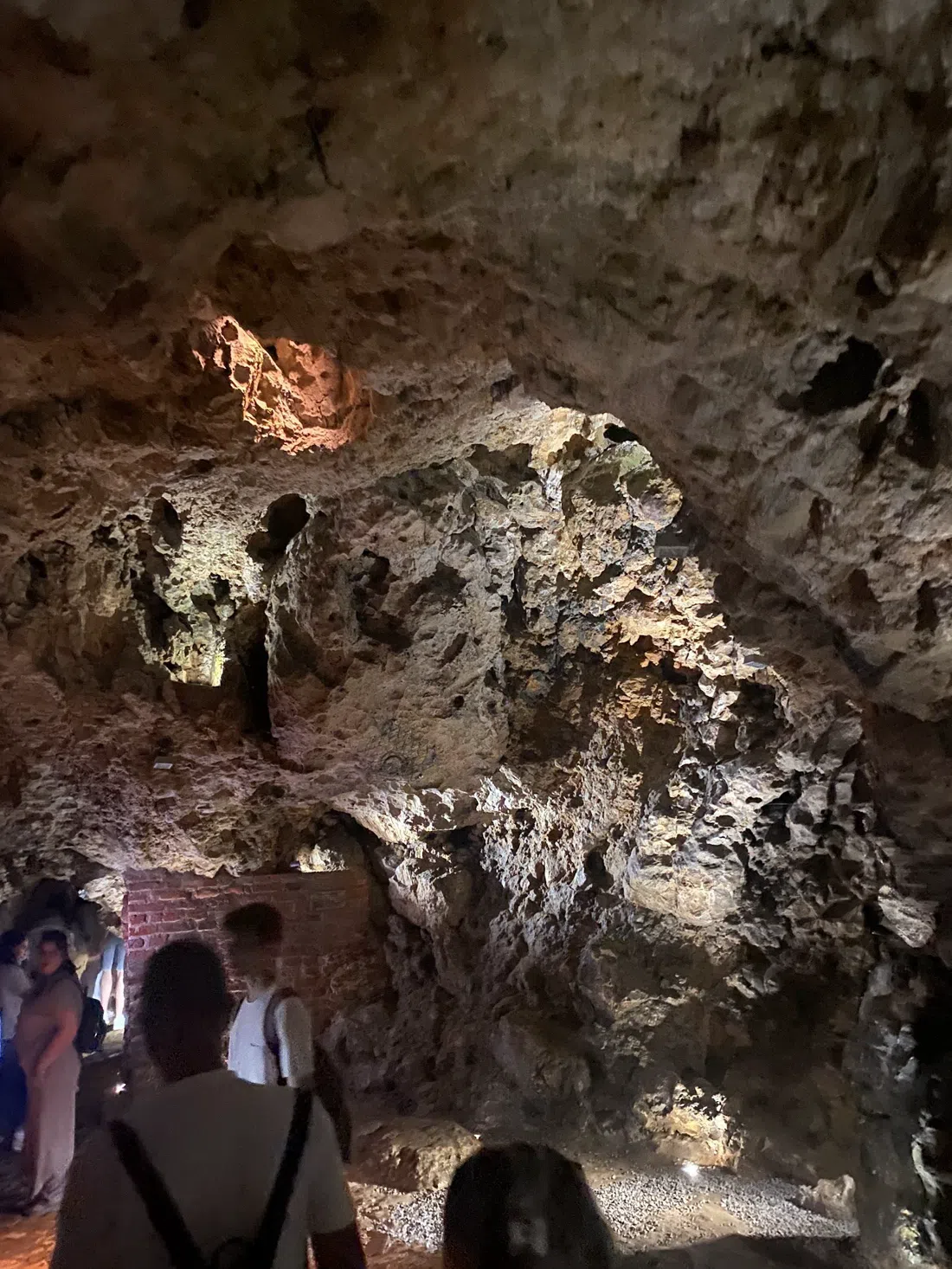
Save your second day for Wawel Hill, a fifteen-minute walk south along the Royal Route, where the underground theme flips from civic archaeology to myth and monarchy. Wawel Royal Castle's Dragon's Den (Smocza Jama), the cave beneath the castle, is Krakow's founding-myth descent — the lair of the dragon the city's legend is built on — and it's a proper cave, not a recreation, with a narrow spiral staircase down and a one-way exit that pops you out at the base of the hill by the Vistula. Entry runs 6–10 PLN, it takes groups without issue, and it's seasonal, open through October, so this isn't a winter fix for the itinerary. If anyone in your party is genuinely claustrophobic, know that going in before you commit — there's no quick way back up once you've started down.
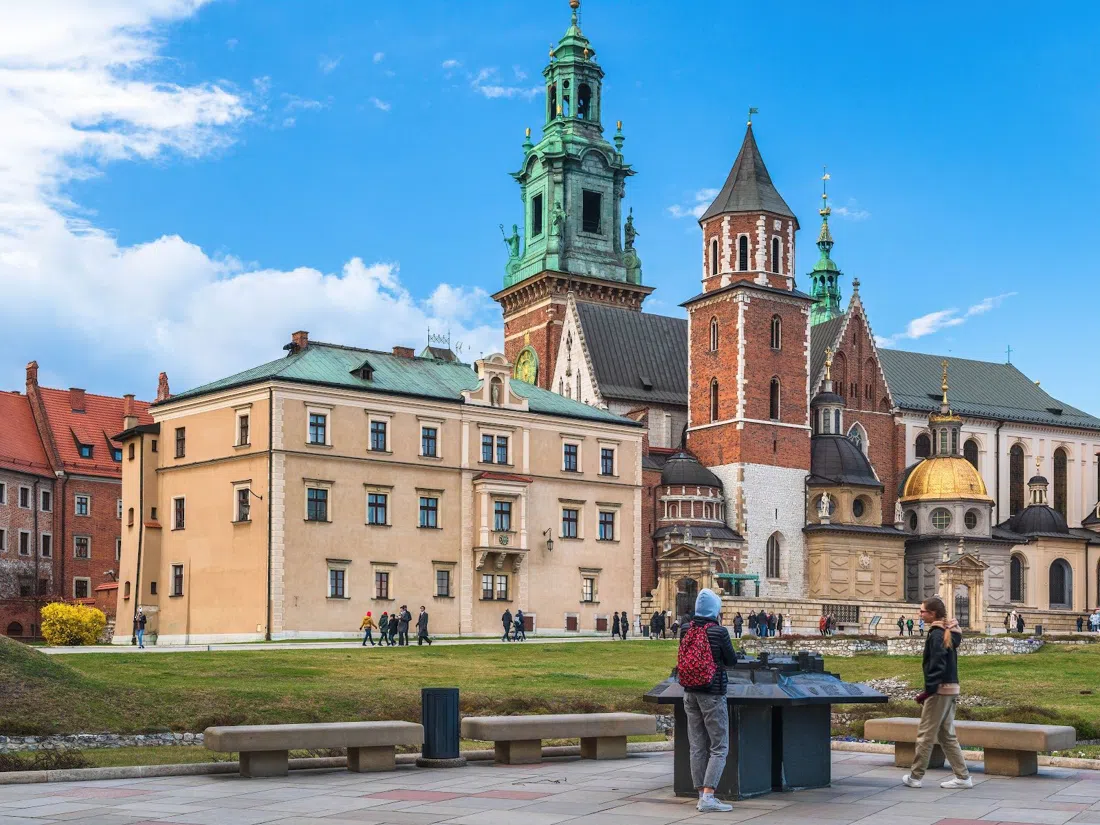
The counterpoint, on the same hill, is Wawel Cathedral's Royal Crypts — the necropolis of Polish kings, swapping the Underground museum's ordinary medieval market life for royal death and state ceremony. It's 26 PLN, or a 23 PLN group rate for parties of 11 or more, and groups of 25-plus are required to use the wireless guide system rather than a shouted commentary, which the cathedral enforces properly. Doing the Dragon's Den and the Royal Crypts back to back on the same hill, same morning, is the efficient move — you're already up there, and the contrast between folk myth and royal history is sharper when you do them within the hour.
The Deepest Descent: Wieliczka Salt Mine
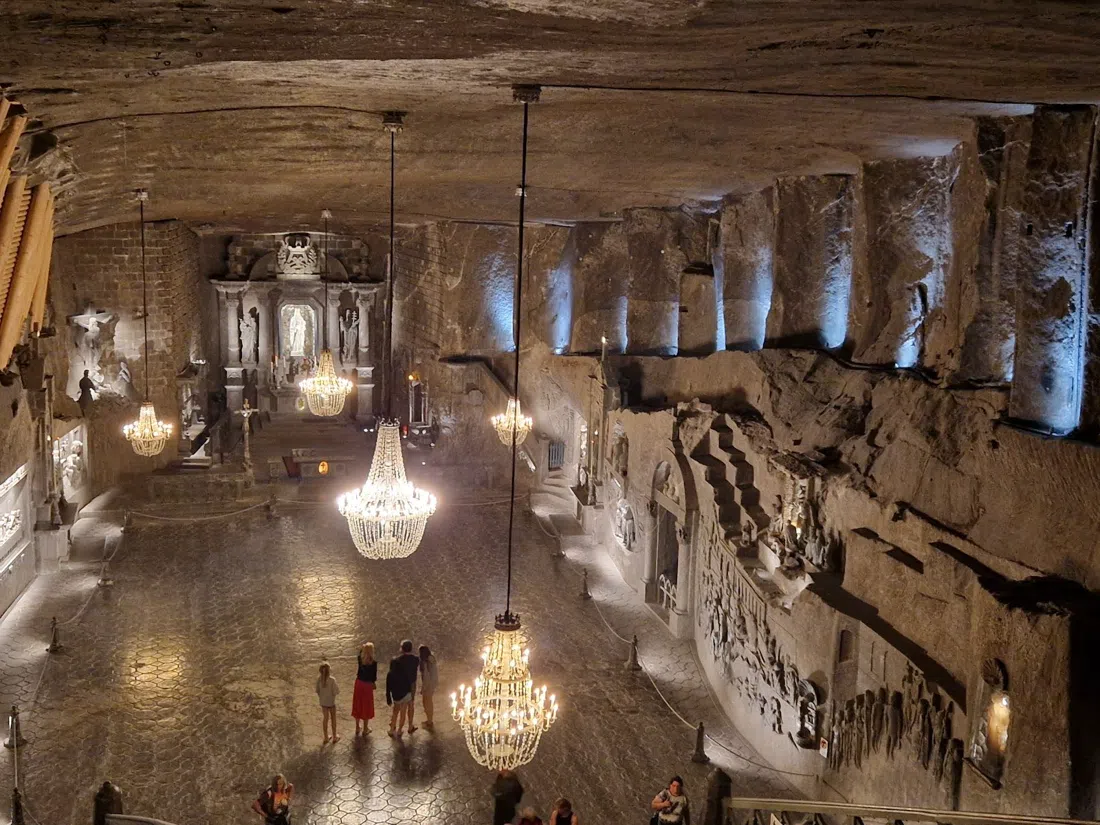
If you've got a half-day beyond the 48 hours, or you're willing to trade one museum morning for it, Wieliczka Salt Mine is the natural extension — the deepest and most famous descent anywhere near Krakow, a UNESCO site twenty minutes outside the Old Town. The standard Tourist Route is 143 PLN and heavily geared toward groups, moving in large batches with a guide; the Miners' Route costs more but runs smaller groups and is more physically active, crawling and working sections rather than just walking them, and it's the better pick if you've already done the Rynek Underground and want something with a different rhythm. Book ahead regardless of which route — it is not a same-day walk-up in high season, and buses back to town can queue.
Dinner Under the Vaults
I don't put a fork in a review unless I've eaten somewhere twice, and all three of these have earned it.
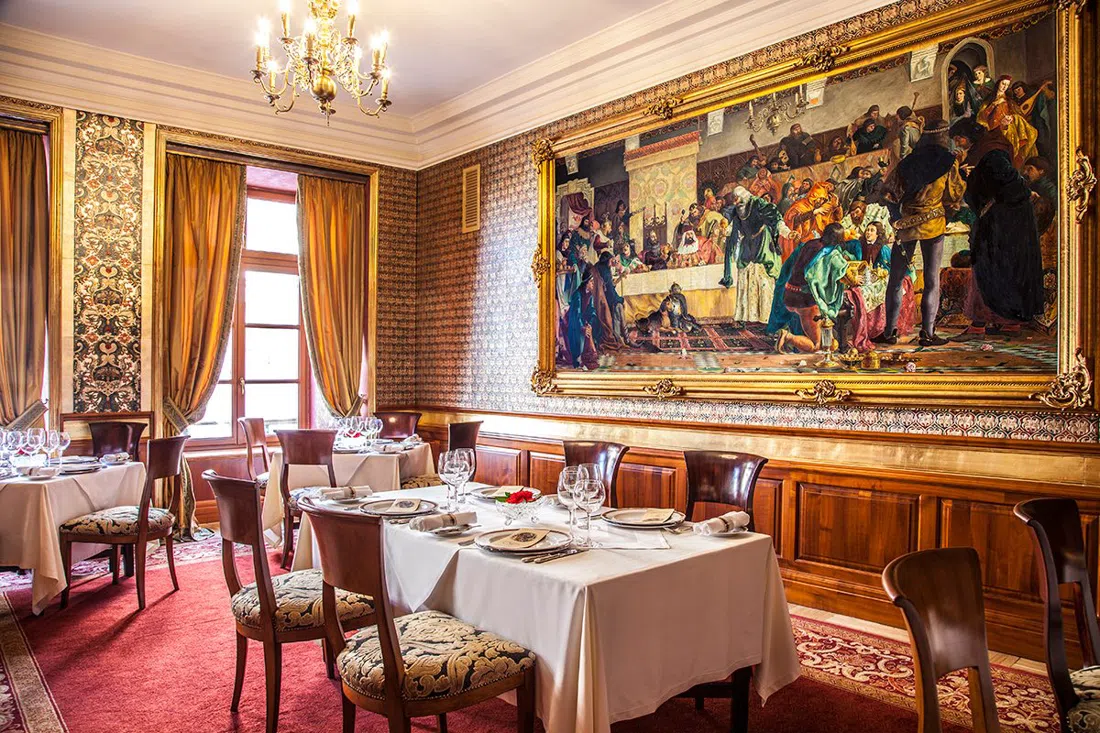
Wierzynek, on the Main Square itself, is Poland's oldest restaurant — open, under one name, since 1364 — and its cellar walls are cut from the same stone the square sits on, which you can feel in the temperature before you feel it in the history. It's formal: book ahead, and ask for one of the private cellar rooms if there are four or more of you, because the ground-floor dining room fills with tour groups by 7pm. Mains run 80–160 PLN; I keep going back for the roast duck with apple, which at around 145 PLN arrives glazed dark and falling off the bone in a way my grandmother's stovetop version — simmered, not roasted, and never this crisp-skinned — has never quite managed, and I say that as someone who grew up eating it every autumn.
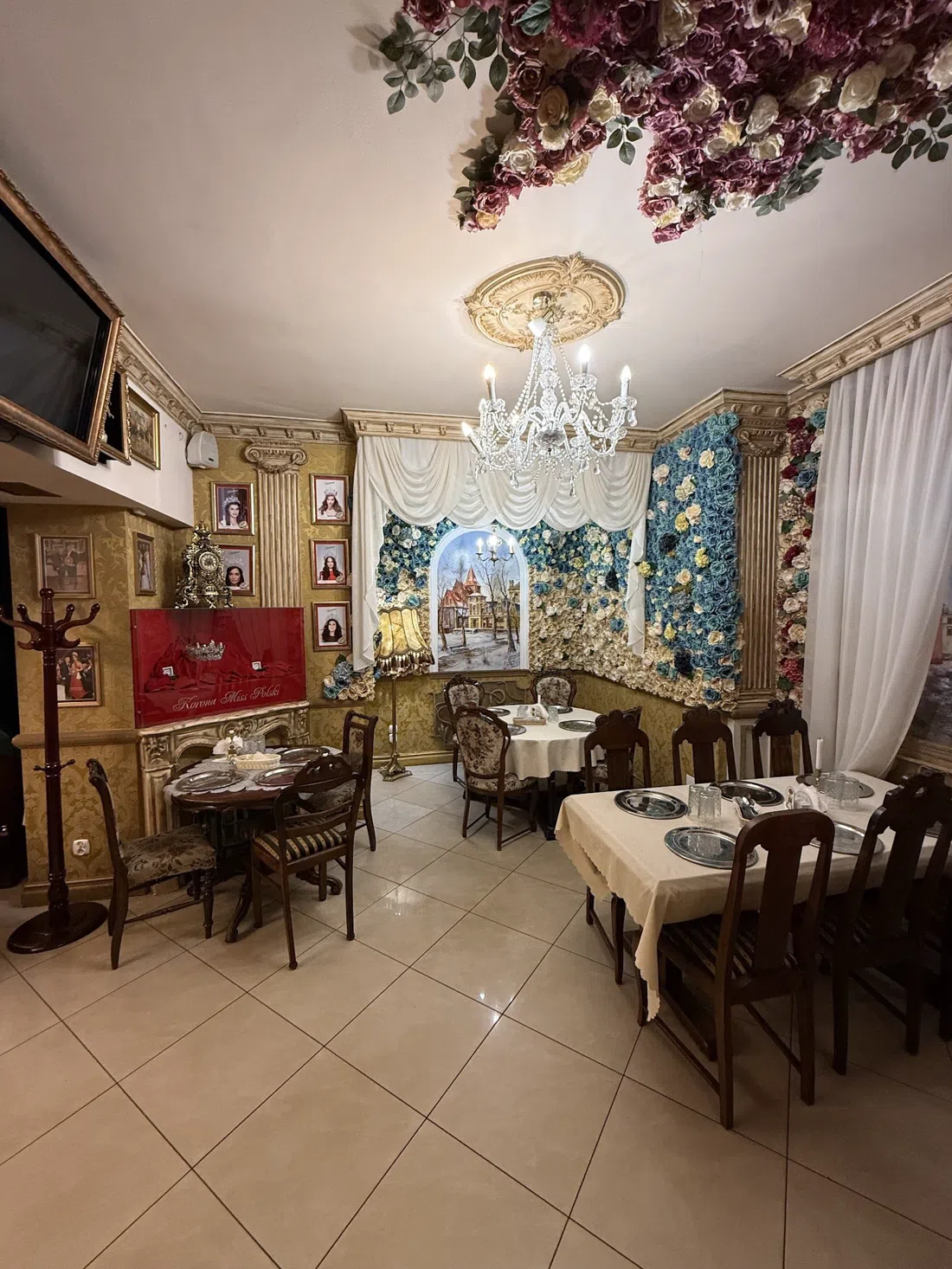
Pod Aniołami, a short walk down the Royal Route toward Wawel, is the most atmospheric dinner on this whole route — a genuine gothic cellar, family-run since 1893, all low vaulted brick and candlelight. It takes private cellar-room bookings for groups and I'd recommend reserving regardless of party size; it fills. Mains sit at 90–150 PLN, and the golonka — pork knuckle, slow-braised until the meat gives with a fork — at around 120 PLN is the dish to order, richer and smokier than anything I'd call a knuckle back home, where it's boiled thin and apologetic by comparison.
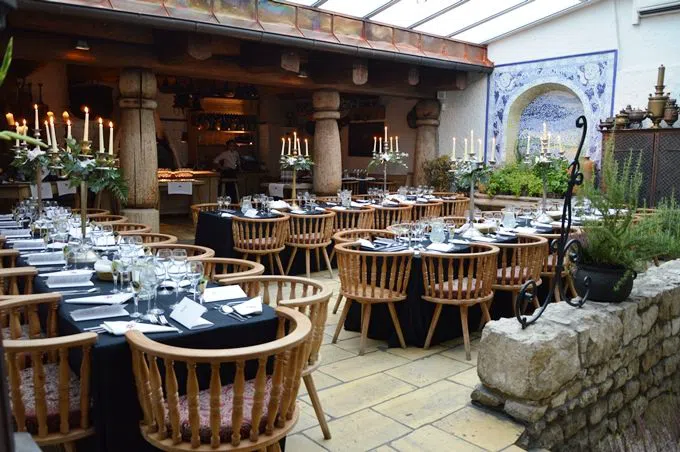
U Babci Maliny, tucked just off the square, is the budget counterpoint to both — same vaulted-brick cellar bones, a fraction of the price, and genuinely informal: no reservations, walk-in groups welcome, but expect a queue at peak dinner hours because everyone in Krakow knows this trick. Mains run 25–45 PLN, and the pierogi ruskie — potato and curd cheese, fried in butter until the edges crisp — at around 28 PLN taste closer to a home kitchen than a restaurant, softer and less uniform than the machine-pressed versions sold near the square, which is exactly the point.
Coffee and Cabaret, Still Under the Square
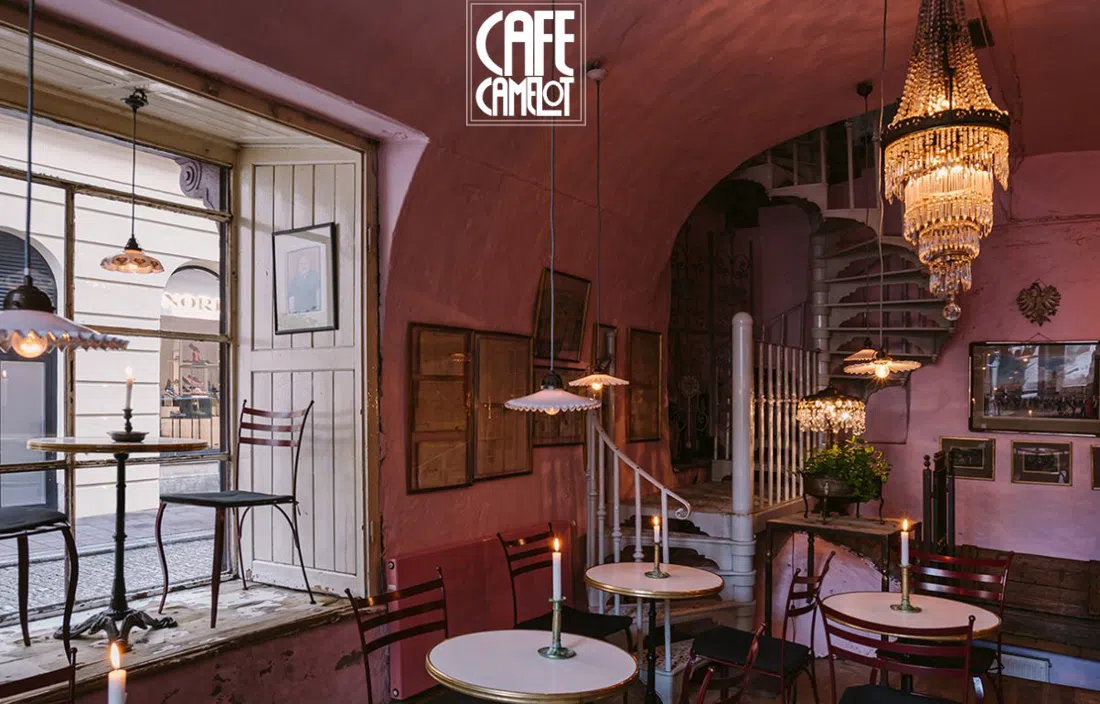
Between museum visits, Camelot Art Café, just off the square, is the low-key daytime stop — casual, no booking, takes groups for coffee and cake without blinking, and sits inside genuinely unpretentious 13th-century brickwork rather than a cellar dressed up to look old. Coffee and cake run 15–25 PLN, and it's the right pace-breaker between the Rynek Underground and St. Adalbert's, or before you set off for Wawel.
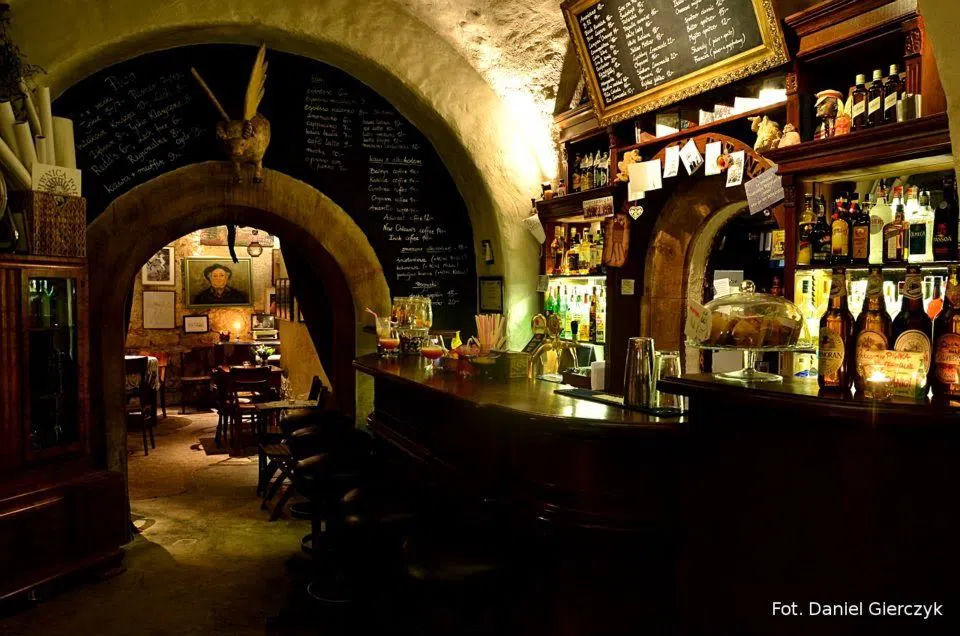
For an evening that's culture rather than food, Piwnica pod Baranami, right on the Main Square, is the legendary post-war cabaret cellar — still running live shows under the same vaults it opened in — and it's the one stop on this route that's about performance, not archaeology or dinner. It takes groups for evening shows but you need to book by phone ahead, not online; tickets run roughly 50–80 PLN depending on the event. It's a poor fit for a quick drop-in — go in expecting a full evening, seated, watching a show, not a casual cellar bar.
The Practical Bit
Transport: everything on this route except Wieliczka is walkable from the Main Square — the Cloth Hall, St. Adalbert's, and all three cellar restaurants sit on or just off the square itself, and Wawel Hill is a flat fifteen-minute walk down the Royal Route. Wieliczka is twenty minutes out by minibus, train, or an organized transfer booked with your mine ticket; don't drive if you can avoid it, parking near the mine entrance is tight on tour-bus days.
Cash: cards are accepted everywhere that matters, but carry some zł — St. Adalbert's 4 PLN entry and Camelot's coffee-and-cake stop are the kind of small, informal transactions where a card reader either doesn't exist or isn't worth the hassle for either side.
Timing: book Rynek Underground and Wieliczka ahead regardless of season; both run out of same-day slots in June through September. The Dragon's Den and Royal Crypts are more forgiving but still seasonal — the Den closes for winter, so this itinerary as a whole works best April through October.
Budget: figure roughly 250–350 PLN per person across the 48 hours for entries alone (Rynek Underground, St. Adalbert's, the Dragon's Den, and the Royal Crypts), before Wieliczka or any meals — add another 150–250 PLN per person for two cellar dinners depending on where you eat. For where to sleep between the two days, start with a Krakow hotel search; for the rest of what's above ground once you've had your fill of what's below it, the full Krakow guide covers the square and beyond.