Krakow neighbourhood guide
Grzegórzki, Kraków: the district that wakes with the trams
From Hala Targowa at dawn to the Vistula at dusk, Grzegórzki is Kraków off the postcard: lived-in, well connected, and full of useful little pleasures.
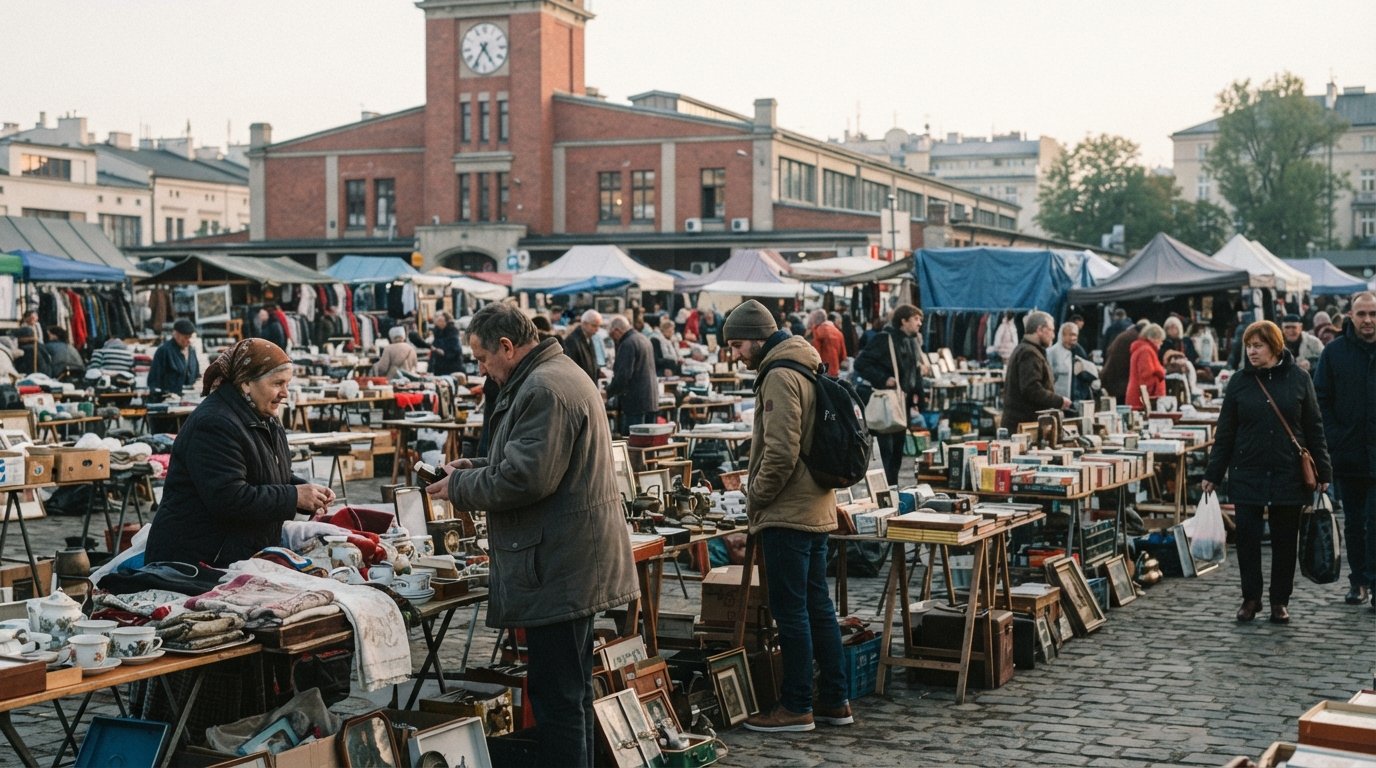
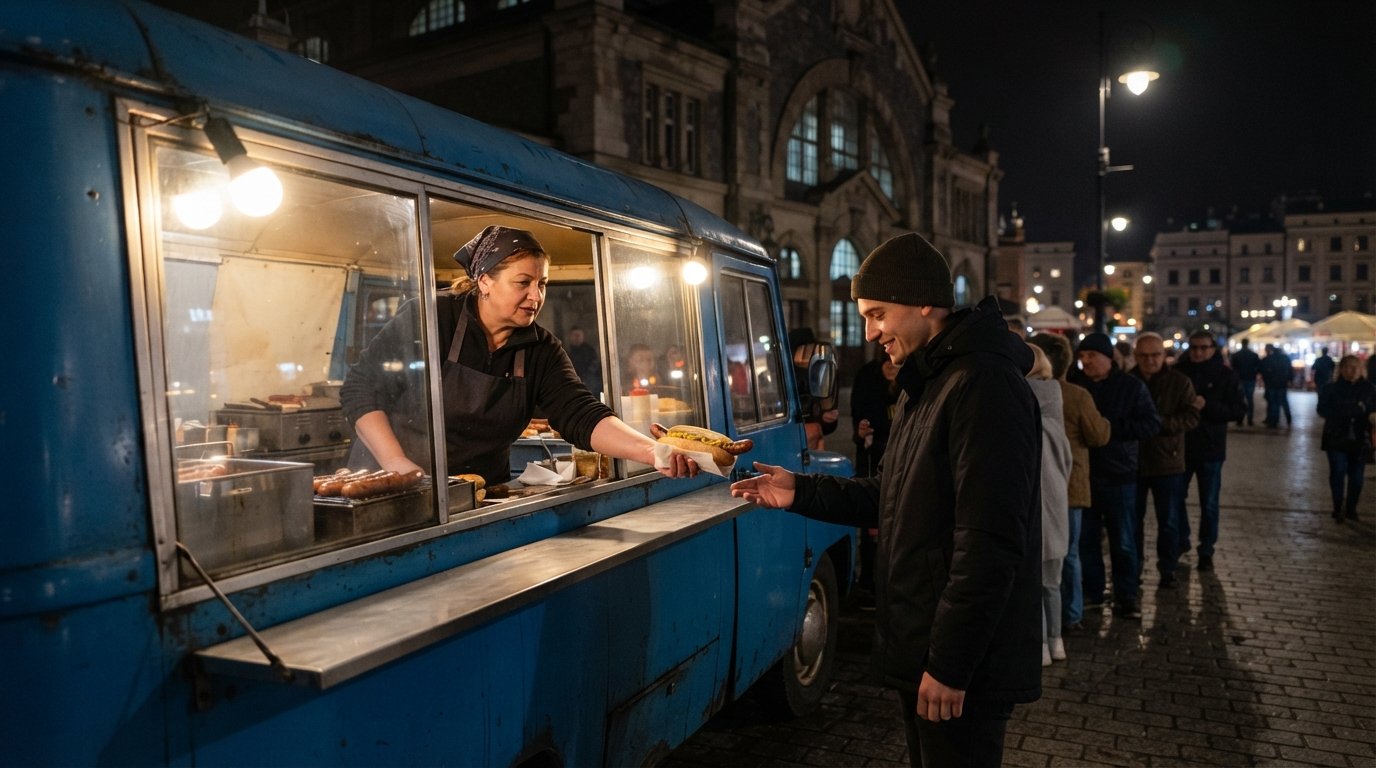
Grzegórzecka is already awake before the city has fully decided to be civilised: trams clatter past, somebody is haggling under the roof of Hala Targowa, and the Blue Nysa is heating its grill beside the market hall while the rest of Kraków is still rubbing its eyes. That is Grzegórzki in one frame — not polished, not theatrical, but very much alive, and close enough to the Rynek that you can be there in ten minutes without paying for the privilege of a view of a church tower.
What Grzegórzki is known for
Grzegórzki sits where the Planty ring gives way to rail lines, traffic, and the long eastern pull of the city. The first impression is honest rather than pretty: viaducts, 1970s blocks, the station in the top-left corner like a practical front door, and the sense that people here are going somewhere rather than posing for a weekend. That is exactly why I like it. Students from the University of Economics, commuters, families, market traders — this is a district that works for a living. The trams on Grzegórzecka and Lubicz keep the soundtrack steady, and if you lean into that rhythm, the area starts to make sense quickly.
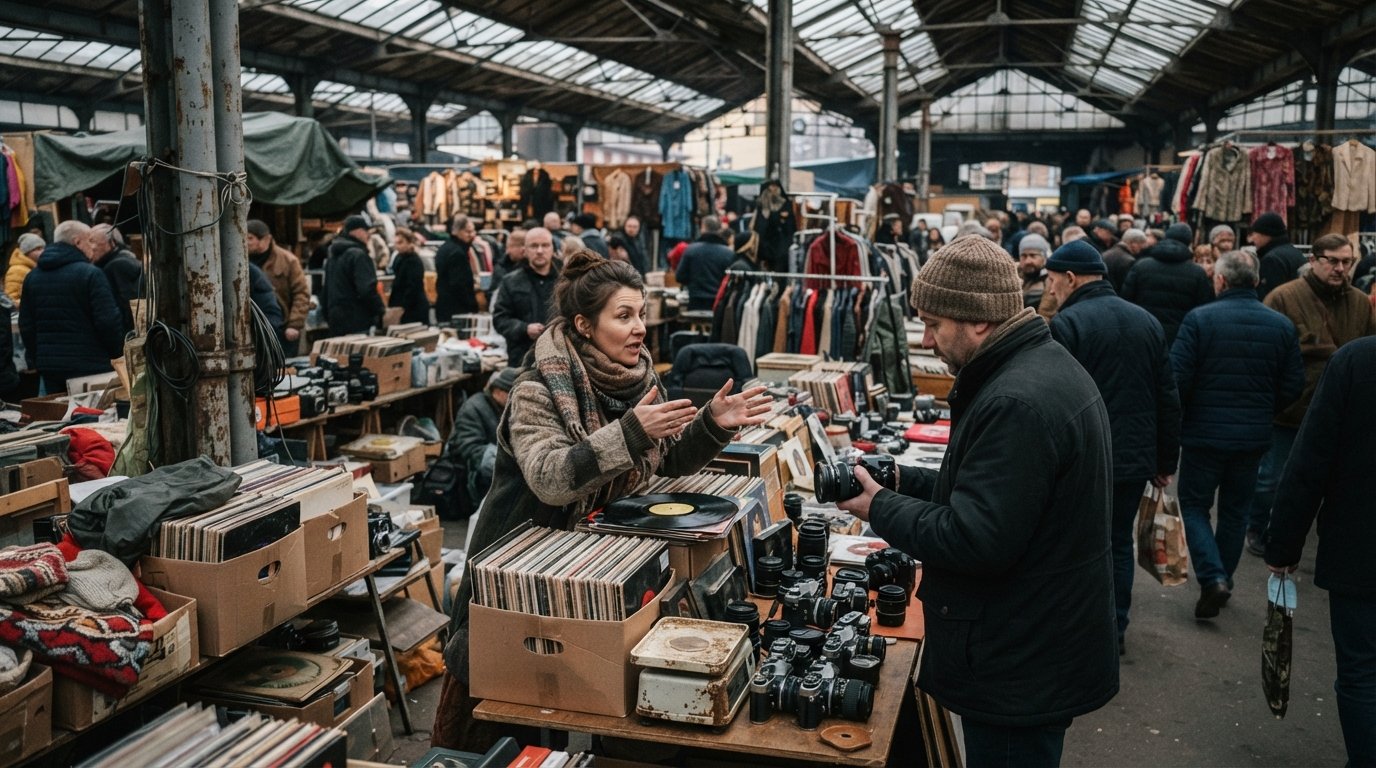
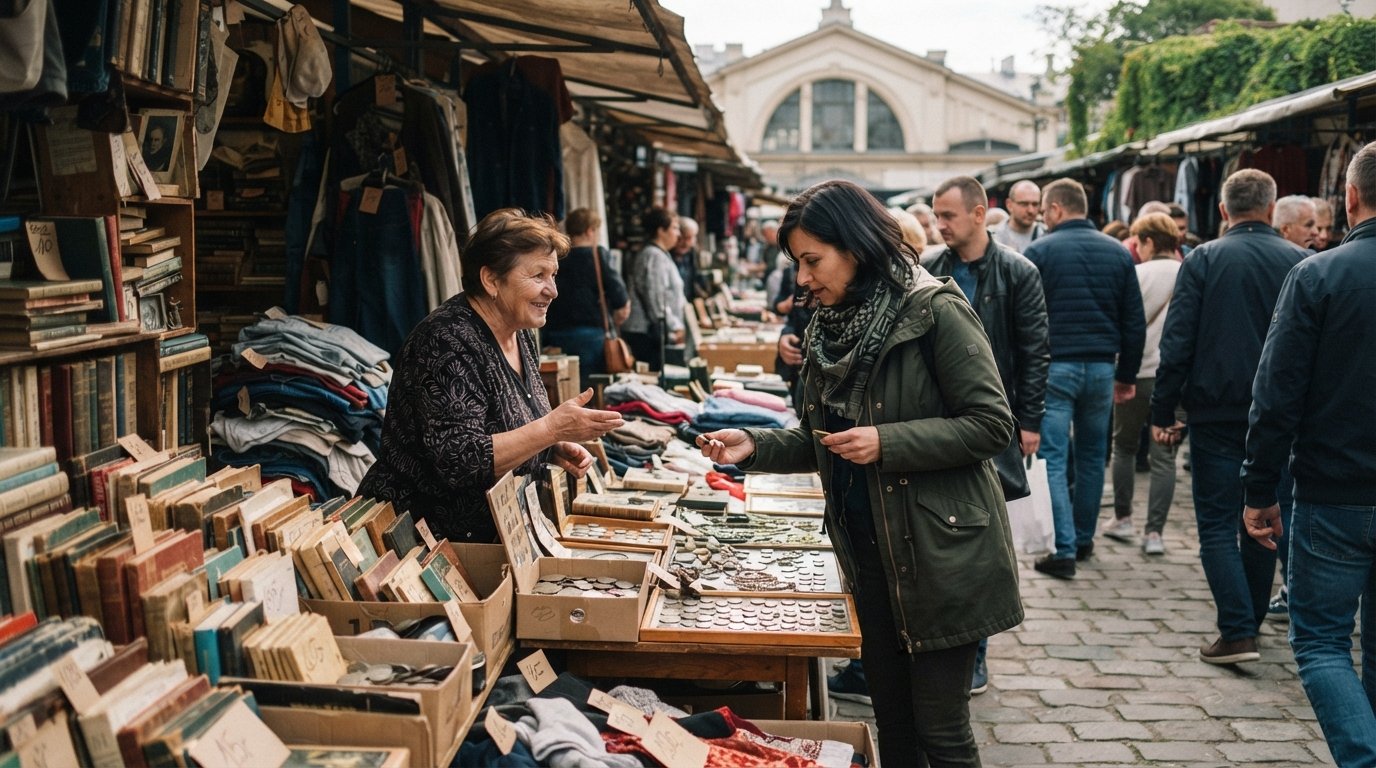
The headline act is Hala Targowa, officially Unitarg, which is Kraków’s biggest flea market and one of the city’s better little pieces of chaos. Weekdays it behaves like a normal market hall, with flowers, fruit and the sort of stallholders who know their regulars by face. Sunday is the thing: from around 6am the whole place spills into a sprawling flea market of vinyl, old cameras, watches, militaria, medals, books, coins, icons and furniture of debatable pedigree. Come early, because the good stuff is gone by early afternoon and the serious browsers know it.
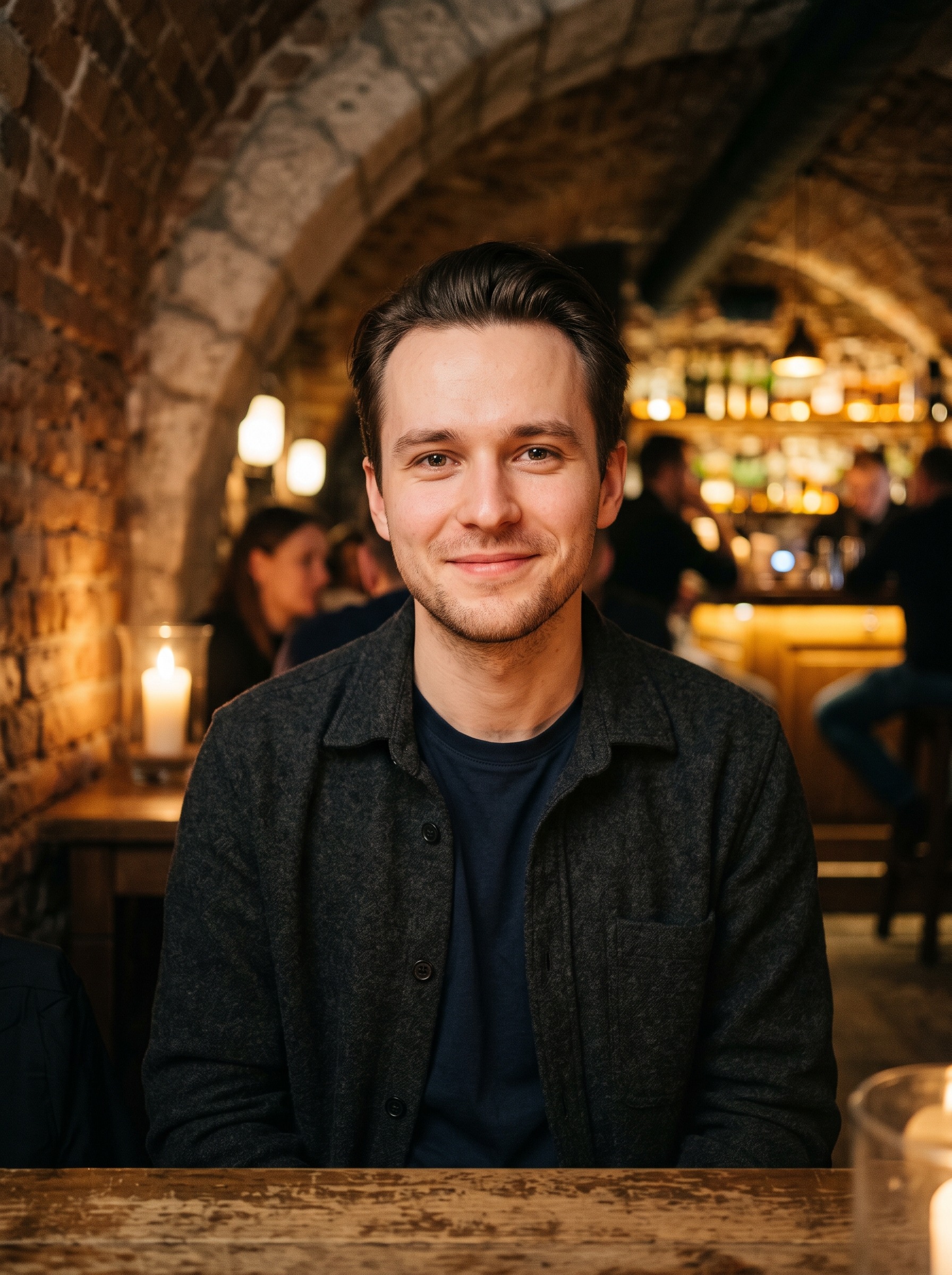
Right beside it sits the Blue Nysa sausage van, Kiełbaski z Niebieskiej Nyski, a piece of Kraków folklore that never quite becomes a joke because it is too useful to be one. Two taxi drivers started grilling kiełbasa here in the early 1990s for the night shift, and the habit stuck. The city even voted it more iconic than the obwarzanek, which tells you something about Kraków’s appetite for the blunt and the smoky. A grilled sausage in a roll with mustard runs about 17–20 zł, and it is exactly the kind of thing you want after midnight or before a long walk home.
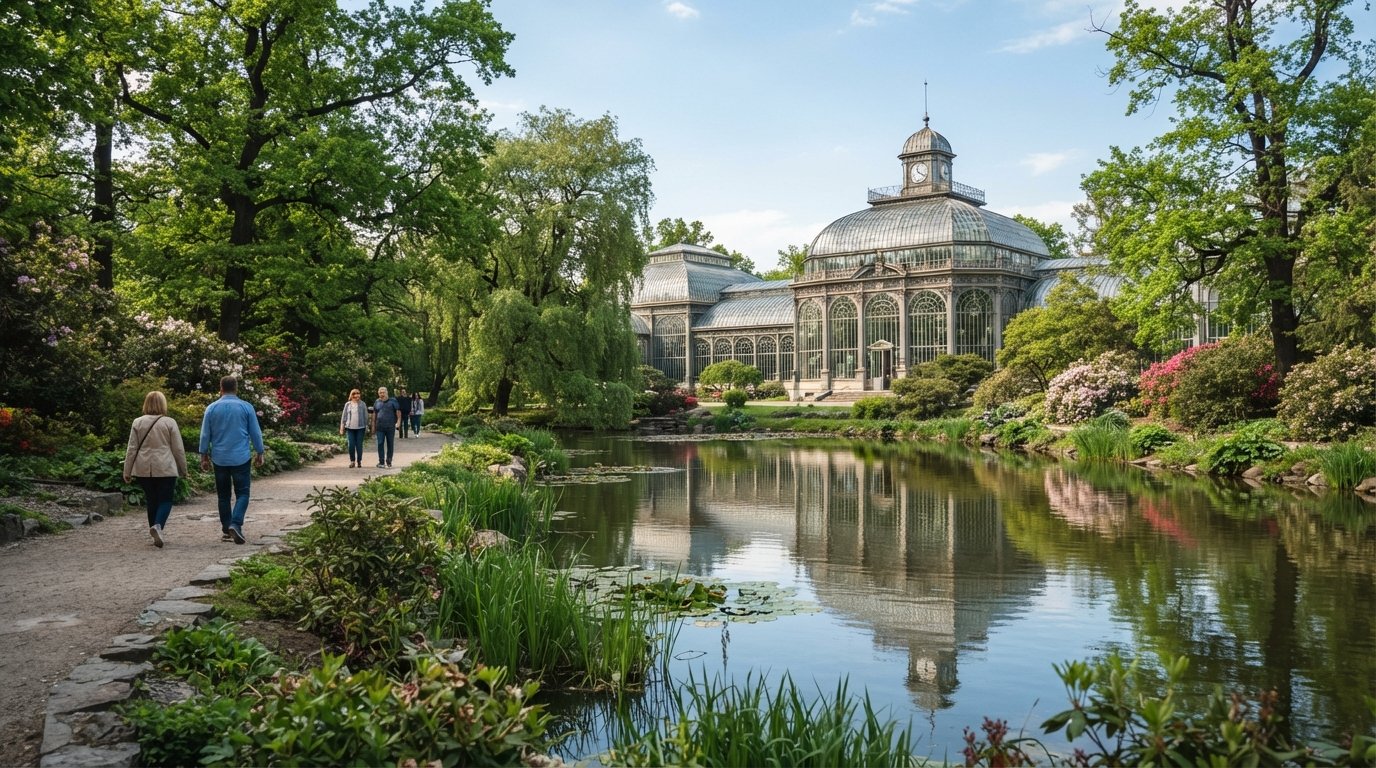
Further north, the district loosens its shoulders. The Botanical Garden of the Jagiellonian University is the cleanest exhale in central Kraków: founded in 1783, it spreads over ponds, old trees and Victorian-style glasshouses, and it opens seasonally from spring to autumn. On the other side of the emotional spectrum is the New Jewish Cemetery on Miodowa, overgrown and heavy with history, and then Park Strzelecki, small but loaded, with the Celestat telling the story of the city’s old Fowlers’ fraternity. Grzegórzki is full of places that do not shout, and maybe that is the point.
Where to eat & drink
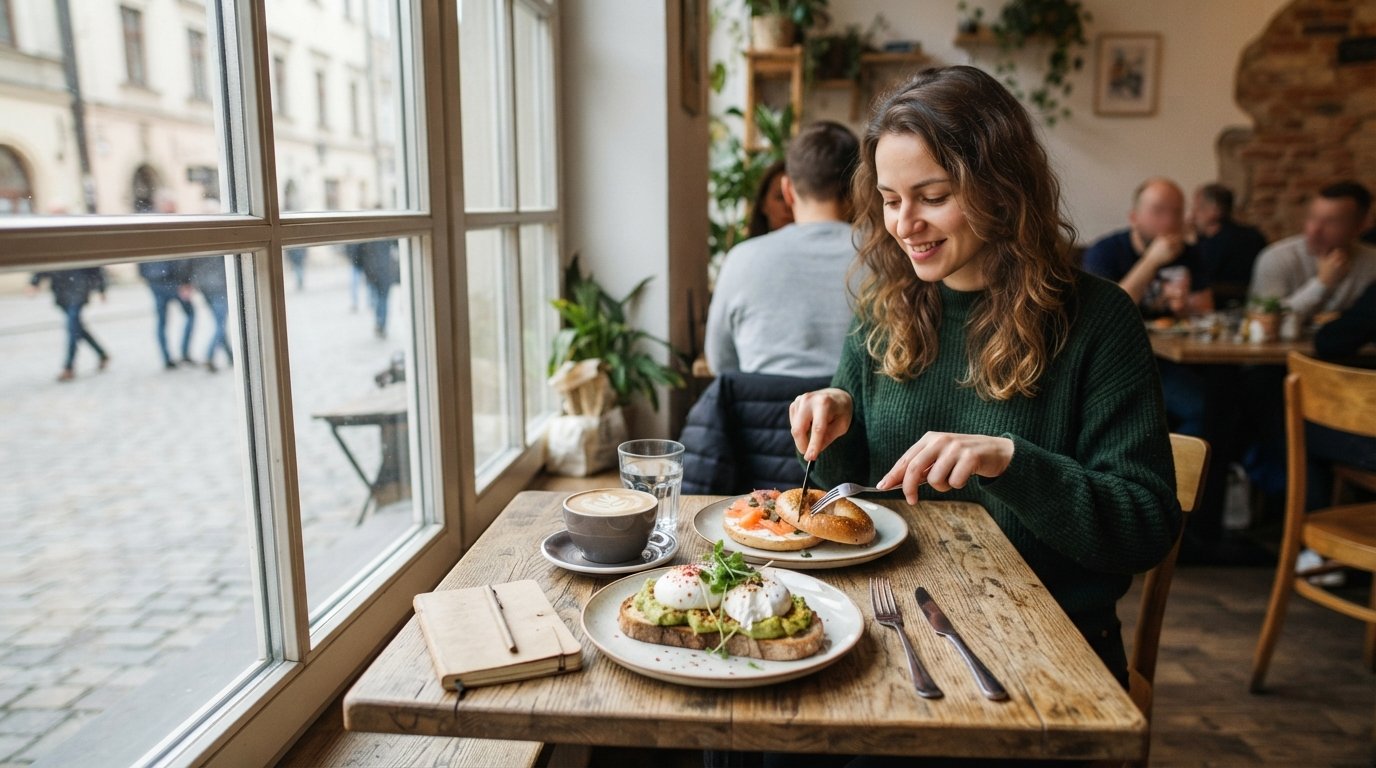
The food here is not dressed up for visitors. It is neighbourhood food, which means you can eat well without feeling that someone has priced the room for your postcode. Start early at Wesoła Cafe on Rakowicka 17, a specialty-coffee place that has been here since 2014 and understands the useful basics: proper breakfast, brunch, cakes, and coffee made with enough care to justify sitting still for a while. Bagels with smoked salmon and cream cheese, avocado toast with a poached egg on sourdough, homemade cakes — all of it is the sort of menu that works whether you are opening a laptop or recovering from the night before.
For dinner, Otto Pompieri on Grzegórzecka 18 is the one to remember. It is an Italian cantinetta inside a converted former hospital building, with a big split-level room and a play area upstairs, so it has the odd but comforting feeling of a place that knows exactly who it is serving. The pizza leans thin and crisp, closer to Roman than Neapolitan despite whatever the menu may imply, and the desserts and service get the kind of praise that usually comes from people who have actually eaten there more than once. If you are going at the weekend, book. Kraków is not short of pizza, but this is one of the addresses in the district that feels worth crossing the tram lines for.
And then there is the market end of things, which is where Grzegórzki quietly wins. The Blue Nysa van is not just a late-night gimmick; it is a real local ritual, the sort of place where the city’s appetite becomes visible. Add the fruit, cheese and quick-bar stalls around Hala Targowa, and you can graze your way through the morning without ever needing a polished brunch room. On rainy days, or if you are travelling with a picky eater, the restaurants at Galeria Kazimierz do the practical job: chain places, food-truck patios, and enough choice to keep a group moving.
Going out
Let’s be straight about this bit: Grzegórzki is not a going-out district. There is no bar strip, no club crawl, no need to pretend otherwise. After dark it is residential, and the loudest thing is usually the trams. That is not a flaw if you want to sleep. It is a flaw if you want your hotel door to open onto a pub.
The advantage is that Kazimierz begins right on the south-western edge, which means the city’s best bar-and-food quarter is a five-to-fifteen-minute walk away. Plac Nowy, Alchemia, the absinthe cafés, the zapiekanka stalls at the round Okrąglak — all of it is close enough to do on foot, and far enough away that you can leave the noise behind when you are done. That is the Grzegórzki trick: stay somewhere quiet and cheap, then wander south for the evening. It is a much better arrangement than trying to sleep above a bar and waking up to someone else’s playlist.
Closer to home, the Blue Nysa van is the late-night fallback and the only after-hours institution in the district that needs no introduction. If you are the sort of traveller who likes a proper night out but a sane bedroom, this is a very good compromise.
Things to do / what to see
The Botanical Garden of the Jagiellonian University on Kopernika is the obvious first stop when you need a break from stone, traffic and market chatter. It is Poland’s oldest botanical garden, founded in 1783, and it keeps its dignity without becoming formal. The ponds, old trees and Victorian-style glasshouses make it feel like a pocket of measured time, and because it opens seasonally from spring to autumn — daily from 9am, later in high summer — it works best as a slow hour rather than a checklist item.
If you want something with more weight, head to the New Jewish Cemetery at Miodowa 55. It was founded in 1800 and now holds more than 10,000 leaning, ivy-wrapped tombs, plus a postwar lapidarium of headstones smashed during the Nazi occupation. It is open daily except Saturday, roughly 9:30am to 4pm, and men should cover their heads. This is not a decorative stop. It is a place that asks for a quieter pace, and it rewards that respect.
Park Strzelecki sits in a different register again: small, tucked between Lubicz and Topolowa, and carrying the history of the city’s Bractwo Kurkowe, the old Fowlers’ shooting fraternity. The neo-Gothic Celestat at ul. Lubicz 16 is now a branch of the Museum of Kraków and opens Wednesday to Sunday. It is one of those places that most visitors walk past without realising it has a story to tell. In Grzegórzki, that happens a lot.
On the north edge, Rakowicki Cemetery is the grand old necropolis of this part of Kraków, and it deserves time if you like cities that keep their memory in stone. Jan Matejko is buried here. So is Wisława Szymborska. So are the parents and brother of Karol Wojtyła, later Pope John Paul II. The cemetery is monumental rather than picturesque, which is exactly why it matters.
Don’t miss in Grzegórzki
Hala Targowa (famous for late-night grilled sausages)
Botanical Garden of the Jagiellonian University
Shopping & markets
Shopping in Grzegórzki splits neatly between the scruffy and the shiny, and both are useful. The scruffy side is Hala Targowa, which is better than it sounds because it is not trying to be charming. Weekdays it is a working produce and everyday-goods market, the kind of place locals actually use. Sunday is the real event, when the flea market starts from dawn and turns into a treasure hunt of vinyl, old cameras, watches, books, militaria, coins, icons and vintage clothing. Haggling is expected, English is optional, and a translation app helps more than pride does. Bring cash, small change and patience.
The shiny side is Galeria Kazimierz at Podgórska 34, on the riverside corner where Grzegórzki meets Kazimierz. It is built into the surviving buildings of the old Kraków meat plant and holds around 160 shops across two levels — Zara, H&M, Reserved, Empik — plus a Cinema City multiplex, a Carrefour Premium supermarket and restaurants with outdoor patios on the square out front. It is not where you go for romance. It is where you go when you need socks, a cinema, groceries, or an escape from the rain without leaving the district.
Where to stay in Grzegórzki
Grzegórzki works as a base because it is practical without being dull in the way some central districts can be. If you arrive by train, the appeal is immediate: Kraków Główny sits inside the district, and you can walk from the platform to your bed in five minutes if you choose well. That alone makes the area worth a look for short stays, late arrivals and early departures.
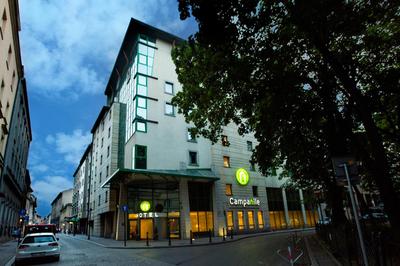
The strongest pocket is around the station and the streets just east of it, where the tram network does the heavy lifting and the prices stay lower than on the Main Square for similar quality. ibis Styles Kraków Centrum is the bright, affordable option on the tram line. DoubleTree by Hilton and Hampton by Hilton cover the more reliable mid-range end. Smaller aparthotels and holiday flats fill out the cheaper side. If you prefer a quieter setting, the riverside corner near Galeria Kazimierz is the other sweet spot: walkable into Kazimierz, handy for the Vistula path, and still central enough to make the city easy.
Where to stay here
Hotels in Grzegórzki
Our best-rated stays in this neighbourhood. Prices are approximate “from” rates — confirmed at the provider when you continue. We may earn a commission if you book through our partners, at no extra cost to you.
 In this area
Hotel H15 Francuski Old Town - Destigo Hotels
 In this area
 In this area
 In this area
 In this area
 In this area
 In this area
 In this area
 In this area
 In this area
 In this area
 In this area
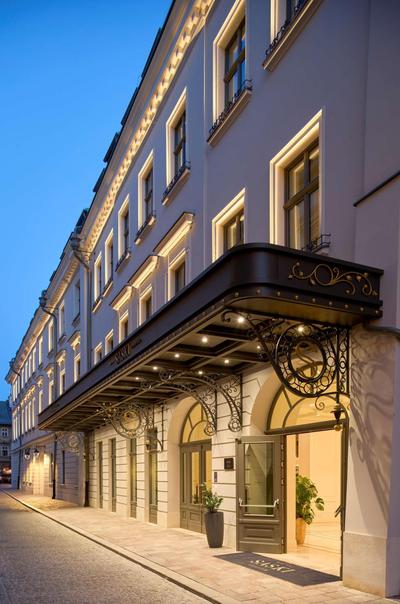
Hotel Saski Krakow Curio Collection by Hilton
The trade-offs are real, and it is better to know them before you book. Some streets are plain 1970s-block plain. The roundabouts are busy. The station area can be noisy, especially if your room faces the wrong side. If you are a light sleeper, ask for a room away from the trams, the station and the traffic-heavy junctions. But if you value transport, a sane budget and a district that feels like somewhere people actually live, Grzegórzki makes a lot of sense.
Getting around
This is where Grzegórzki earns its keep. Kraków Główny is the district’s front door, and beside it you have the bus station plus the airport train, which gets you to Kraków Airport in about 20 minutes. That means arrivals are easy, departures are easy, and you can behave like a person with somewhere to be rather than a tourist hunting for a transfer desk.
Trams run constantly along Lubicz, Grzegórzecka and around Rondo Grzegórzeckie and Rondo Mogilskie, so the Old Town, Kazimierz and Podgórze are all close. On foot, the Rynek Główny is about 10–15 minutes from most of the district, and Kazimierz is even closer across the south-western edge. At the bottom of Grzegórzki, the Vistula Boulevards give you a flat riverside promenade and cycle route, part of the EuroVelo network, where you can walk west past Wawel or head east out of town. If you are driving, think twice. In Grzegórzki, a car is a liability, not a help.
That is really the district in a sentence: central, connected, a little rough around the edges, and much more useful than pretty districts that only know how to look good in daylight. It is where you stay when you want Kraków to feel lived in, not staged.
Good to know
Grzegórzki — your questions
Is Grzegórzki a good area to stay in Krakow?
Yes, if you care more about transport and value than postcard streets. Kraków Główny is inside the district, the Old Town is about a 10–15 minute walk away, and Kazimierz is even closer. It is central, residential and usually cheaper than the Main Square area.
What is the Sunday flea market at Hala Targowa like?
It is Kraków’s biggest flea market: lively, slightly chaotic and best visited early. Expect vinyl, old cameras, watches, books, militaria, coins, icons and vintage clothing from around 6am on Sundays. Bring cash, small change and patience.
Is Grzegórzki safe at night?
Generally yes. It is an ordinary residential district rather than a nightlife zone, so it is quiet after dark. Use normal big-city caution around Kraków Główny station and the busy roundabouts late at night.
Where should I eat in Grzegórzki?
For breakfast, Wesoła Cafe on Rakowicka is the easy pick. For dinner, Otto Pompieri on Grzegórzecka 18 does thin, crisp pizza in a converted hospital building. Late at night, the Blue Nysa sausage van beside Hala Targowa is the local ritual.
Gallery